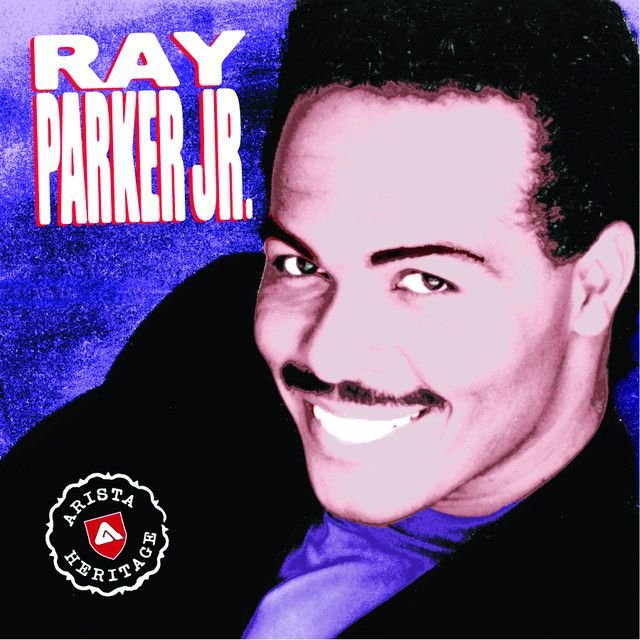
Why 'You Can't Change That' Feels So Steady
The meaning of You Can't Change That Ray Parker Jr., Raydio comes down to a simple but powerful idea: some feelings do not move just because life does. This 1979 hit turns devotion into a calm statement of fact. Instead of sounding dramatic or desperate, it sounds settled.
"You Can't Change That" - Ray Parker Jr., Raydio
Honey, I'll always love you
I promise I'll always love you
Loading lyrics...
Unable to load lyrics
We're unable to display the lyrics at this time. Please try again later.
That matters because the song's speaker is not trying to win an argument. They are saying their love has already been decided. In that sense, the record is less about romance in its first spark and more about emotional certainty.
A Love Song Built on Decision, Not Doubt
At its core, the song says love can stay fixed even when circumstances shift. The speaker keeps returning to the same point: the other person may change details around them, but the feeling remains. When they repeat you can't change that
, they are not just being catchy. They are defining love as something deeper than fashion, distance, or inconvenience.
This is why the song feels so reassuring. The lyric does not focus on heartbreak, jealousy, or confusion. It focuses on constancy. Songfacts sums it up as a song about love so strong and true that nothing can alter it.
Interpretation: There is also a subtle edge in that confidence. The singer sounds loving, but also immovable. That gives the track a little tension beneath its smooth surface.
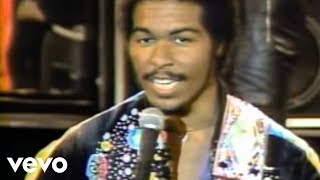
Watch the official You Can't Change That
music video
Who Is Speaking, and What Are They Saying?
The voice in the song speaks directly to a partner who may be drifting away. The singer lists possible changes in the other person's life, then dismisses them as powerless against real feeling. Small phrases like change your telephone number
and change your address too
show that the other person could try to create distance.
But the answer is always the same: love stays. Even changes in appearance do not matter. The mention of the color of your hair
makes the point concrete. External details can shift, but care does not.
That makes the song easy to follow. It works almost like a conversation:
- The singer declares love.
- They imagine the other person pulling away.
- They insist none of those actions can rewrite what they feel.
The Chorus Turns Emotion Into a Promise
The chorus is where the song's message becomes strongest. Short lines such as the only one I love
and the only one I need
strip the message down to essentials. There is no long story, no complicated backstory, just a repeated emotional truth.
There's nothing you can do or say
my mind's made up
to feel this way
That brief passage explains the whole record. Love here is not treated as a passing mood. It is presented as a settled inner state.
Interpretation: Some listeners may hear this as deeply romantic. Others may hear a trace of stubbornness. Both readings are reasonable, and that ambiguity helps the song last.
Why the Track Sounds So Warm and Easy
The production is a big reason the message lands. According to available song credits, the track was released in April 1979 on Rock On, written and produced by Ray Parker Jr. The recording blends soul, funk, and soft rock into a polished groove that feels relaxed instead of heavy.
Critics noticed that balance. Robert Hilburn of the Los Angeles Times called it a brief, good-natured highlight, while AllMusic's Craig Lytle described it as "laid-back yet very danceable." That combination fits the lyric perfectly. The song is firm, but it never sounds harsh.
Arnell Carmichael's lead vocal is especially important. His tenor gives the promise warmth and ease. If the vocal had been tougher or louder, the song might have sounded controlling. Instead, it sounds affectionate and sure of itself.
The Spinners Connection Explains the Style
One fascinating piece of context deepens the song's meaning. In a 2019 [PopMatters] interview, Ray Parker Jr. said he originally wrote the song for the Spinners, drawing on the feel of songs like "Games People Play" and "Rubberband Man." When the group passed on it, he recorded it himself with Raydio.
That story helps explain why the song has such an easy, rolling soul-pop feel. It was built in the tradition of elegant group harmony records. Record World even said it had a "Spinners feel."
So the song's meaning is not just in the lyric. It is also in the arrangement. The groove says this love is steady. The harmonies say this promise is communal and warm. The rhythm says devotion can still move.
A Bright Counterpoint in Raydio's Catalog
The song also stands out because it contrasts with Raydio's earlier hit "Jack and Jill," which tells a much more troubled relationship story. Next to that, "You Can't Change That" feels like a corrective. Instead of a bond falling apart, this one holds.
That may help explain its chart success. The single reached No. 9 on the Billboard Hot 100 and No. 3 on the US R&B chart, with additional Top 10 success in Canada and Australia. Listeners likely heard both comfort and groove in it.
The Lasting Meaning of the Song
In the end, the meaning of You Can't Change That Ray Parker Jr., Raydio is about emotional permanence. Love is shown as a choice, a conviction, and a personal truth that outside changes cannot shake.
Its genius is that it never overstates the point. The song stays light on its feet, even while making a very serious promise. That is why it still feels memorable: it turns devotion into something simple, smooth, and strong.
Disclaimer: This interpretation blends verified song history with critical reading of the lyrics and sound. As with any song, listeners may hear different meanings in it.








