Why 'Red & Blue' by Razz Rejects Labels
The meaning of Red & Blue Razz comes into focus fast: this is a song about labels, pressure, and the quiet act of refusing to be boxed in. Its lyrics describe a world of judgment, routine, and polished expectations. Then the chorus answers with a blunt, catchy statement of selfhood.
"Red & Blue" - Razz
You're deemed so unsilt your view
Grown up and tied to the nine
Loading lyrics...
Unable to load lyrics
We're unable to display the lyrics at this time. Please try again later.
Rather than pleading for approval, they seem to step sideways from the whole system. That tension gives the song its force.
The Core Idea Hiding in Plain Sight
At heart, “Red & Blue” sounds like a pushback against false binaries. The singer moves through a social world where other people decide what they should be. In the verses, that world feels stiff, watchful, and performative.
The repeated idea of being soaked in fake perfection
is especially important. Paraphrased, the song suggests they are surrounded by standards that look polished but feel artificial. That phrase turns the track away from romance and toward social critique.
Interpretation: the title colors may represent any forced split—good/bad, normal/strange, masculine/feminine, accepted/rejected, even political sides. The song does not lock itself to one meaning, which is part of why it works.
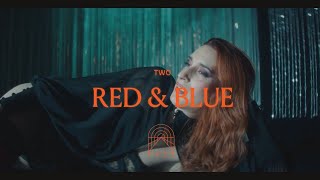
Watch the official Red & Blue
music video
A Speaker Under Pressure
The opening lines place the speaker in public space, where they are seen and judged. The song keeps returning to eyes, walls, and the ground. Those images imply surveillance, limits, and lowered confidence.
When the lyric says make you wanna be see-through
, it captures the emotional result of being watched too closely. Instead of feeling recognized, they feel like disappearing. That is a sharp description of social anxiety and image pressure.
Another key phrase is tied to the nine
. In plain terms, it points to grown-up routine, likely the nine-to-five structure of adult life. The song links that routine to social performance, as if work, status, and appearance all blend into one machine.
How the Chorus Flips the Meaning
The chorus is simple, but it changes everything. After verses filled with pressure, the speaker says I'm red
and I'm blue
, then shrugs off whatever others want to call them.
That move matters because it refuses the logic of either/or. The speaker does not argue for one approved identity. They claim both colors, or maybe neither in a fixed way. In effect, they say: name me what you want, but your names are not the whole truth.
Interpretation: this can be heard as fluid identity. It may relate to personality, social role, or even gendered expectations. The lyric leaves room for all three readings without confirming just one.
Walls, Fruit, and Other Strange Symbols
Some of the song’s best lines are also its oddest. The image All the walls they drew
suggests boundaries created by someone else—rules, norms, or roles already mapped out in advance. Painting those walls differently becomes an image of reclaiming choice.
The fruit line is more abstract, but it still fits the theme. A world that tells people what to buy, what to consume, and how to live can also tell them what story to accept. That makes the phrase about a story they wrote to rule
feel central. The song seems wary of systems that shape identity from the outside.
There is an accidental cultural echo here too. In American culture, “red” and “blue” often signal sharp oppositions, while “blue raspberry” itself is a manufactured color category rather than a natural one. According to the history summarized by Wikipedia’s overview of blue raspberry flavor, the color was popularized in U.S. food branding partly to distinguish raspberry products from red-colored competitors. That detail is not proof of author intent, but it is a useful parallel: color labels can be artificial, commercial, and imposed.
The Most Crushing Moment in the Song
The bridge-like repetition about lowered vision is the bleakest part of the track. It describes people with their attention forced downward, almost physically pinned in place.
Eyes to the ground
That keeps us down
We're fixed to the floor
Paraphrased, the song suggests a whole group has learned to look down because looking up might mean questioning the rules. The repeated lines feel intentionally exhausting. They trap the listener in the same cycle the lyric describes.
How the Sound Likely Carries the Message
Even from the lyric structure alone, they seem to be working with repetition as a major tool. The chorus is direct and chant-like, which would make it feel communal rather than private. The recurring verse phrases also create a sense of routine, matching the theme of social programming.
Songwriting credits provided here list Christian Knippen, Dennis Borger, Fabian Langer, Lukas Bruns, Niklas Keiser, and Pott Steffen as writers. That collaborative setup often supports tight hooks and repeated motifs, both of which are central to this track.
Interpretation: if the production leans indie rock or post-punk, the song’s clipped phrasing and repeated slogans would likely heighten the feeling of pressure. If it leans more alt-pop, the same chorus could sound deceptively bright, which would deepen the contrast between catchy melody and uneasy meaning.
Final Take on the Meaning of Red & Blue Razz
The meaning of Red & Blue Razz is less about choosing a side than about exposing the trap of sides in the first place. The song presents a world built on judgment, routine, and fake ideals, then answers with a refusal to be reduced.
Its smartest move is that it never turns that refusal into a speech. Instead, it becomes a hook: calm, repetitive, and strangely liberating.
Disclaimer: This interpretation is based on the lyrics provided and common songwriting analysis. Unless the band has confirmed a specific meaning, some readings remain informed interpretation rather than established fact.








