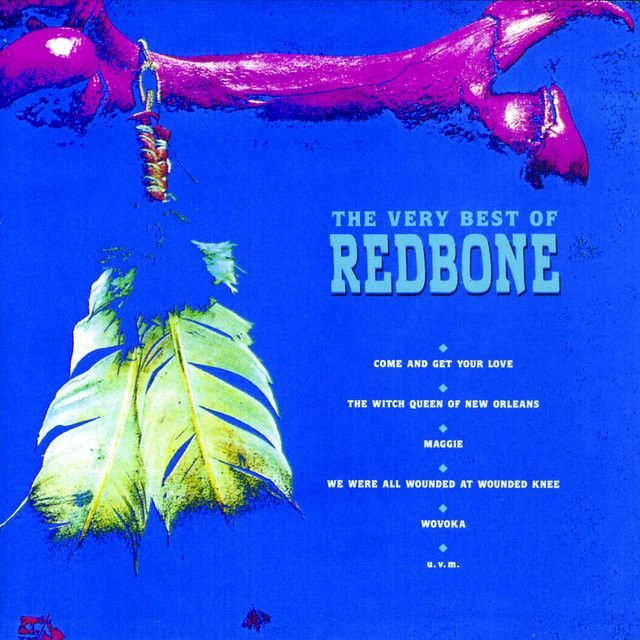
Maggie by Redbone
A dark little story hiding in a groove
The meaning of Maggie Redbone starts with a simple but unsettling idea: the song paints a portrait of a woman trapped inside desire, danger, and judgment. On the surface, it moves like a loose, rootsy rock track. Underneath, it sounds like a cautionary tale about a woman named Maggie, whose charm draws people in but whose path seems headed toward ruin.
"Maggie" - Redbone
Following the hookin' game
Boo-lah rooka hook and chain
Loading lyrics...
Unable to load lyrics
We're unable to display the lyrics at this time. Please try again later.
Redbone released “Maggie” on Potlatch in 1970. That matters, because the band was already building a style that mixed rock, R&B, funk, Cajun color, and swampy rhythm. According to widely available band histories, Redbone formed in Los Angeles in 1969 and became known for blending Native American and Chicano identity with a broad American roots sound. “Maggie” came from that early period and was noted as more successful overseas than in the U.S.

Watch the official Maggie
music video
What the lyrics suggest about Maggie
The song describes Maggie as a magnetic figure, but not in a romantic, gentle way. The words frame her as someone living close to vice and performance. Phrases like following the hookin' game
suggest a life tied to survival, sex, or exploitation. The song does not offer much protection or sympathy from the people around her.
At the same time, Maggie is not described as weak. She is given a dangerous glamour. When the song says Maggie's eyes could cook a man
, it turns attraction into heat and threat at once. She has power, but it is the kind of power that exists in a cruel world. That mix is central to the meaning.
Desire and punishment in the same breath
One of the song's sharpest moves is how it pairs pleasure with doom. Maggie can make it feel like paradise
, but the chorus keeps pushing toward death and public indifference. That contrast makes the song feel less like a love song and more like a rough folk-blues tale where beauty never guarantees safety.
Interpretation: the lyric seems less interested in Maggie as a full person than in Maggie as a symbol. She can stand for the woman men desire, society judges, and nobody saves.
The chorus turns the song tragic
The emotional center of the song is the repeated line nobody cry when Maggie die
. It is blunt and cold. Instead of mourning, the song presents social abandonment.
That matters because the verses build Maggie up as vivid and seductive, yet the hook tells listeners that when her life ends, the world barely reacts. In story terms, that is the twist. In theme terms, it suggests how quickly society consumes and discards people, especially women pushed to the edges.
But oh, she loved to tantalise
And make it feel like paradise
And oh, nobody cry when Maggie die
Those lines sum up the song's emotional logic: pleasure first, punishment after. The song sounds catchy, but its message is harsh.
A tale told in fragments, not facts
Part of what makes “Maggie” unusual is its language. Some lines are plain, while others feel slangy, coded, or surreal. That can make the narrative hard to pin down. Words such as hook and chain
and other odd phrases create the sense of a half-heard street story, almost like gossip carried through a barroom rhythm.
Because of that, listeners should be careful not to force one exact plot onto the lyric. The song gives scenes and impressions more than clear biography. Maggie is introduced, sexualized, pulled through danger, and finally reduced to “poor Maggie.” The story lands emotionally even when every phrase does not explain itself.
A likely narrative arc
A useful reading goes like this:
- Maggie lives by charm and risk.
- Men want what she offers.
- The world around her is rough and exploitative.
- Her end feels inevitable.
- The final refrain shows how little compassion she receives.
That arc fits the repeating sense that Maggie didn't stand no chance
.
How Redbone's sound deepens the meaning
Redbone were never a stiff, one-style band. Histories of the group describe a blend of rock, funk, soul, Cajun, Latin, and swamp-rock textures, with strong rhythmic identity. In that setting, “Maggie” works because the music feels earthy and physical rather than polished.
The groove gives the song motion, almost like a dance number, but the words tell a grim story. That tension is important. A buoyant beat can make a sad lyric feel even sadder, because it mimics the way real tragedy is often hidden inside nightlife, seduction, and spectacle.
Interpretation: Redbone's performance may be doing two things at once. It invites listeners into Maggie's world through rhythm, then shows how unstable that world is. The repeated “boom boom” sounds like both dance pulse and funeral thud.
Artist context helps explain the edge
Knowing Redbone's background adds depth to the meaning of Maggie Redbone. The band emerged at a time when Indigenous presence in mainstream rock was rare, and they openly carried Native American identity into popular music. Their songs often drew on American regional styles and outsider perspectives.
“Maggie” is not an overt political song the way some later Redbone material became. Still, it shares the band's taste for characters on the margins and for stories that feel older than pop radio. Instead of neat romance, they offer rough social drama.
The strongest reading of “Maggie”
The clearest interpretation is that “Maggie” is about a woman both desired and condemned. The song watches how people enjoy her allure, then abandon her when the cost turns fatal. That is why the chorus feels so cruel: it exposes not only Maggie's downfall, but everyone else's lack of mercy.
There is also a second possible reading. Interpretation: Maggie may represent any person trapped in a cycle of temptation, nightlife, and exploitation. In that sense, her name becomes universal. She is one person, but also a type of story society keeps repeating.
Final takeaway
The meaning of Maggie Redbone lies in its clash of sound and story. It uses a lively, swampy groove to carry a bleak portrait of seduction, danger, and social neglect. Maggie is presented as powerful, vulnerable, and finally disposable in the eyes of others.
That is what gives the song its sting. It is catchy, but it never feels safe.
Disclaimer: This article offers interpretation based on the released lyrics, recording, and publicly available band context. Song meaning can remain open to different listener readings.








