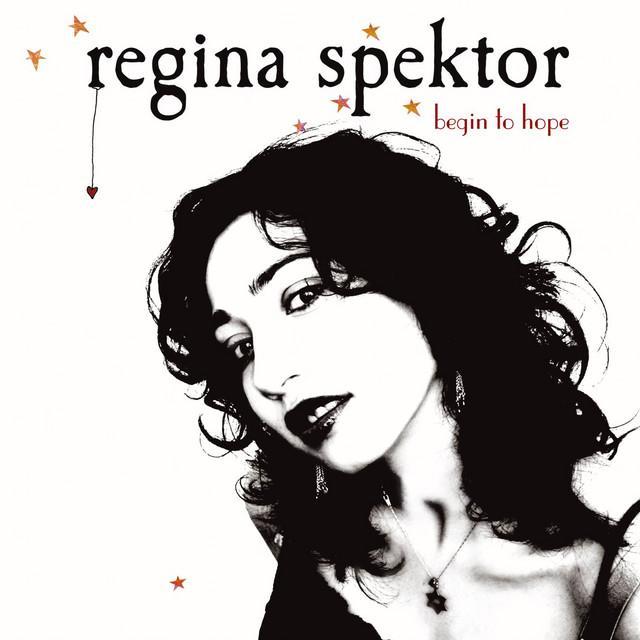
Fidelity by Regina Spektor
The meaning of Fidelity Regina Spektor comes down to a painful contradiction: the narrator wants love, but they have spent so long guarding their heart that real closeness feels dangerous. That tension gives the song its emotional force.
"Fidelity" - Regina Spektor
I never loved nobody fully
Always one foot on the ground
Loading lyrics...
Unable to load lyrics
We're unable to display the lyrics at this time. Please try again later.
Released on Begin to Hope and written by Regina Spektor, “Fidelity” became one of the songs that helped bring her eccentric piano-pop style to a wider audience. It was issued as a single in 2006 and stood out for mixing bright melody with uneasy feelings. That split between sound and emotion is the key to understanding it.
A Love Song About Self-Protection
At its core, “Fidelity” is about someone who realizes that emotional caution has turned into emotional distance. Early on, the narrator admits they never loved completely and kept one foot on the ground
. In plain terms, they have always stayed partly detached, as if they needed an escape route.
That confession matters because the song does not blame another person first. Instead, it points inward. The speaker sees that trying to protect their heart has come with a cost. Rather than feeling safe, they feel disconnected and stuck in their own head.
Interpretation: This is why the title “Fidelity” feels larger than romance alone. It can suggest faithfulness not just to a partner, but to emotional truth. The narrator may be asking whether they can be fully present in love at all.

Watch the official Fidelity
music video
The Inner Noise That Won’t Go Quiet
One of the song’s strongest ideas is that the narrator lives inside a crowded mental world. They repeat all of these voices
, all of these words
, and all of this music
. Paraphrased, their mind is full of thoughts, language, and melodies that keep circling.
This does two things at once. First, it makes the song feel personal and psychological. Second, it hints that creativity itself may be part of the problem. The same imagination that gives the narrator songs also seems to deepen their pain.
Interpretation: “Fidelity” can be heard as a song about choosing between art and intimacy, or at least struggling to balance both. The mind is so active, so full of sound, that genuine closeness becomes hard to hold onto.
The "Suppose" Lines Reveal Regret
In the middle of the song, the narrator imagines an alternate life where the relationship never happened. They wonder what it would mean if they had never met this person, never let them get close, and never entered this emotional risk.
That section matters because it is not simple rejection. It sounds more like defensive fantasizing after love has already changed them. They are trying to imagine a safer version of life, but the idea does not bring peace.
Instead, the fantasy exposes how much the relationship mattered. Even when they picture avoiding the romance, the sadness remains. The repeated idea of trying to break my fall
suggests they have been using songs, distance, or imagination as a cushion against real hurt.
Why the Chorus Hurts So Much
The emotional center of the track is the repeated line about heartbreak. The narrator says the inner flood of voices and music breaks my heart
. That is a striking choice because music is usually healing in songs like this. Here, it also wounds.
This gives “Fidelity” its special sadness. The narrator cannot fully escape into love, but they cannot fully escape into art either. Both emotional worlds are mixed together. The result is not dramatic collapse, but a steady ache.
The brief reassurance from friends that things will improve adds another layer. Their optimism sounds ordinary and well-meant, but it does not solve the deeper issue. The real struggle is not just getting over someone. It is learning how to live without always holding part of oneself back.
How the Sound Carries the Meaning
Musically, “Fidelity” is one of Regina Spektor’s most inviting songs. Its piano hook is buoyant, almost playful, and the rhythm gives it pop momentum. That lightness makes the lyric feel sharper, because the arrangement never sinks into heavy melodrama.
Spektor’s vocal delivery also matters. They move between crisp phrasing and emotional repetition, making the song sound both controlled and close to spilling over. That mirrors the theme perfectly: a person trying to stay composed while feeling overwhelmed inside.
From a production standpoint, the song is polished without losing Spektor’s odd, intimate charm. The blend of alternative pop structure and art-pop personality helped it connect with a larger audience while keeping her voice distinct.
Artist Context Helps Explain It
Regina Spektor is known for writing songs that mix plainspoken feeling with surreal or literary turns. “Fidelity” is more direct than some of her work, which may be one reason it became a breakthrough track. It takes a complicated emotional state and makes it immediately recognizable.
That context matters for the meaning of Fidelity Regina Spektor because the song sits between confession and performance. It sounds conversational, but it is carefully built. The repetition, especially in the chorus, turns private anxiety into something memorable and universal.
Final Reading: Love Requires Risk
The clearest reading is that “Fidelity” is about the cost of emotional self-defense. The narrator tried to stay safe, but in doing so, they became divided from their own feelings. Love exposed that habit, and music keeps echoing it back.
Interpretation: Another valid reading is that the song is about fidelity to one’s inner life versus fidelity to another person. In that version, the heartbreak comes from not knowing which devotion will win.
Either way, the song lasts because it captures a common fear: if they let someone in completely, they may get hurt. But if they never do, they may hurt anyway.
Disclaimer: This interpretation is based on the song’s lyrics, sound, and public context. Like most art, “Fidelity” can support more than one meaning.








