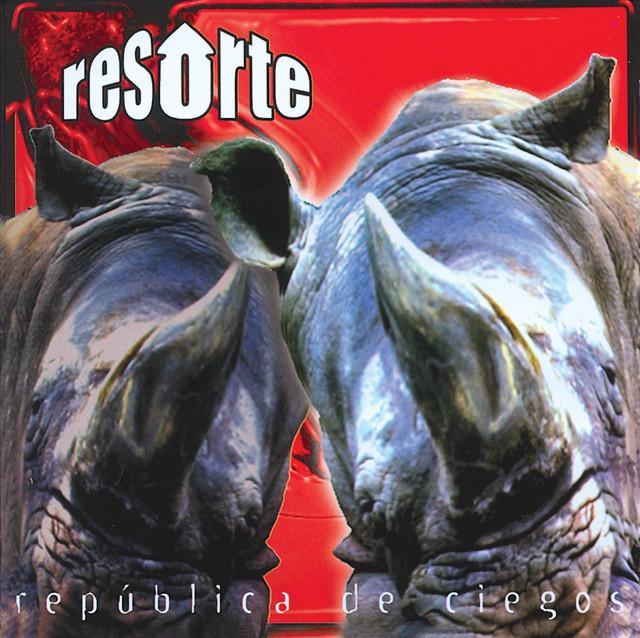
América by Resorte
The meaning of América Resorte starts with a cry of identity and defense. This is not a soft patriotic song. It sounds like a warning, a refusal, and a demand to remember who the land belongs to. Resorte, a Mexican band known for heavy grooves and rap-metal force, turns the track into a compact statement about America as a living place with history, pain, and people who cannot be erased.
"América" - Resorte
América, América
Única, Única Tierra de indios
Loading lyrics...
Unable to load lyrics
We're unable to display the lyrics at this time. Please try again later.
A Continent, Not a Slogan
At its core, the song presents América as more than a name on a map. The repeated call of América, América
feels like an alarm and a rallying chant at the same time. Right after that, the lyric points to Tierra de indios
, which frames the continent through Indigenous presence rather than colonial power.
That choice matters. Instead of praising nation-state pride, the song pushes listeners to think about deeper roots. The line about not giving in, selling, or handing over the land paraphrases a collective refusal. The speaker is not talking like one person with a private problem. They sound like a group defending memory, territory, and dignity.

Watch the official América
music video
The Main Theme: Resistance Against Erasure
The clearest theme in the meaning of América Resorte is resistance. The song insists that the land is unique and should not be surrendered. When the lyric says No cederemos
, it turns the song into a public vow.
This is where the song’s politics become visible, even if the words stay fragmentary. It is not offering a policy argument. It is using compressed language to express a feeling many protest songs share: the fear that land, identity, and culture can be taken, sold, or emptied out.
Interpretation: They seem to be speaking against exploitation in a broad sense. That could include colonial history, modern capitalism, or cultural displacement. The song does not define one single enemy in detail, which gives it a wider emotional reach.
Why the Lyrics Feel Broken and Urgent
One unusual thing about the song is how jumpy and intense the writing feels. Phrases arrive in bursts. Images collide. A line like afuera del agua
suggests being thrown out of a natural space or forced into discomfort. Another passage mentions pain reaching the speaker’s head, which makes the conflict feel physical, not abstract.
That fractured style fits the message. The song is not trying to tell a smooth story with a beginning, middle, and end. It sounds more like a mind under pressure, trying to hold onto purpose while anger and urgency rise.
Fuera de aquí
Para arriba jump jump
These short commands intensify the mood. One pushes something away; the other drives bodies upward, almost like a mosh-pit order. Together, they merge protest language with live-performance energy.
How Resorte’s Sound Deepens the Meaning
Resorte emerged from Mexico’s alt-metal scene and became known for fusing heavy riffing, groove-based rhythms, and vocal attack; their profile is documented by Discogs. That musical background is key to understanding this track.
The song’s heavy rock and Latin alternative frame makes the message feel bodily. Thick guitars create pressure. The rhythm section gives the words a marching force. The vocal delivery sounds closer to a shout than a conversation, which suits lyrics about refusal and defense.
This matters because the meaning of América Resorte is carried as much by tone as by wording. Even if a listener does not catch every phrase, they can still feel the confrontation. The track’s stop-start energy mirrors social tension: there is no comfort, only momentum.
The Chorus as Collective Memory
The repeated return to the title acts like a reset button. Every time the song circles back to América, it reminds listeners what is at stake. The repetition gives the continent a sacred, wounded quality.
Interpretation: The hook may be read as an attempt to reclaim the word itself. In many contexts, “America” gets narrowed to one country. Here, the song appears to pull the word back toward a larger land and a longer history. The emphasis on uniqueness supports that reading.
There is also a spiritual edge to the repetition. América becomes almost a body, almost a homeland, almost a witness.
Artist Context and Cultural Weight
Resorte belongs to a wave of Mexican heavy acts that brought local identity into aggressive global rock forms. Their work is associated with the late-1990s/early-2000s nu-metal and alternative boom, including releases such as XL. In that setting, a song like “América” stands out because it uses the force of rap-metal not just for rebellion in general, but for a regional and historical statement.
That context helps explain why the song feels bigger than a personal rant. It taps into questions that matter across Latin America and for many U.S. listeners too: Who gets to name the land? Who gets remembered? What does resistance sound like when institutions fail?
A Few Strongest Interpretations
Reading One: An anti-colonial statement
This is the most direct reading. The mention of Indigenous land and the refusal to give it up strongly suggest a protest against conquest, extraction, and historical theft.
Reading Two: A defense of cultural identity
The song can also be heard as a stand against cultural dilution. In this view, the rage is about memory being commercialized or flattened.
Reading Three: A live-wire call to action
Because of its chant-like lines and physical energy, the song also works as a crowd-moving anthem. It does not just describe resistance; it tries to produce it.
Why the Song Still Hits
The meaning of América Resorte remains powerful because it is blunt, noisy, and open enough to fit many struggles. It speaks in collective language, not private confession. It treats land as memory and identity, not property.
For listeners in the United States, that can resonate in several ways: as a Latin American identity statement, as a challenge to simplified ideas of “America,” or as a broader protest song about belonging and control.
In the end, “América” is less interested in explanation than in impact. It wants listeners to feel the pressure, hear the refusal, and remember that history still lives under the ground.
Disclaimer: This interpretation is based on the lyrics, musical context, and available artist information. As with many concise and image-heavy songs, some meanings remain open to listener interpretation.








