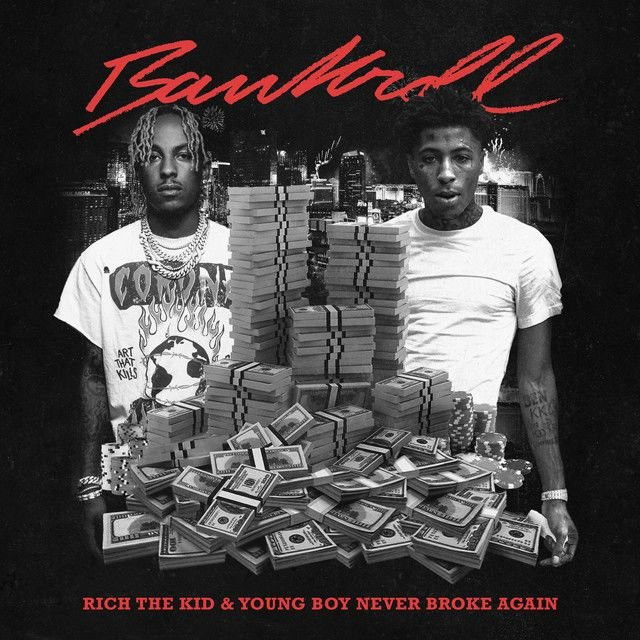
Bankroll by Rich the Kid, YoungBoy Never Broke Again
The meaning of Bankroll Rich the Kid, YoungBoy Never Broke Again starts with a simple idea: money is not just money here. In this song, cash stands for escape, rank, and proof. It is a flex record on the surface, but it also carries the pressure of people who believe wealth must be defended once it is finally earned.
"Bankroll" - Rich the Kid, YoungBoy Never Broke Again
Bankroll, whole lotta hundos (bankroll)
In the trap, they deliver like Dominos (in the trap)
Loading lyrics...
Unable to load lyrics
We're unable to display the lyrics at this time. Please try again later.
A Victory Lap With Teeth
“Bankroll” appears on the joint mixtape Nobody Safe, released on November 20, 2020, a collaboration between Rich the Kid and YoungBoy Never Broke Again. That project peaked at No. 43 on the Billboard 200, according to the YoungBoy discography record summarized by Wikipedia. The song was written by Dimitri Roger and Kentrell Gaulden, the two artists named in the track credits provided here.
That context matters because both rappers were already known for different shades of rap stardom. Rich the Kid often leans into flashy, branded luxury. YoungBoy, by contrast, tends to bring emotional volatility and threat into even his victory records. On “Bankroll,” those styles meet in the middle.
Watch the official Bankroll
music video
What the Song Is Really Saying
At its core, the song argues that wealth changes how people move, who respects them, and how they see themselves. The repeated hook about a bankroll
and whole lotta hundos
is not subtle. It is meant to sound oversized.
But the lyrics do more than count cash. They keep linking money to motion, business, and memory. When the song compares trap delivery to Dominos and paper to Kinkos, it turns hustle into a brand-like operation. The message is that success is no longer random; it is organized, constant, and visible.
Interpretation: the hook works like a chant of self-validation. They are not just saying they are rich. They are repeating it until it sounds permanent.
The Line Between Flexing and Remembering
One of the most revealing moments is the callback to harder times: 'Member back when I couldn't get an elbow
. Paraphrased, that line points to scarcity and exclusion. Before the money, they were not getting access, product, or status.
That memory keeps the song from being only shallow brag rap. It frames the current excess as a response to lack. The luxury meals, expensive cars, and stuffed pockets matter because the song wants listeners to compare “then” and “now.”
There is also a social angle. The track keeps measuring people by whether they were loyal before success. In other words, money reveals character. Some people support the artists now, but the verses suggest those same people were absent when times were bad.
YoungBoy’s Verse Brings the Darkness
YoungBoy shifts the mood. Where Rich the Kid sounds slick and celebratory, YoungBoy adds menace, distrust, and emotional strain. He mentions a gun at his side, refuses empty talk, and describes real demons in my head
. That phrase is important because it turns the song inward for a second.
Instead of treating wealth as peace, his verse implies that money comes with wariness. They have more now, but they also feel watched, tested, and pulled toward violence. Even when the song is showing off, it does not sound relaxed.
Interpretation: this is why “Bankroll” feels heavier than a standard club-friendly flex track. YoungBoy makes wealth sound like armor, not comfort.
Rich the Kid’s Role in the Power Fantasy
Rich the Kid gives the song its cleaner luxury language. He uses restaurant names, designer references, and a punchline-driven style to make success feel public and theatrical. His sections are less introspective than YoungBoy’s, but that contrast helps the track.
Together, they create two versions of the same dream:
- Rich the Kid treats money as display.
- YoungBoy treats money as protection.
- Both treat it as proof they won.
That split is the heart of the record’s appeal.
How the Beat Carries the Message
The production tag It's Buddha Beats
sets up a beat that is spare, hard, and loop-based. The instrumental does not overcrowd the song. Instead, it leaves space for the repetitive hook and sharp one-liners to land.
That matters for meaning. A busy beat might have made “Bankroll” feel playful. This one feels cold and controlled. The low-end weight and minimal melody support the song’s core themes: money, threat, and emotional numbness.
The repetitive structure also mirrors the lyrics. Just as the artists keep returning to the same ideas—cash, respect, status, danger—the beat keeps circling without much release. That creates a trapped feeling beneath the flexing.
Symbols That Keep Showing Up
Several images repeat across the song and reinforce its themes:
Cash as identity
The central image is obvious: the bankroll itself. It is not just something they carry. It is who they are in public.
Drip as performance
When they mention whole lotta drip on me
, they connect fashion and jewelry to authority. Looking rich becomes part of being believed.
Violence as background noise
Threats and weapon talk are woven into the verses so casually that they feel normalized. The song presents danger as part of maintaining status.
Loyalty as a test
The lyrics repeatedly separate real allies from late arrivals. In this worldview, success attracts people, but hardship reveals them.
Final Take on the Meaning
So, what is the meaning of Bankroll Rich the Kid, YoungBoy Never Broke Again? It is a song about wealth as evidence—evidence of survival, status, and self-made power. Yet it also shows the cost of that mindset: paranoia, aggression, and the sense that even success never fully quiets the past.
That tension is what gives “Bankroll” its edge. It celebrates winning, but it never sounds carefree about it.
Disclaimer: This interpretation is based on the lyrics, artist context, and the track’s sound. As with any song, meaning can vary by listener.








