Why 'Right Here Waiting' Still Hurts
A love song built on distance
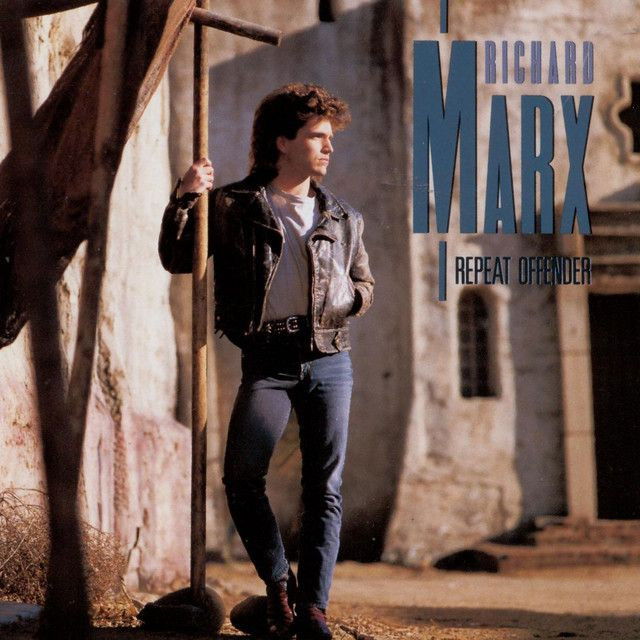
The meaning of Right Here Waiting Richard Marx starts with a simple idea: love can feel strongest when two people are far apart. Richard Marx wrote the song as a personal message to Cynthia Rhodes while she was away filming in South Africa, a story widely noted in coverage of the song's background. It later appeared on Repeat Offender in 1989 and became a major hit, reaching No. 1 on the Billboard Hot 100.
"Right Here Waiting" - Richard Marx
And I slowly go insane
I hear your voice on the line
Loading lyrics...
Unable to load lyrics
We're unable to display the lyrics at this time. Please try again later.
That real-life context matters because the song does not sound abstract or theatrical. It feels specific. The singer is not just saying, "I miss you." They are trying to survive the daily grind of separation, hearing a loved one but not being able to touch them, comfort them, or share ordinary life.

Watch the official Right Here Waiting
music video
What the verses are really saying
The opening sets up emotional and physical distance at once. The phrase Oceans apart
turns separation into a huge landscape. This is not a small delay or a short trip. It feels endless.
Then the song adds a more modern kind of loneliness: communication that helps, but not enough. When the singer hears the other person on the line
, the connection is real, yet it cannot fix the pain. That contrast is one reason the song still lands. Even now, people know that calls, texts, and video chats can ease distance without erasing it.
Another key idea is regret. The narrator realizes they once assumed their time together would simply continue. Now that it is gone, memory becomes both comfort and torture. They can remember joy and sadness, but memory does not close the gap.
The chorus makes a promise, not a fantasy
The chorus is the emotional center of the song. Instead of pretending everything will be fine, it makes a vow under pressure. The line right here waiting
is not glamorous. It is patient, still, and stubborn.
That matters because the chorus balances devotion with pain. The singer is not offering a carefree promise. They admit the cost. Even as their heart breaks
, they choose loyalty.
Wherever you go
Whatever you do
I will be right here waiting for you
Paraphrased, the message is clear: no matter where life takes the other person, the bond remains. This is why the chorus became so universal. It speaks to romance, but also to any relationship tested by time and distance.
A song about uncertainty as much as devotion
One of the strongest parts of the lyric is that it does not hide doubt. The singer wonders whether the relationship can survive. They are not fully secure, and that insecurity gives the song its human scale.
Interpretation: This is why the track feels more moving than a standard power ballad. It is not about perfect confidence. It is about choosing faith when confidence is impossible.
The question of forever also hangs over the song. If lovers are separated for too long, what does commitment really mean? The lyric never fully answers that. Instead, it turns waiting itself into proof of love.
How the sound carries the meaning
The production helps explain why the song became such a soft-rock classic. It opens with a gentle keyboard texture, then settles into a restrained piano-led arrangement. That softness gives the song room to breathe.
Rather than using a huge rock build right away, Marx and co-producer David Cole keep the track controlled. The performance leans on space, slow tempo, and clean melody. That makes the loneliness feel bigger. Silence and sustain do part of the storytelling.
The guitar lines and polished 1980s adult contemporary production also matter. They do not distract from the vocal. Instead, they frame it. Marx sings with enough ache to sound wounded, but not so much that the song tips into melodrama.
Interpretation: The arrangement mirrors waiting itself. It stretches time. Notes hang in the air the way days do when someone important is gone.
The artist story behind the song
Part of the song's legend is that Marx first thought it was too personal to record and even offered it to Barbra Streisand. As Marx later recalled, she rejected it because she was not going to be, in her words, someone who would wait around for anybody. That rejection ended up sending the song back to its writer.
That twist adds another layer to the meaning of Right Here Waiting Richard Marx. The song works because it sounds lived in. Had another singer recorded it, it might still have been pretty, but perhaps less intimate. In Marx's voice, it feels like a private letter made public.
Its reception supports that reading. The single topped charts in the United States and several other countries, and it became one of Marx's signature songs. Listeners clearly heard something more than a generic love ballad: they heard vulnerability.
Why it still connects now
For many listeners, the song endures because it captures a familiar emotional contradiction. Love can make people feel steady and fragile at the same time. They can be committed, yet scared. Hopeful, yet lonely.
That tension is what keeps the song from feeling dated. The hair, keyboards, and late-'80s sheen place it in its era, but the emotional problem is timeless. Anyone who has counted days, replayed conversations, or wondered whether love can survive distance will recognize the feeling.
Final takeaway
At its core, the song is about faithful love under strain. It turns separation, regret, and uncertainty into a promise of presence. More than a simple ballad, it is a song about choosing to remain emotionally available when distance makes that choice painful.
That is the lasting meaning of Right Here Waiting Richard Marx: love is not shown through grand speeches alone, but through endurance.
Disclaimer: This article mixes documented background with clearly labeled interpretation. Song meanings can vary from listener to listener.









