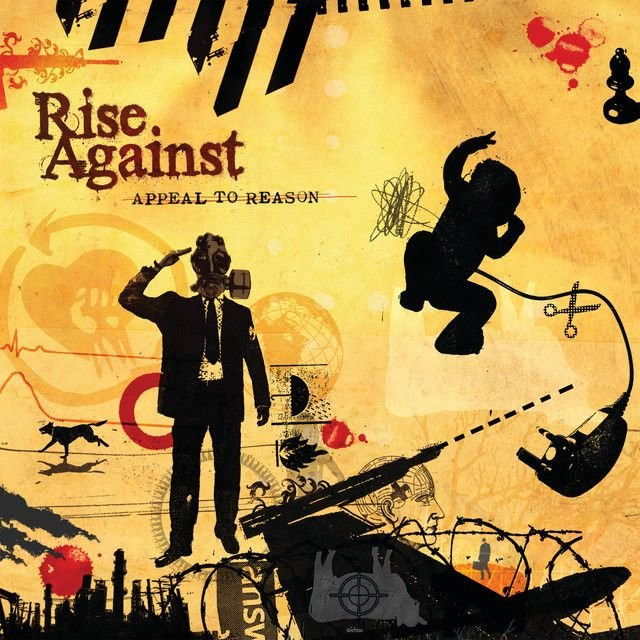
Re-Education (Through Labor) by Rise Against
The meaning of Re-Education (Through Labor) Rise Against starts with a simple idea: this is a protest song about working, surviving, and slowly being worn down by a system that asks for everything and gives back very little. Rise Against turn that pressure into a loud, urgent anthem.
"Re-Education (Through Labor)" - Rise Against
To the rhythm of the awful rusted machines
We toss and turn but don't sleep
Loading lyrics...
Unable to load lyrics
We're unable to display the lyrics at this time. Please try again later.
Released as the first single from Appeal to Reason in 2008, the track became one of the band’s biggest songs, reaching No. 3 on Billboard’s Alternative Airplay chart and later earning Gold certification in the U.S. Those facts matter because they show how widely its message connected. Even with its aggressive sound, the song speaks to an everyday struggle many people know well.
The Daily Grind at the Center
At its core, the song describes labor as both physical and emotional exhaustion. The opening frames life as a loop of pounding bodies and factory-like motion. The phrase awful rusted machines
does not just paint a workplace scene. It makes the whole environment feel old, uncaring, and built to consume people.
That fits what frontman Tim McIlrath said about the song. He described it as being about the “9-to-5, dog-eat-dog lifestyle” and what people are asked to do just to make ends meet. That statement gives a clear factual anchor for the song’s message.

Watch the official Re-Education (Through Labor)
music video
From Survival to Submission
The verses show people trapped in a routine that steals rest, hope, and even self-respect. When the song says we toss and turn
, it suggests anxiety that follows workers home. Sleep is gone, but so is peace.
Then the chorus sharpens the point. The repeated image crawl on our knees
presents labor as humiliation, not just hard work. They are not simply tired. They are being pushed into obedience.
Interpretation: The song is not only about one job or one boss. It seems to describe a larger culture that teaches people to accept exploitation as normal. In that reading, “re-education” means learning to live with conditions that should never feel acceptable.
Why the Chorus Hits So Hard
Rise Against write a chorus that sounds huge, but the words are bleak. They pair effort with delay, and sacrifice with disappointment. The line about sowing and waiting suggests people keep investing their lives in the hope of future reward, yet that reward never seems to arrive.
That is why the song’s emotional center is frustration. People work, sweat, and endure, but dreams still fail. The sky is “no longer blue,” which turns the world itself into something dimmer and damaged.
We sow the seeds to see us through
Our days are precious and so few
This brief closing image matters because it changes the song’s direction. The same labor imagery that once meant survival begins to mean renewal.
Machines, Sirens, and a Broken World
The song’s imagery is full of motion and alarm. Heartbeats, ticking clocks, sirens, engines, and gears all create a world that feels mechanical and unstable. Nothing is calm. Everything is pushing toward collapse.
The phrase time bomb ticking away
raises the stakes. It suggests people are not just tired; they are living under constant countdown pressure. The system is unsustainable, and everyone knows it.
Another key image comes later with we just survive
. That line compresses the whole song into a painful truth: life has been reduced to endurance. Survival replaces living.
The Turning Point: Refusal
The bridge is where the song stops documenting suffering and starts fighting back. Instead of describing submission, the narrator rejects it. They will not kneel, they will not believe lies, and they will not keep giving their energy away.
This is the song’s biggest shift. Until then, the speakers sound trapped together. After that point, they sound united and dangerous.
Interpretation: When the song calls people the “rust” in the gears and the insect in the ear, it imagines resistance as irritation that grows into disruption. The machine may look powerful, but it can still be jammed by the people inside it.
How the Sound Carries the Message
Musically, the song supports its meaning almost perfectly. It was recorded for Appeal to Reason and produced by Bill Stevenson and Jason Livermore. Critics and reference sources note that it opens with a heavy, metallic guitar figure, while guitarist Zach Blair said the riff had a more rock-and-roll, almost southern-rock feel than some earlier Rise Against songs.
That matters because the track sounds both mechanical and human. The guitars grind forward like a machine, but the vocals strain with real panic and anger. The drumming keeps everything tense and driving, making the song feel like it is always running out of time.
The result is a protest song that does not sound polite. It sounds cornered.
Artist Context and Why It Landed
Rise Against have long mixed punk energy with social criticism, so this song fits their larger identity. But it also arrived in 2008, when economic anxiety in the United States was especially sharp. That timing helped the lyrics hit harder.
The video, directed by Kevin Kerslake and filmed in Chicago, pushed the song’s unrest even further with images of youth rebellion and urban collapse. Even without the video, though, the message is clear: ordinary people are tired of being told to endure quietly.
The Final Meaning
So, what is the meaning of Re-Education (Through Labor) Rise Against? It is a song about how work and power can strip people down to survival, then train them to call that normal. But it is also about the moment they stop accepting that deal.
The ending does not promise easy victory. It offers something more believable: awareness, solidarity, and the first light of change. In that sense, the song is both warning and rallying cry.
Disclaimer: Song meaning is always part fact, part interpretation. The reading above is based on the lyrics, band comments, and the song’s wider context.








