Why “Savior” Still Hits So Hard
The meaning of Savior Rise Against comes down to a painful idea: sometimes two people still care for each other, but care is not enough to fix what is broken. That is why the song lands so hard. It is not about a clean breakup or an easy villain. It is about love, regret, and the moment when one person realizes they cannot be healed by the other.
"Savior" - Rise Against
What the color of her eyes were, and her scars or how she got them
As the telling signs of age rain down, a single tear is dropping
Loading lyrics...
Unable to load lyrics
We're unable to display the lyrics at this time. Please try again later.
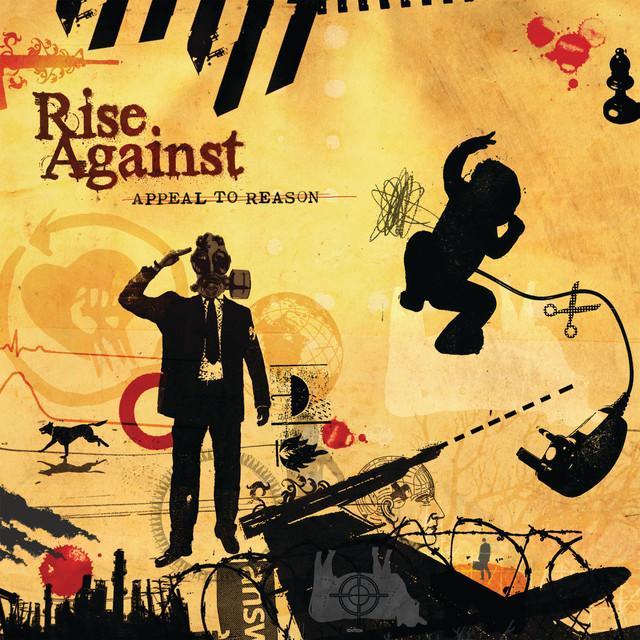
Released on Appeal to Reason in 2008 and issued as the album’s third single in 2009, “Savior” stood out because Rise Against turned away from their usual political focus and wrote something much more personal. Tim McIlrath described it as “a story of love and loss” and a push-pull relationship that many people can relate to (Songfacts).
A breakup song with no easy enemy
At its core, “Savior” sounds like the aftermath of a split. The narrator is looking back, trying to hold onto details that are already slipping away. Early on, the song shows how memory fades after loss. The pain is not only that the relationship ended. It is that even the other person’s face is becoming harder to recall.
That detail matters because it turns heartbreak into something larger than sadness. It becomes fear: if memory goes, what is left? The opening gives the song a bruised, reflective tone before the guitars push it into something more urgent.
Interpretation: the narrator is not only grieving the relationship. They may also be grieving the version of themselves that existed inside it.

Watch the official Savior
music video
The chorus turns love into a warning
The emotional center is the exchange in the chorus. The narrator asks, in effect, if this is love, why does it feel impossible to escape? Then the other voice answers with I don't hate you boy
and I just want to save you
. Those phrases are gentle, but they are not comforting.
They suggest a relationship where love has become tied to damage control. One person sees the other as someone in danger, someone unraveling, or someone unable to face their own problems. The narrator answers with I love you girl
, but then admits I'm not the answer
. That is the real heartbreak of the song.
Love is present on both sides. What is missing is a path forward.
How the verses build that trapped feeling
The song keeps returning to images of pressure, time, and collapse. The day moves like crushing weights
. Memories hit like storms. The world becomes noise. None of that imagery is random. It shows emotional overload.
Three key story beats
- Memory is fading. The narrator is losing small, intimate details.
- The relationship cannot heal itself. They admit there is no easy reconciliation.
- Distance replaces clarity. By the bridge, they are emotionally and perhaps physically far apart, with “so much left” unsaid.
That structure is why the song feels so relatable. It does not tell a dramatic story with twists. It follows the actual rhythm of many breakups: remembering, arguing, trying, failing, and then sitting with the silence.
The sound makes the meaning sharper
“Savior” was recorded at The Blasting Room and produced by Bill Stevenson and Jason Livermore (Wikipedia). The track runs about four minutes and moves in a verse-chorus form, but it never feels static. The drums keep a hard forward drive while the guitars open up the chorus into something almost desperate.
That contrast matters. The verses feel tense and boxed in. The chorus feels bigger, but not freer. Instead, it sounds like emotion spilling over.
McIlrath’s vocal delivery also helps sell the meaning of Savior Rise Against. He does not sing these lines like a calm confession. He pushes them, especially in the repeated refrain, so the reassurance sounds unstable. Even the words I don't hate you
feel like they have to be said again and again because neither person fully believes repetition can solve anything.
Why this song connected beyond the fan base
“Savior” became one of Rise Against’s biggest crossover songs. It reached No. 3 on Billboard’s Alternative Songs chart and stayed there for an unusually long run, later ranking among the format’s most successful songs (Wikipedia). That success makes sense.
The song keeps the band’s punk energy, but the subject is broad and human. Listeners do not need to know the band’s politics or history to understand emotional exhaustion. Almost everyone recognizes the feeling of loving someone while also knowing the relationship is doing harm.
It also helped that the writing is direct. The song is poetic without becoming vague. The images are vivid, but the emotional message is clear.
One more layer: saving someone may mean leaving
A powerful reading of the song is that “saving” does not mean repairing the relationship. It may mean ending it before both people sink further. In that sense, the chorus is not a promise. It is a boundary.
Interpretation: the most loving act in “Savior” may be refusal. One person cannot become the cure for another person’s pain, confusion, or self-destruction.
That reading makes the title ironic. There is no true savior here. Neither side can fully rescue the other.
Why “Savior” still lasts
What keeps the song alive is its honesty. It understands that breakups are not always built on hate. Sometimes they are built on care that has run out of answers.
That is the lasting meaning of Savior Rise Against: love can be real, forgiveness can be real, and the ending can still be real too.
Disclaimer: This interpretation is based on the lyrics, band comments, and recorded context. Like many songs, “Savior” can support more than one valid reading.