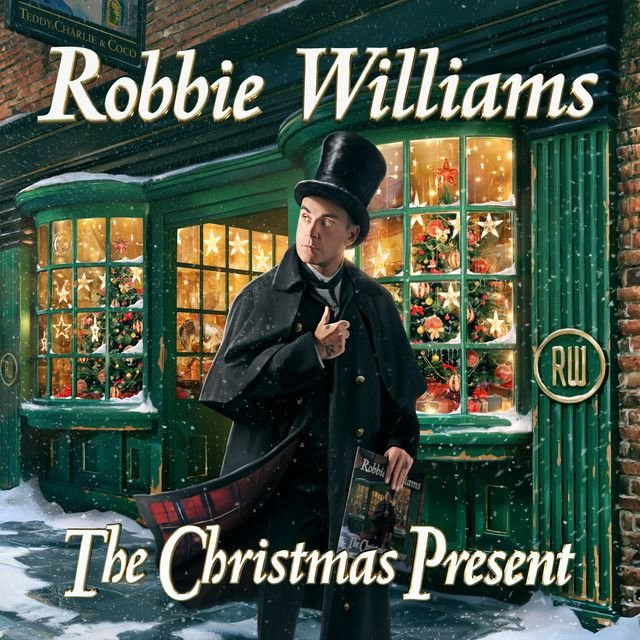
What 'Darkest Night' by Robbie Williams Means
Robbie Williams' "Darkest Night" is not a soft-focus holiday song. It is messier, more adult, and more human than that. For anyone searching for the meaning of Darkest Night Robbie Williams, the clearest answer is this: the song is about chasing warmth and connection when the year feels cold, unstable, and close to breaking point.
"Darkest Night" - Robbie Williams
'95 or '96? I really can't remember which
Pack of fags, no bags, man, I like to travel lightly
Loading lyrics...
Unable to load lyrics
We're unable to display the lyrics at this time. Please try again later.
It sits on The Christmas Present, Williams' 2019 holiday album, his first studio album since 2016, released on November 22, 2019. The record mixed covers with original songs, and critics noted that some of the originals stood out, with NME calling "Darkest Night" a "galloping" highlight. According to album information summarized by Wikipedia, the song was written by Robbie Williams, Karl Brazil, and Owen Parker, and produced by Guy Chambers and Robbie Williams.
A Christmas Song With the Lights Half-Off
The song opens in a very unglamorous place: winter in London, recent job loss, and no clear plan. That setup matters. Instead of holiday magic, Williams begins with instability. The narrator sounds uprooted, almost drifting through the city with little to hold onto.
That makes the emotional engine of the song easy to spot. They are not looking for snow-globe comfort. They are looking for a person, a touch, and a feeling strong enough to cut through the numbness. When the song moves toward darkest night
and the coldest year
, it frames December as both a season and a state of mind.
Watch the official Darkest Night
music video
The Story Beneath the Hook
From setback to escape
The verses move like scenes from a late-night film. First comes the bad news and the wandering. Then comes temptation: a phone call, a ride across town, and the sense that old habits are easy to find again. A phrase like travel lightly
suggests someone with little baggage in the literal sense, but maybe too little stability in the emotional one.
Interpretation: the song presents desire as a survival tool. The narrator may be reckless, but they are also trying not to sink into despair.
Intimacy as shelter
The repeated plea Hold me now
is important because it softens the swagger around it. Beneath the nightlife details and provocative language, there is vulnerability. They do not just want excitement; they want to be steadied.
That balance is what gives the song its bite. It knows the difference between lust and comfort, but it also knows that in hard moments people often reach for both at once.
What the Chorus Really Says
The chorus is the key to the meaning of Darkest Night Robbie Williams. It argues that even during the year's bleakest stretch, people still want to feel alive. The holiday season can pretend everything is warm and wholesome, but the song pushes back against that fantasy.
When Williams sings It's not Christmas night every night
, he seems to be saying that the emotional permission of the season is temporary. Christmas can briefly make loneliness easier to hide, or desire easier to excuse. But real life returns fast. That is why the chorus feels urgent rather than cozy.
Hold my hand
'til the last day of the year
Those lines condense the whole song. It is not really about one holiday evening. It is about getting through an ending, whether that ending is a year, a chapter, a job, or a version of oneself.
Grown-Up Christmas, Robbie Williams Style
One of the most revealing moments comes when the song says they are all grown up now, with no one left to tell them when to stop. That line shifts the song from simple flirtation into something darker and more mature.
Interpretation: adulthood here does not feel free in a cheerful way. It feels unchecked. The song recognizes the thrill of that freedom, but also its danger. Williams has often written songs that mix bravado with self-exposure, and "Darkest Night" follows that pattern. Even without a direct interview about this specific track, it fits the wider context of a performer who has long turned public image, temptation, and private vulnerability into pop drama.
How the Sound Supports the Lyrics
Critics described the track as "galloping," and that is a useful word. The rhythm gives the song forward motion, like a person walking fast through a freezing city or pushing ahead because stopping would mean thinking too much.
Production-wise, that matters. A slower arrangement might have made the song mournful. Instead, the pacing gives it hunger. The music helps turn despair into momentum, which mirrors the lyrics' move from loss toward pursuit.
This also helps explain why the song works on a Christmas album. The Christmas Present was built from both festive standards and original material, and Williams said he wrote many songs for the project, not just in a sudden burst of seasonal feeling. That bigger writing approach, noted in the album's background coverage on Wikipedia, helps explain why "Darkest Night" feels less like novelty and more like a fully formed pop character study.
Two Strong Readings of the Song
- A song about comfort in winter: The narrator feels alone and reaches for closeness to survive a difficult night.
- A song about using pleasure to outrun pain: The nightlife details, old habits, and provocative chorus suggest escape that may not last.
Both readings can be true at once. That is the song's strength. It does not cleanly separate tenderness from trouble.
Why "Darkest Night" Sticks
What makes "Darkest Night" memorable is its honesty about the holiday season. Not everyone experiences December as pure joy. For some, it magnifies uncertainty, memory, desire, and loneliness. Williams turns that tension into a song that is festive on the surface but restless underneath.
In that sense, the meaning of Darkest Night Robbie Williams is less about Christmas itself and more about what people do when the year goes dim: they look for heat, for company, and for one more reason to keep moving.
Disclaimer: This interpretation is based on the lyrics, song context, and publicly available album information. As with all song meaning analysis, some meanings remain open to listener interpretation.








