
Why 'Snowflakes' Turns a Joke Into Love
The meaning of Snowflakes Robbie Williams becomes clearer the longer the song goes on. At first, it sounds like a cheeky holiday comedy about relatives who drink too much, argue at lunch, and bring awkward baggage to the table. By the end, though, it becomes something softer: a song about choosing love over judgment when family life gets strange, loud, and politically tense.
"Snowflakes" - Robbie Williams
Eat so much, it makes us sick
Start to look just like Saint Nick
Loading lyrics...
Unable to load lyrics
We're unable to display the lyrics at this time. Please try again later.
“Snowflakes” appears on The Christmas Present, Robbie Williams’ 2019 holiday album, his twelfth studio album and first since 2016, according to the album’s release information and track listing. The record was released on 22 November 2019 and mixes covers with originals, including “Snowflakes,” which lists Williams, Flynn Francis, Konrad Olsen, and Philipp Steinke as writers. The album was largely produced by Guy Chambers and Robbie Williams, with “Snowflakes” credited to that same production team on the track list.
A Holiday Song About Family, Not Perfection
The song’s core idea is simple: family gatherings are absurd, but they still matter. The verses pile up comic details about overeating, drunken brunches, late arrivals, and uncomfortable small talk. In that setting, the repeated label snowflakes
begins as a tease.
But the word changes meaning as the song moves forward. What starts as a culture-war jab becomes a nickname for loved ones who are flawed, sensitive, unique, and impossible to replace. That twist is the emotional engine of the track.
Interpretation: Robbie Williams seems less interested in mocking “soft” people than in exposing how silly the insult sounds inside a real family. When everyone at the table has quirks and contradictions, nobody gets to act superior for long.
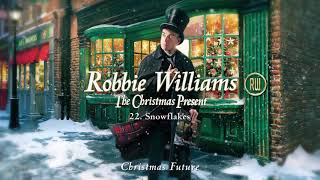
Watch the official Snowflakes
music video
The Verses Build a Comic Family Portrait
One of the smartest things about the song is how quickly it sketches characters. A stepdad talks politics. A grandmother drinks too much. A father shows up with a much younger partner. A spouse is already tipsy by brunch. These details are exaggerated, but they feel familiar.
The line about liberal snowflakes
is important because it brings in public language from internet fights and cable news. Yet the song does not stay there. It places political friction next to ordinary holiday discomfort, suggesting that ideology is just one more thing people drag into the dining room.
There is also a gentle note beneath the jokes. When the song mentions someone who has never seen a snowflake
, it widens the story beyond mockery. Suddenly, the image of snow stops being just seasonal decoration and becomes a symbol of difference, migration, and newness.
The Chorus Reframes Everything
The chorus is where the meaning of Snowflakes Robbie Williams fully opens up. After the sarcastic family snapshots, the song steps back and says the narrator once searched the world for a tribe, only to find that belonging was already at home.
That shift matters. Instead of treating family as a burden, the song treats them as the reason life feels rooted. The phrase family vibe
may sound casual, but it carries the song’s deepest point: peace is not found in perfect agreement. It is found in staying connected.
A brief multi-line section says it best:
searchin' for my tribe
family vibe
home of mine
Even here, the message is broader than Christmas. The holiday setting gives the song warmth, but its real subject is belonging after disappointment.
Why “Snowflakes” Is a Clever Symbol
Snowflakes work on several levels at once:
- They suggest winter and Christmas.
- They hint at fragility and sensitivity.
- They imply uniqueness, since no two are exactly alike.
- They echo the insult used in modern political speech.
Williams uses all four meanings. Early on, the term is teasing. By the close, it becomes affectionate, almost protective. The final blessing over this bunch of snowflakes
sounds sincere, not sarcastic.
Interpretation: The song argues that uniqueness and emotional mess are not weaknesses. They are what make family worth loving.
How the Sound Supports the Message
Because “Snowflakes” sits on The Christmas Present, its sound is shaped by the album’s larger goal: to blend festive tradition with new songs rather than rely only on standards. Williams said in past interviews about wanting to make a Christmas album that his wife Ayda helped him love the season more, which gives useful context for how warmly this record approaches home life.
Musically, “Snowflakes” feels built for singalong release. Its pop structure, bright seasonal mood, and broad chorus soften the sting of the verses. That matters. If the arrangement were bitter or stripped down, the lyrics might sound cruel. Instead, the production makes the family chaos feel survivable, even lovable.
The likely effect is intentional: humor in the verses, lift in the chorus, and a communal glow at the end. That contrast mirrors the emotional pattern of many real holidays. Things get tense, someone says too much, then everybody keeps passing the food.
Where It Fits in Robbie Williams’ Christmas Album
On a commercially successful album that reached No. 1 in the UK and tied Williams with Elvis Presley for the most UK No. 1 albums by a solo artist, “Snowflakes” stands out because it sounds current. Many Christmas songs sell idealized coziness. This one offers a modern table full of blended families, politics, age gaps, and social unease.
That makes it one of the album’s more revealing originals. It shows Williams using Christmas not just for nostalgia, but for observation. He turns seasonal music into social comedy without losing heart.
The Lasting Takeaway
In the end, the meaning of Snowflakes Robbie Williams is not that families are easy. It is that they are worth loving anyway. The song laughs at holiday dysfunction, but it never abandons the people causing it.
That is why the title word lands so well. “Snowflakes” begins as an insult and ends as a blessing.
Disclaimer: This interpretation is based on the released lyrics, song context, and publicly available album information. As with any song, listeners may hear different meanings in it.









