Why 'Ya Got Trouble' Still Works
The meaning of Ya Got Trouble Robert Preston starts with a sales pitch disguised as a warning. In The Music Man, this song is the moment when Harold Hill wins over River City by turning a pool table into a symbol of moral collapse. The idea is absurd on purpose, and that is exactly why it works.
"Ya Got Trouble" - Robert Preston
To a situation you do not wish to acknowledge
Or you are not aware of the caliber of disaster
Loading lyrics...
Unable to load lyrics
We're unable to display the lyrics at this time. Please try again later.
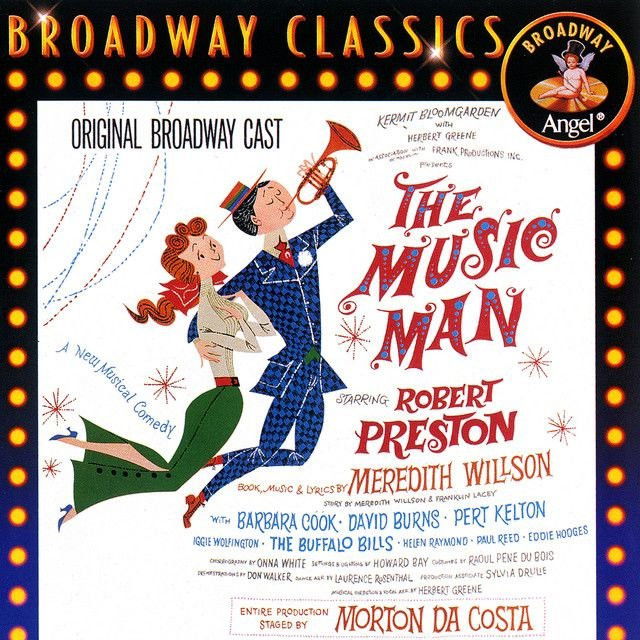
Robert Preston’s performance made the number unforgettable in the 1962 film adaptation of Meredith Willson’s musical, which had first opened on Broadway in 1957. Willson wrote the show and based much of its small-town setting on his Iowa upbringing. Those facts are well documented in standard histories of The Music Man and the film version.[1][2]
The Real Warning Is About Fear
On the surface, the singer claims there is trouble right here
in town. He points to a new pool table as proof that local boys are headed toward gambling, smoking, bad language, and loose behavior. The argument grows wilder with every line.
Interpretation: the song is not really a careful case against pool. It is a study in moral panic. Harold Hill knows that if he can link a harmless pastime to bigger social fears, parents will stop asking hard questions.
That is why the famous line capital "T"
matters so much. It turns anxiety into a slogan. Once fear becomes catchy, the crowd can repeat it without examining it.
Watch the official Ya Got Trouble
music video
Harold Hill’s Voice: Fast, Funny, Dangerous
What makes the song brilliant is the speaker. Harold Hill is a con man, and this number lets listeners hear his method in real time. He talks quickly, piles up examples, and keeps shifting from certainty to outrage.
He begins by accusing the town of ignoring a danger. Then he claims special expertise. He even compares respectable billiards with common pool, acting as if one game builds character while the other leads to decline. That fake distinction helps him sound informed.
Interpretation: this voice is funny because it is so overconfident, but it is also revealing. They are hearing a person who can invent authority on command.
How the Lyrics Build a Chain Reaction
The song’s structure matters. Harold does not say a child will simply waste time. He builds a full ladder of corruption, one step at a time. First comes the pool hall, then bad company, then gambling, then smoking, then dancing, then social disorder.
A short stretch of the lyric shows that escalating logic:
Then beer from a bottle
And the next thing you know
The point is not evidence. The point is momentum. Every new image makes the last one feel more believable.
That is also why phrases like fritterin' away
land so well. He paints idleness as a civic threat. Chores do not get done, family duties are ignored, and even the town’s language starts to slip. The panic spreads from one room to the whole community.
A Satire of Respectability and Class
Part of the meaning of Ya Got Trouble Robert Preston lies in class anxiety. Harold frames pool as the difference between a gentleman and a bum. That is not a neutral claim. It reflects a world where entertainment, manners, and status are tightly linked.
He mocks slang, cheap cigarettes, dime novels, and popular music. In other words, he treats youth culture itself as suspicious. The song pokes fun at adults who confuse change with collapse.
Interpretation: the number satirizes the urge to police behavior through respectability. What sounds like concern for children often hides fear of modern life, pleasure, and the lower classes.
Why Robert Preston’s Performance Sells It
Robert Preston does not sing this piece in a smooth, melodic way for long stretches. He attacks it as patter: fast, rhythmic speech riding close to music. That style comes from musical theater tradition, but here it feels like verbal hustling. In the 1962 film, his timing, grin, and breathless certainty turn the song into a master class in persuasion.[2]
The orchestration helps. Brass punches, marching rhythm, and rising ensemble responses make the town sound as if it is being organized into panic. The chorus echoes him until private suspicion becomes public consensus.
When the crowd joins on that stands for pool
, the scam is nearly complete. Their repetition shows they have accepted his framing.
Why the Song Still Feels Modern
Even though the setting is early 20th-century Iowa, the song feels current. Communities still hear arguments that one trend, one app, one place, or one form of entertainment will destroy the next generation. The details change, but the tactic stays the same: simplify, scare, repeat.
That is why the number remains funny and sharp. It captures how public persuasion often works better through rhythm and emotion than through proof. Harold Hill is ridiculous, but he is also recognizable.
The Lasting Meaning in One Line
In the end, this song is less about vice than about performance. Harold Hill creates a crisis, names himself the one who understands it, and turns a crowd into his chorus. That is the lasting meaning of Ya Got Trouble Robert Preston: fear can be staged, sold, and sung.
They can laugh at the exaggeration, but the joke lands because it exposes a real habit in American life. People often accept the loudest story when it flatters their worries.
Disclaimer: This interpretation is based on the lyrics, the role of Harold Hill in The Music Man, and the song’s theatrical context. As with any work of art, listeners may hear additional meanings.







