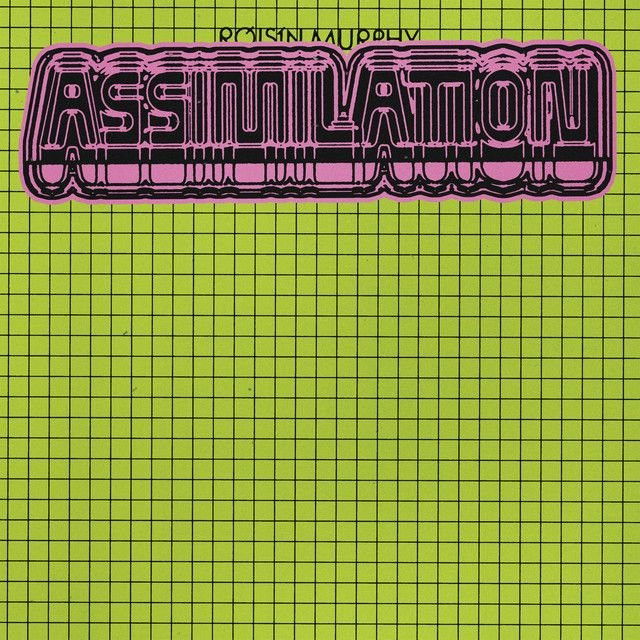
Assimilation by Róisín Murphy
The meaning of Assimilation Róisín Murphy starts with a paradox: the song sounds warm, sensual, and danceable, yet its words keep circling around illusion, projection, and emotional distance. They present a speaker who knows they are living inside a dream-image of love, but they do not reject that dream. Instead, they examine it, move inside it, and maybe even choose it.
"Assimilation" - Róisín Murphy
I realise (I realise)
Such a perfect (such a perfect)
Loading lyrics...
Unable to load lyrics
We're unable to display the lyrics at this time. Please try again later.
Róisín Murphy has long worked in the space where club music meets performance art, and that context matters here. According to Paste, “Assimilation” is a rework of 2020’s “Simulation” from Róisín Machine, reshaped into a moodier house-disco track that highlights layered vocals and bright keyboard textures. That shift helps explain why this song feels both intimate and artificial at once.
A Love Song Built on a Digital Mirror
At its core, the song is about constructing a private emotional reality. Early lines frame that reality as a perfect model rather than a stable relationship. When the speaker notices a face all over the place
, the image suggests obsession, but also fragmentation. This is not simple closeness. It is closeness broken into copies, reflections, and screens.
The word simulation
becomes the song’s center of gravity. In plain terms, the speaker seems to admit that what they feel may be a projection of desire rather than a fully shared bond. Still, the song does not treat that as meaningless. It treats the simulated feeling as vivid, seductive, and emotionally real.
Interpretation: Murphy’s narrator is not fooled in a naive way. They seem aware that fantasy is involved. The tension comes from knowing something is constructed while still wanting to live inside it.
Watch the official Assimilation
music video
Repetition Turns Thought Into a Dance Loop
One striking part of the song is how often it repeats key phrases. The hook does not unfold like a story with many details. Instead, it loops, almost like a machine testing a system. The line for demonstration
makes the whole scene feel staged, as if love itself is being presented as an exhibit or prototype.
That repetition does two things at once:
- It mimics obsessive thinking.
- It makes the track hypnotic enough for the dance floor.
This balance is a classic Murphy move. The body is invited to move, while the mind is asked to notice how strange the emotional setup is. In that sense, the song is less about romance in a normal narrative sense and more about what happens when desire becomes an environment.
Where Illusion Becomes Comfort
Midway through, the lyric moves from description into defense. The speaker asks what if this feeling is limited, and what if love is still a meaningful sign anyway. That matters because the song stops sounding embarrassed about illusion. It begins to argue that a partial, imagined, or symbolic love may still hold value.
When the song refers to a lonely illusion
and an only delusion
, it sounds sad on paper. But in performance, those phrases do not feel purely tragic. They feel accepted, maybe even cherished. The speaker seems to know this fantasy is imperfect, yet they protect it because it gives shape to their inner life.
Interpretation: This can be heard as a comment on modern intimacy. In a world full of mediated images, digital personas, and idealized desire, people often fall in love with versions, not complete realities. Murphy’s song does not moralize about that. They simply expose how human it is.
The Sound Design Explains the Emotion
The production is central to the song’s meaning. Paste described “Assimilation” as a moody, house-influenced disco rework whose vocal lines “loop and glide” across syllables, surrounded by echoing layers and twinkling keys. Those choices matter because they make the song itself feel simulated: duplicated voices, blurred edges, and a beat that keeps pulling everything back into a cycle.
Rather than sounding cold, though, the track feels soft and immersive. That is important. A harsher electronic sound might have made the song feel critical of artificiality. Instead, Murphy and their collaborators make simulation feel lush.
The credited writers are Michael Ward, Richard Barratt, and Róisín Murphy, and that combination helps explain the track’s balance of conceptual writing and club-ready flow. Even without a dense storyline, the arrangement gives the listener a clear emotional map: attraction, repetition, awareness, surrender.
A Few Ways to Read “Assimilation”
There is more than one strong reading of the song.
A portrait of obsession
The repeated face, the looping phrases, and the inward focus suggest someone unable to stop replaying an image of another person. In this view, the song captures infatuation becoming self-enclosed.
A meditation on mediated love
Because the song uses words tied to artifice and display, it can also feel like a reflection on digital-era desire. Love arrives as image, pattern, and projection before it arrives as touch.
A defense of fantasy itself
Another reading is more generous. The song may argue that imagination is not the enemy of feeling. Even if love begins in a constructed space, it can still reveal genuine longing.
Why the Song Lingers
The meaning of Assimilation Róisín Murphy is powerful because the song refuses easy judgment. It does not say fantasy is false and reality is pure. It says people often live through mixtures of both. Murphy turns that uneasy truth into something graceful, stylish, and deeply rhythmic.
In the end, “Assimilation” feels like a song about accepting the strange forms desire can take. It understands that a dream can be incomplete, even unhealthy, and still feel transcendent. That is why the track lingers: it lets the listener dance inside a question they may not be able to answer.
Disclaimer: This interpretation is based on the song’s lyrics, sound, and available release context. As with any art, other listeners may hear it differently.









