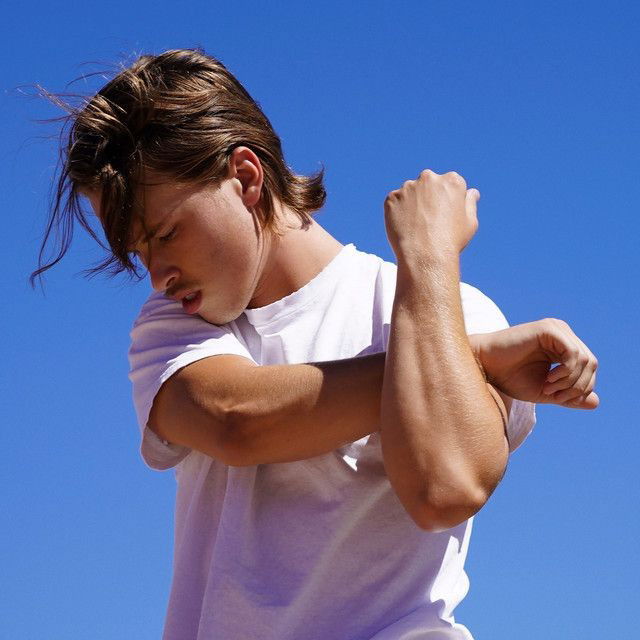
Ribbons by Ryan Beatty
They drive into the night and wake into a new self. That’s the core meaning of Ribbons—and the reason many listeners search for the meaning of Ribbons Ryan Beatty. The song tracks one heady evening of love, then the clarity that arrives with dawn. It’s a tender study of how euphoria, distance, and time braid together.
"Ribbons" - Ryan Beatty
To remind you why you came
Monterey to Camarillo
Loading lyrics...
Unable to load lyrics
We're unable to display the lyrics at this time. Please try again later.
A Night That Changes You, Then Leaves You
The opening maps a California sweep and a rush of first love. With It took all of California
, the song frames a feeling so big it needs an entire state to hold it. The drive and the dance capture momentum—joy unfolding in motion.
But joy is messy. The image Ribbons runnin' down your face
suggests tears—maybe mascara, maybe just light catching on wet cheeks. By the time the bar lights go dark, the mood turns from charged to contemplative. The song asks: What remains when the noise ends?
Who’s Speaking—and To Whom?
The song mostly uses second person, a voice talking to “you.” It can sound like the singer addressing a lover, guiding them through a memory. It can also read as the singer speaking to a younger self—someone they used to be on nights just like this.
Who's gonna hold you while you sleep? It's brave to be nothin' to no one at all
Those lines land like a thesis. The song suggests real courage isn’t in being adored for a night, but in facing the morning without a net.
From Highways to Headspace: The Story Arc
- Motion: The scene rolls from coast roads to the dance floor.
Drivin' with the headlights off
signals reckless abandon—going by feeling, not rules. - Peak: The night high crests. Love feels singular and huge; the room spins toward blackout.
- Turn: Dawn arrives with
suddenly, you're sober
. The glow drains, self-awareness floods in. - Reckoning: Time appears as a mechanism—
spinnin' the turnstile over and over
—as if the narrator keeps passing the same gate of experience until they learn how to walk through. - Acceptance: The voice stops promising a fix. They admit, in spirit, “It’s out of my hands,” and choose grace over control.
Symbols You Can Feel
- California map: Not just geography—it’s scale. The feeling is sprawling, warm, and cinematic.
- Headlights and night: Risk, anonymity, and the way darkness lets big feelings bloom.
Drivin' with the headlights off
hints at surrender to impulse. - Ribbons: Tears, but also pretty debris, the adornments that melt in heat. They show love’s beauty and its cost at once.
- Turnstile: Time and repetition. It suggests growing older by returning to the same lessons until they click.
- Glass and reflection: The bar mirror and the bottom of a glass blur. Facing the self is the hardest part of the comedown.
How the Sound Sells the Story
Ribbons leans on intimacy. The arrangement feels close-miked, with soft keys or guitar and generous space around the vocal. Nothing hurries. That restraint mirrors the song’s arc: a rush of movement, then a gentle settling.
Beatty’s delivery is uncluttered and warm. Phrases hang and breathe, the way dawn stretches minutes after a long night. Subtle dynamics—perhaps a swell of harmonies or a hush of room reverb—underline the shift from glow to reckoning. The track trusts silence as much as sound, which makes the sunrise moment feel earned, not forced.
Why These Lines Matter
It took all of California
: Love is too large for a single room—so the stage becomes a whole coast.Ribbons runnin' down your face
: Beauty and mess are the same moment. The image turns tears into something almost celebratory.suddenly, you're sober
: Clarity is abrupt. Maturity can arrive in a single, unwelcome flash.spinnin' the turnstile over and over
: Time isn’t a straight road; it’s a loop you pass through until you pay attention.
Alternate Readings Worth Considering
- Interpretation: A love letter to a first, overwhelming romance. The second person is a partner who taught the singer what love could feel like.
- Interpretation: A self-portrait. The “you” is the artist’s younger self—a mirror for growth, sobriety (literal or emotional), and the will to accept solitude without shame.
Takeaway
The meaning of Ribbons Ryan Beatty centers on courage after the rush. The song honors the high, then shows how dawn asks harder questions—about love, identity, and the cost of being seen.
By morning, the narrator understands that sometimes the bravest move is choosing to stand alone, clear-eyed, ready to try again.
Disclaimer: Song meanings are interpretive and may differ from the artist’s intent or listener experience.









