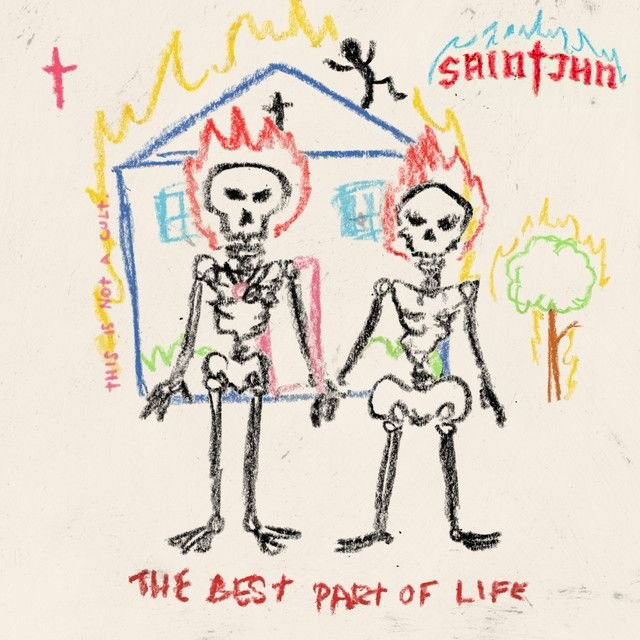
The Best Part of Life by SAINt JHN
The meaning of The Best Part of Life SAINt JHN centers on a love that feels stronger than fear, history, and even the chance that it may not last. It is a romantic song, but not a simple one. SAINt JHN frames love as the one clear thing in a life that has included guilt, distance, and confusion.
"The Best Part of Life" - SAINt JHN
You only love me when they're not watching
All nights, all nights, every night
Loading lyrics...
Unable to load lyrics
We're unable to display the lyrics at this time. Please try again later.
Rather than sounding naive, the track sounds chosen. They present devotion as something they arrive at after mistakes, not before them. That gives the song its emotional pull: it is about commitment that knows the risks.
A Love Song Built on Risk
From the opening, the song sets up tension between intimacy and secrecy. The repeated idea when they're not watching
suggests a relationship that feels honest in private but limited in public. That small phrase changes the entire mood. This is not just celebration; it is celebration under pressure.
The verses then push deeper into that pressure. The speaker asks who is really afraid of where the relationship leads, but the question sounds defensive as much as brave. They know how the story could end, yet they still move toward it.
Interpretation: the song is less about perfect romance than about accepting vulnerability. Love matters here because it is risky, not because it is safe.

Watch the official The Best Part of Life
music video
The Chorus Turns Love Into a Life Philosophy
The chorus carries the song’s main message with simple, direct language. The repeated claim that the best part of life is being with this person turns romance into a worldview. Even the phrase even if it end
is important. It admits that forever may fail, but the feeling is still worth naming.
That contradiction is the heart of the song. They sing about forever, then quietly allow for an ending, then imagine beginning again. The loop suggests that love is not valuable only if it lasts without interruption. It is valuable because it transforms experience while it is real.
This is one reason the hook feels so affecting. It sounds like a vow, but also like a confession from someone trying to believe in that vow while knowing life is unstable.
Guilt, Growth, and Self-Reckoning
One of the strongest parts of the lyric is the moment of self-accounting. SAINt JHN admits he was not always present and that he caused harm. The line about doing his share of crimes is clearly figurative in context; it points to emotional damage, recklessness, or relationship mistakes rather than a literal confession.
He follows that with a striking shift toward responsibility. The idea that he is now accountable gives the song more depth than a standard love anthem. This is someone looking back at the person they were and trying to become safer for the person they love.
The phrase comfortable closing my eyes
suggests rare peace. Instead of restlessness or paranoia, there is a sense that love has made inner quiet possible. That makes the relationship feel restorative, not just passionate.
Survival Imagery Gives the Song Its Weight
Another key section uses the language of survival: nobody else survived
and waving a flag alone. These are dramatic images. They make the relationship sound like something that has endured chaos, conflict, or emotional ruin.
This imagery does two things at once:
- It raises the stakes of the romance.
- It makes the bond feel earned rather than idealized.
Interpretation: the song may be comparing love to making it through a war zone of past behavior, public pressure, or failed relationships. The speaker does not claim to know the map or destination. They say, in effect, that the route is unclear, but the feeling is real.
That is why the line about not knowing the miles or routes matters. It frames love as an uncertain journey where certainty comes from attachment, not from planning.
How the Sound Supports the Meaning
Even without diving into every production credit, the song’s construction helps explain its message. SAINt JHN is known for blending melodic rap, alt-R&B, and atmospheric pop textures, a style heard across releases documented by sources like AllMusic and Genius artist pages. That hybrid approach fits this track well.
Here, the repetition feels central. Hooks return in waves, giving the promise of love a hypnotic quality. The melody is smooth, but the words carry tension. That contrast mirrors the song’s emotional design: calm surface, unsettled core.
The vocal delivery also matters. SAINt JHN often sounds both intimate and detached, as if they are confessing while still protecting themselves. In this song, that trait helps sell the conflict between private closeness and public uncertainty.
SAINt JHN’s Persona Matters Here
Carlos St. John Phillips, known professionally as SAINt JHN, built a career on songs that mix swagger with vulnerability, according to biographical overviews from Britannica and major music databases. That context matters because this song feels like a softer version of his usual emotional world.
They do not drop the edge entirely. Instead, they redirect it. The confidence remains, but it now serves tenderness. That makes the song feel mature: less about conquest, more about choosing one person despite fear.
The Most Plausible Meaning of The Best Part of Life SAINt JHN
The best reading is that the song describes love as the clearest source of meaning in an unstable life. It is about devotion after mistakes, privacy mixed with longing, and the decision to value love even when permanence is uncertain.
A second valid reading is that it captures a relationship that cannot fully exist in public. In that version, the song is partly joyful and partly frustrated, because real intimacy is happening behind closed doors.
Either way, the emotional center stays the same: being with this person feels like the closest thing to truth.
Final Take
The meaning of The Best Part of Life SAINt JHN is not that love is easy. It is that love can still be the best part of living even when it comes with secrecy, regret, and the possibility of loss.
That interpretation is based on the available lyrics and artist context, and like all song meaning analysis, it remains an informed reading rather than a confirmed single answer.








