
Why 'Fall for You' Still Hits So Hard
The meaning of Fall for You Secondhand Serenade comes down to one painful idea: love can feel strongest right when it seems closest to ending. The song captures a couple in a rough patch, then follows the speaker into a late-night moment of panic, honesty, and renewed attachment.
"Fall for You" - Secondhand Serenade
Could it be that we have been this way before?
I know you don't think that I am trying
Loading lyrics...
Unable to load lyrics
We're unable to display the lyrics at this time. Please try again later.
According to Songfacts, John Vesely said the song was about a relationship that was slowly falling apart until a sudden glimpse of life without that person made him realize how much he needed them. That comment matters because it frames the song not as a simple love ballad, but as a crisis song.
A breakup song that turns into a plea
From the opening, the relationship already sounds damaged. The speaker notices that at least they are not arguing tonight, which implies conflict has become normal. When he wonders if they have been here before and admits the other person thinks he is not trying, the song shows emotional fatigue on both sides.
This is why the track feels more real than many grand romance songs. It does not start with devotion. It starts with wear and tear.
Interpretation: The core tension is not whether love exists. It is whether love is enough to repair what repeated hurt has done.
Watch the official Fall for You
music video
The chorus is a promise made under pressure
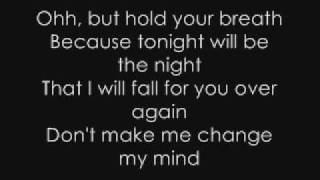
The big hook turns the song from observation into confession. When the singer says tonight will be the night
, he treats this moment like a final chance. The phrase fall for you over again
suggests rediscovery, not first love. He is choosing the relationship again after disappointment.
That distinction is the heart of the song. Plenty of love songs celebrate attraction. This one is about recommitment after damage.
There is also a dramatic line about not living to see another day. In context, it reads as emotional overstatement, the kind of language people use when they feel cornered by loss. It intensifies the fear of separation, but it works best as a sign of desperation rather than a literal plan.
Verse by verse, the song maps a failing relationship
The lyrics move in a clear emotional sequence:
- First, there is a pause in the fighting.
- Then comes self-awareness: he knows he has disappointed her.
- Next, he admits weakness, even though she once saw him as strong.
- Finally, he reaches for one more chance to hold the relationship together.
A key line in the second verse is I may have failed
. That brief admission gives the song weight. Instead of blaming the other person, the speaker admits he has fallen short. Right after that, he insists he has loved her from the start, which keeps the song balanced between guilt and sincerity.
Small images carry the biggest feelings
The imagery is simple, but it does a lot of work. Breath, sleep, night, and words all show up as small physical details that hold emotional pressure.
When he says hold your breath
, the song creates suspense, as if everything depends on what happens next. Later, talk is cheap
cuts through the drama with a blunt truth: promises only matter if they lead to action. That line keeps the song from becoming pure fantasy.
The nighttime setting matters too. Night often represents emotional honesty in pop-rock ballads because defenses are lower and consequences feel bigger. Here, night becomes the stage for a private reckoning.
Why the music makes the lyrics land
“Fall for You” appeared on A Twist in My Story and was produced by Butch Walker, a producer known for emotionally direct rock records. The song is built around piano, restrained backing, and a vocal that grows more strained as the chorus returns.
That arrangement supports the message perfectly. Piano songs often feel confessional because the instrument leaves space around the voice. Here, that space makes every apology and promise sound exposed.
As the track builds, the performance becomes less controlled and more urgent. That rising intensity mirrors the lyric’s emotional logic: the speaker is no longer calmly explaining the relationship. He is trying to save it in real time.
Artist context helps explain the honesty
Secondhand Serenade was John Vesely’s project, and that matters when reading the song. His early work was closely associated with acoustic confession and emotionally open writing. Vesely told MTV, as quoted by Songfacts, that this was the first song he wrote on piano and that it came together quickly because it reflected something happening in his life.
That backstory explains why the song feels so immediate. It sounds less like a crafted concept and more like a direct emotional document.
A realistic love song, not a perfect one
Part of the meaning of Fall for You Secondhand Serenade is its refusal to present romance as smooth or ideal. Love here includes frustration, weakness, repetition, and fear. Yet the song still argues that those messy parts do not erase love; they test it.
Interpretation: Another way to hear the song is as a portrait of someone who realizes love only when loss becomes visible. That does not make the feeling fake, but it does make it reactive. The song leaves open whether this late realization will truly fix anything.
That ambiguity is one reason it lasts. It offers a huge emotional promise, but it does not guarantee a happy ending.
Why listeners still return to it
The song remains memorable because it mixes plain language with intense feeling. A line like impossible to find
may be simple, but in the middle of a collapsing relationship, it sounds like a final truth. The song understands that people often recognize value most clearly when they think they are about to lose it.
In the end, “Fall for You” is about the moment when regret turns into clarity. It is less about falling in love for the first time than about deciding, through pain, to love again.
Disclaimer: This interpretation combines documented artist comments with close reading of the lyrics and sound. As with any song, listeners may hear different meanings in it.







