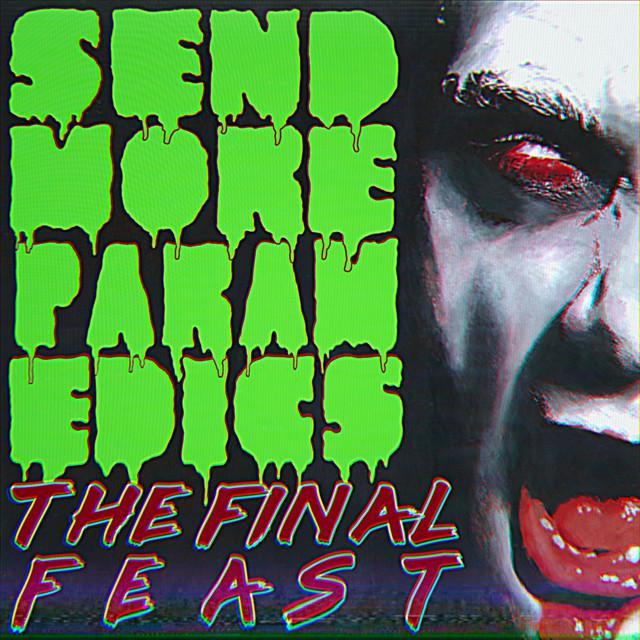
How "Human Capital" Turns Zombies Into Class War
The meaning of Human Capital Send More Paramedics comes through fast: this is not really a song about zombies. It is a song about what happens when fear, money, and class power meet during a public disaster.
"Human Capital" - Send More Paramedics
Damn virus freaked their fucking brains
Thousands at risk nowhere to go
Loading lyrics...
Unable to load lyrics
We're unable to display the lyrics at this time. Please try again later.
Send More Paramedics, a UK band known for mixing thrash, hardcore, and horror imagery, use an undead outbreak as a sharp social joke. The lyrics do not celebrate survival in a broad, heroic sense. Instead, they follow a speaker who sees chaos and immediately spots a market.
That choice is the key to the song. The monster is not only the zombie horde. It is the economic mindset that looks at panic and thinks: how can this be monetized?
A Horror Plot With a Business Model
On the surface, the story is simple. The dead rise, a virus spreads, and thousands are trapped. But the narrator is not frozen by fear. They start calling contacts, moving money, and trying to buy access before everyone else.
Early lines sketch the disaster in blunt, nasty terms, then pivot into opportunity. The speaker has people that I know
and gets a golden ticket
into a safer world. In plain terms, the song shows privilege at work: when public systems fail, private connections become a survival tool.
That is why the song feels so bitter. The outbreak creates danger for everyone, but escape is not shared equally. Some people are exposed to mass panic, while others use contracts, deals, and insider access to get behind the gates.
What the Lyrics Really Attack
The target is not subtle. The song criticizes profit-making during catastrophe, sometimes called disaster capitalism. The speaker treats emergency as an opening for investment, not a moment for solidarity.
The clearest statement comes in the repeated idea that profit to be made
sits inside the crisis. Right after that, the song adds that protection exists only if people can pay. Paraphrased, safety has become a product.
The strong are saved
The weak go to the wall
This is the article’s only multi-line lyric quote, and it sums up the moral logic of the whole track. In a fair society, crisis response should protect the vulnerable first. Here, the opposite happens. The rich and connected are preserved, while everyone else is treated as disposable.
The Narrator as a Symbol of Elite Opportunism
Interpretation: The “I” in the song is best understood less as a fully personal confession and more as a type. They represent an investor class that sees collapse as leverage.
That is why the lines about contracts and action matter so much. The speaker does not sound emotional about the dying city. They sound energized. Even the spread of investment is compared to contagion, which cleverly mirrors the virus itself.
In other words, the infection is both biological and economic. One disease turns bodies into monsters; the other turns citizens into assets.
Why the Title Hits So Hard
The title “Human Capital” is cold on purpose. In economics, the phrase can refer to the value of people’s labor, skills, and productivity. Here, the band twists that language into something grim.
Instead of seeing human beings as neighbors, families, or communities, the song frames them as units of value. That idea fits the whole lyric: people are sorted by usefulness, buying power, and access.
The title also adds irony. During a zombie outbreak, bodies are literally under threat. But the song suggests that long before the zombies arrive, society is already reducing people to resources.
Sound, Speed, and Satire
Musically, the song’s message works because the band does not deliver it like a lecture. They package it in aggressive, fast-moving metal and punk energy. That speed mirrors panic, urban violence, and the frenzy of markets moving during collapse.
The vocals hit with barked urgency, which makes the narrator sound harsh and transactional rather than reflective. The riffing and rhythm section likely add a sense of pursuit and pressure, pushing the listener through the song the same way the lyrics push through moral boundaries.
Interpretation: That contrast matters. The music is exciting, but the worldview inside the words is ugly. The band use that tension to make the satire sting.
Gated Safety and Urban Decay
One of the song’s strongest images is the move toward a gated community
with private security
. That detail takes the song out of pure horror fantasy and places it in a recognizable modern world.
This is not just apocalypse fiction. It is a critique of unequal cities, where wealth can buy separation from public suffering. The phrase about feeding off the carcass extends that idea. The city is dying, and predators are still finding ways to eat.
For US listeners especially, the message lands because it echoes real debates about privatized safety, neighborhood inequality, and who gets protected first when systems break down.
Final Take on the Meaning
The meaning of Human Capital Send More Paramedics is a savage critique of class privilege during catastrophe. Its zombies create the horror setting, but the real fear is a society where emergency response becomes a market and survival becomes a luxury.
Send More Paramedics turn gore into social commentary. By the end, the song argues that the worst infection may be the belief that every disaster is also a business opportunity.
Disclaimer: This interpretation is based on the lyrics provided and general genre context. Like many satirical songs, "Human Capital" can support more than one reading.







