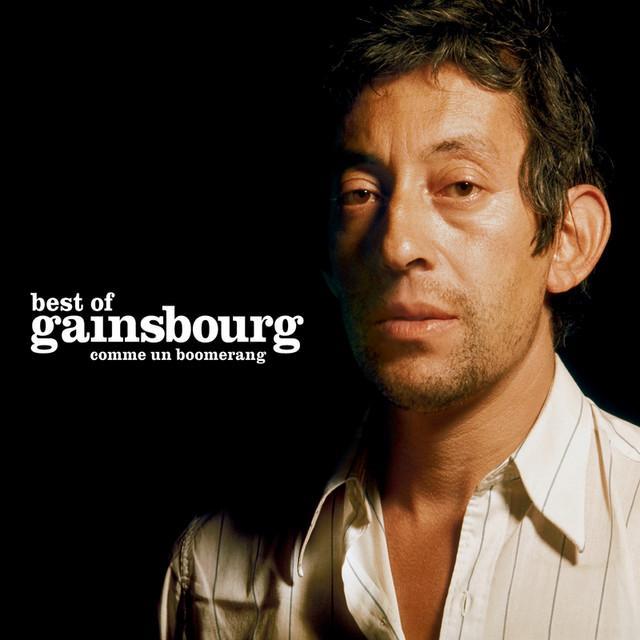
L'anamour by Serge Gainsbourg
The meaning of L'anamour Serge Gainsbourg starts with its strange title. It sounds close to the French word for love, but twisted. That small twist matters. Instead of a stable romance, the song presents love as absence, confusion, and drift.
"L'anamour" - Serge Gainsbourg
Aucun bateau sous mon transat
Je cherche en vain la porte exacte
Loading lyrics...
Unable to load lyrics
We're unable to display the lyrics at this time. Please try again later.
Written by Serge Gainsbourg, the song turns longing into a dreamlike puzzle. Its speaker is in love, but they do not sound safe inside that feeling. They sound stranded inside it.
A Love Song About Emotional Dislocation
At its core, “L’anamour” is about loving someone who is gone, distant, or emotionally unreachable. The singer searches for signs, routes, and exits, yet nothing lines up. Early images about planes, boats, and doors suggest movement, but every possible path seems blocked.
That is why the song feels so modern. It is not simply about heartbreak. It is about being suspended in a mental airport with no departure and no arrival. When the lyric mentions le mot exit
, the idea is not just physical escape. It points to a desperate need for clarity.
Interpretation: the invented title may imply “non-love” or love emptied out from within. Gainsbourg does not define it directly. Instead, they let the images create that meaning.
Watch the official L'anamour
music video
How the Verses Turn Confusion Into Story
The verses move like fragments from a half-awake mind. The speaker says they sing to les transistors
, which makes the confession feel lonely and impersonal. They are broadcasting pain into machines, not speaking directly to the beloved.
Then the song shifts to the phrase anamours transitoires
. That wording connects temporary love affairs to passing transit spaces. Romance becomes brief, unstable, and impossible to hold.
There is also a fairy-tale image: Belle au Bois Dormant
. Instead of a rescue fantasy, this reference deepens the song’s stillness. The beloved is linked to sleep, distance, and inaccessibility. She is present in the mind, but not truly available.
A Quick Narrative Map
- The speaker searches for direction and cannot find it.
- They retell an unusual love story to no real audience.
- Memory enters through photographs and past travel.
- Reality disappoints them again when imagined escape proves false.
That last turn is especially sharp. They think they hear aircraft, but it is only a fan. The song keeps offering hope, then taking it away.
The Chorus Is the Emotional Key
The chorus explains why all the surreal imagery matters. In simple words, the speaker admits both love and fear. The line Je t'aime et je crains
joins tenderness to anxiety in one breath.
Then comes the fear of losing their way. This is not just romantic doubt. It feels like a deeper loss of self. Love becomes a maze rather than a home.
The image of sowing grains de pavot
on the roads of “anamour” adds another layer. Poppies can suggest sleep, dreams, forgetting, or opium-like haze. So the chorus may describe someone scattering numbness across the path of broken love.
Je t'aime et je crains
De m'égarer
Those two short lines hold the song together. They strip away the puzzles and show the raw nerve underneath.
Symbols That Carry the Meaning
Several motifs repeat across the song and help explain the meaning of L'anamour Serge Gainsbourg:
- Transit and travel: planes, boats, exits, and propellers suggest movement that never fully happens.
- Sleep and sedation: the sleeping beauty reference and poppy seeds imply emotional paralysis.
- Fading color: photographs of Asia losing their brightness show memory decaying after separation.
- False signals: the fan mistaken for aircraft shows how desire can distort perception.
Together, these symbols build a world where love is not warm and direct. It is filtered through distance, memory, and illusion.
How the Sound Supports the Lyrics
Gainsbourg’s pop writing often relied on elegant arrangements and understated vocals, and that style suits this song. Even without quoting reviews, listeners can hear how the melody glides instead of bursts. The performance feels cool on the surface, but wounded underneath.
That contrast matters. A dramatic vocal might have turned the song into open heartbreak. Instead, the controlled delivery makes it feel more alienated. The music does not collapse; it floats. That floating quality matches the lyrics’ transit imagery and dream-state logic.
Interpretation: the arrangement can be heard as emotional camouflage. The beauty of the sound softens the pain, which makes the pain feel even stranger.
Artist Context Matters Here
Serge Gainsbourg was known for wordplay, provocation, and unusual emotional tones across French pop, chanson, and studio-crafted recordings. “L’anamour” fits that reputation because it turns a private romantic wound into a stylized language game without losing feeling.
The song was written by Gainsbourg, as provided in the context, and its pop setting is important. Pop usually promises immediacy and connection. Here, Gainsbourg uses pop form to describe disconnection instead.
That tension helps explain why the song still attracts close reading. It sounds seductive, but its inner world is unstable.
One More Way to Read It
There is another possible reading beyond simple heartbreak. Interpretation: the song may be about modern alienation itself. Machines, transit zones, police-station sky, technical film speed, and false engine sounds all place the speaker in a manufactured world. In that reading, the lost lover is real, but the deeper subject is how modern life turns feeling into static.
That does not cancel the personal reading. It expands it.
Why “L’anamour” Still Lingers
What makes this song memorable is not just sadness. It is the exact shape of that sadness: elegant, disoriented, and half-dreaming. The singer cannot arrive, cannot forget, and cannot fully wake up from love.
For many listeners, that is the true meaning of L'anamour Serge Gainsbourg. It captures the moment when love survives, but its world has already faded.
Disclaimer: This article offers interpretation based on the lyrics and known artist context. As with many Gainsbourg songs, ambiguity is part of the design, so other readings are also possible.








