Why “Gangang” Turns Success Into a Loyalty Test
The meaning of Gangang Sfera Ebbasta, Lil Mosey comes down to one big idea: success matters, but the people who were there before the success matter more. The song sounds glossy and confident, yet beneath that shine it keeps returning to memory, trust, and the fear of becoming disconnected from one’s roots.
"Gangang" - Sfera Ebbasta ft. Lil Mosey
Money gang, money gang
Sai che vengo da là
Loading lyrics...
Unable to load lyrics
We're unable to display the lyrics at this time. Please try again later.
Sfera Ebbasta and Lil Mosey use the track to show two sides of modern rap success. One side is luxury, motion, and money. The other is the crew, the neighborhood, and the emotional code that helped them survive before fame arrived.
What the Track Is Really Saying
At its core, “Gangang” is about identity through belonging. The title phrase is more than a chant. It becomes a way of saying: they know who they are because they know who they came up with.
Sfera’s opening memories are especially important. He looks back on a small neighborhood outside the city and recalls how youth felt simple, rough, and shared. When he suggests that some people leave while others stay, the song begins to frame growth as uneven. Not everyone escapes the same way, and not everyone handles adulthood the same way.
That is why the line about money and women coming and going matters so much. Even without quoting the whole passage, the idea is clear: fame brings change, but loyalty is supposed to stay fixed. In that sense, gang gang
is not just slang. It is the song’s moral center.
Watch the official Gangang
music video
Sfera Ebbasta’s Verse: Memory Before Flexing
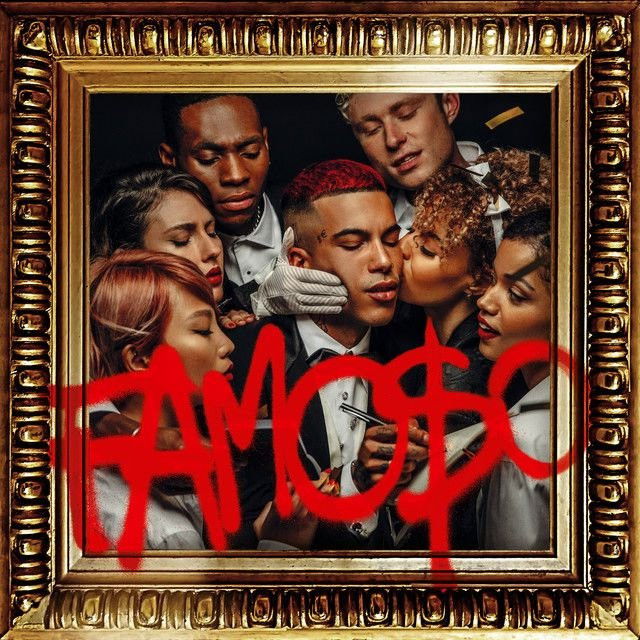
Sfera Ebbasta, one of Italy’s biggest rap stars, built much of his image around trap luxury and street-rooted style, and Lil Mosey is credited as a guest appearance on the song tied to Sfera’s album Famoso according to publicly available discography listings. That context matters because “Gangang” fits both artists well: it pairs international polish with a local past.
In Sfera’s section, the strongest writing is not the bragging. It is the storytelling. He remembers smoking in the park with friends and dreaming big. The dream itself was basic and universal: make money, get attention, become someone.
But then the verse complicates that dream. A friend is consumed by a relationship and stops showing up. Someone seen again now feels changed, yet also somehow unchanged. These small observations give the song emotional texture. They show that growing up is not one clean rise. It is messy, full of distance, and full of disappointments.
Interpretation: Sfera seems less interested in judging these people than in noticing how success sharpens separation. Fame does not create every fracture, but it reveals them.
Lil Mosey’s Verse: From Nothing to Motion
Lil Mosey brings a more American melodic-trap energy to the song. He is known for a smooth, melodic flow, and his breakout path included hits like “Noticed” and the Billboard Hot 100 top-10 single “Blueberry Faygo,” as widely documented in music reference sources. That style carries into “Gangang,” where his verse expands the song from neighborhood loyalty to international mobility.
He talks about going to the bank
, being up late, entering the studio with cash, and moving through cities with status. One vivid boast links his style to footballer Marcelo, while another mentions a jet to Milan. These details are not random. They place him inside a world where success is visible, portable, and always on display.
Still, his verse circles back to the same emotional claim as Sfera’s: they are just some young
people who once had very little. That memory of lack is the key to the whole feature. Even at their richest, both artists still define themselves against scarcity.
The Hook Works Like a Border Line
The chorus is catchy because it is simple, but its simplicity is strategic. Phrases like don’t try to step
and we are not the same
turn the hook into a boundary marker. The song is welcoming to insiders and cold to outsiders.
That helps explain why the repeated references to danger and distrust matter. When the lyrics mention being ready to bang bang
, the tone turns more defensive than narrative. They are not only celebrating friendship. They are protecting a circle.
Interpretation: The hook expresses both pride and paranoia. The group bond feels strong precisely because the wider world feels unreliable.
Sound, Production, and the Feeling of Distance
The production supports this meaning well. The beat uses a sleek trap structure: deep bass, crisp drums, airy space, and a loop that feels hypnotic rather than warm. That sound creates a cool emotional surface.
This matters because the lyrics move between old memories and present-day status. A sentimental instrumental might have made the song nostalgic. Instead, the beat stays icy and controlled, which makes the memories feel processed through fame. They are not reliving the past. They are carrying it into a harder, richer present.
The alternating Italian and English also adds to that effect. The track feels transnational, almost like loyalty itself has become exportable. Their hometown identity now moves through luxury rap’s global language.
Why the Song Sticks
What makes “Gangang” memorable is that it does not treat success as pure victory. It shows how money can amplify old bonds while also exposing weak ones. Friends drift. Trust shrinks. Romance can distract. Fame changes the room.
Yet the song still insists on one stable truth: tonight, they stay with their people. That is the emotional payoff behind the flexes.
For anyone searching for the meaning of Gangang Sfera Ebbasta, Lil Mosey, the best answer is this: it is a song about using wealth and confidence to defend a deeper fear of losing one’s roots. Its loudest word is about the gang, but its deepest subject is belonging.
Disclaimer: This interpretation is based on the lyrics, artist context, and the song’s sound. As with any song, meaning can vary from listener to listener.








