
BENEF by Simba La Rue
A hard-edged song about money, survival, and status, "BENEF" turns street detail into a blunt statement of identity.
"BENEF" - Simba La Rue
Provided by LyricFindVoluptyk
La rue, la vrai, ah
Ah, ah, ah-ah-ahLoading...Loading lyrics...
Unable to load lyrics
We're unable to display the lyrics at this time. Please try again later.
What the Meaning of BENEF Simba La Rue Comes Down To
The meaning of BENEF Simba La Rue centers on profit, pressure, and self-definition. The title itself points to gain or benefit, and the hook keeps returning to that goal. This is not a reflective ballad. It is a track that presents a mind focused on winning, moving carefully, and staying emotionally hard.
At the same time, the song is not only about cash. Beneath the threats and criminal imagery, there is a social story about coming from poverty and refusing fake glamour. When Simba says sto pensando al benef
, they reduce the world to a single priority: survival through gain. That makes the song feel both boastful and defensive.
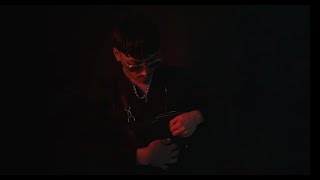
Watch the official BENEF
music video
From Poverty to Proof
One of the clearest ideas in the lyrics is class mobility. Simba describes misery as something that left a mark, then contrasts that past with having a contract and being able to call their mother to say they made it. That detail matters because it gives the song an emotional center.
Instead of celebrating luxury in a simple way, they draw a line between shallow display and real support. The line about not wearing gold and rather giving jewelry to their mother reframes success as family repair, not just personal flexing. In plain terms, the song argues that money matters most when it changes the life of someone who struggled with them.
Violence as Language, Not Decoration
The track is full of knives, shells, stolen cars, masks, and warnings. These details create a world where danger is ordinary. In that setting, violence is presented less as random chaos and more as the language of reputation.
When Simba says do la mano a pochi
, they are not just talking about friendship. They are describing a code of limited trust. The same goes for the repeated warning around behavior: people who do not know how to act get punished. Interpretation: the song frames the street as a harsh school where every lesson is physical, and every mistake can become permanent.
That does not make the claims automatically factual. In rap, extreme detail often serves performance, myth-making, and intimidation. But whether literal or exaggerated, the imagery supports the same message: the narrator wants to sound untouchable, disciplined, and feared.
The Hook Turns Ambition Into Obsession
The chorus is the key to why the song sticks. It repeats mobility, robbery imagery, and the goal of profit until ambition starts to sound like fixation. The phrase Audi 4X4
is not just a car image. It signals movement, force, and a bigger scale of operation.
Then the refrain returns to sto pensando al benef
. Because it comes back so often, the song narrows its emotional range on purpose. There is little room for romance, regret, or joy. Everything is filtered through gain, risk, and vigilance.
Botti in zona ma non è capodannoIn paraphrase, the area is loud with gunfire, not celebration.
That short image is one of the song’s best examples of contrast. A phrase linked to a holiday gets twisted into a sign of threat. It shows how normal life and violence blur together in the world the song builds.
Why the Details Feel So Cold
Much of the track’s power comes from inventory-like writing. Simba lists objects and procedures: trunks with hidden space, gloves, surveillance, controlled phones, garages, and stolen parts. Those details make the song feel procedural rather than emotional.
That choice matters. A more dramatic song might focus on pain directly. Here, pain is mostly buried under logistics. Interpretation: the coldness is part of the message. To survive, the narrator acts like a planner, not a dreamer.
There is also a refusal of decorative rap clichés. The line no oro, no VVS
pushes back against standard luxury symbols. Even when the song boasts, it tries to sound practical, not flashy. That makes the persona come off as someone who values function, secrecy, and leverage more than image alone.
How the Sound Supports the Story
Simba La Rue is part of a lane in Italian rap that often mixes drill intensity with multilingual street slang and clipped delivery. On "BENEF," the production tag and sparse beat design give the lyrics room to hit like commands rather than conversation. The track’s official release through Warner Music Italy helps place it inside a bigger commercial rap system, even as its voice stays raw.
The beat likely works best through tension: hard drums, dark space, and repetition. That sonic minimalism fits the subject. A crowded instrumental would weaken the sense of focus. Instead, the production lets each threat, boast, and memory land with blunt force.
For artist context, Simba La Rue has been widely covered in the Italian scene for a style tied to drill aesthetics and street realism, including profiles at Billboard Italia. That context helps explain why "BENEF" leans so heavily on intimidation, movement, and coded local language. The song is speaking from within that tradition, not outside it.
A Song About Success With No Peace
The most interesting thing about the meaning of BENEF Simba La Rue is that success never sounds relaxing. Even after the contract, the mindset stays tense. Money brings proof, but not calm. The narrator is still watching, calculating, and separating real allies from weak ones.
That tension is what gives the song weight. It is a victory track, but a paranoid one. It celebrates making it out while admitting that the habits of survival do not disappear once some money arrives.
Final Take
"BENEF" presents profit as both dream and trap. It is about escaping poverty, protecting family, and building fear as armor. Interpretation: the song’s deeper point is that when survival shapes a person early, even success gets measured in risk, not comfort.
This reading is an interpretation based on the lyrics, performance, and available context. Listeners may hear its details as literal autobiography, stylized storytelling, or a mix of both.







