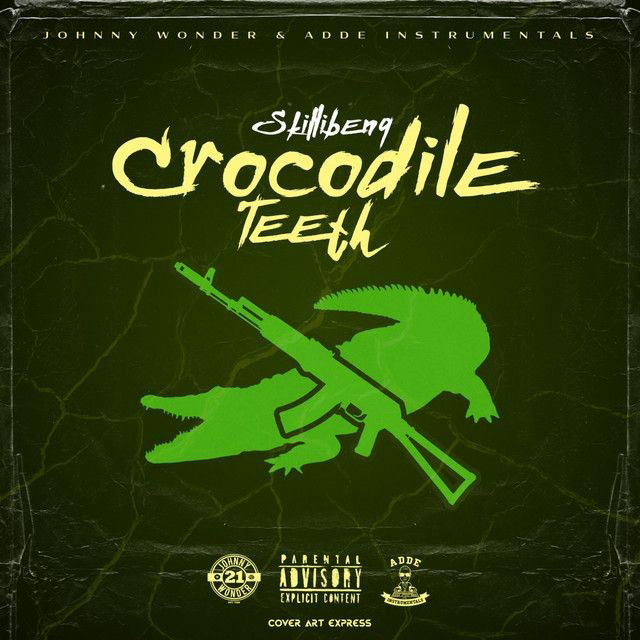
How Skillibeng Turns Fear Into Power
The meaning of Crocodile Teeth Skillibeng starts with raw intimidation, but the song does more than shock. It presents a persona built on menace, confidence, and local identity. Rather than telling a story with a beginning and end, Skillibeng stacks threats, boasts, and place-markers until the track feels like a warning siren.
"Crocodile Teeth" - Skillibeng
Yuh sih?
Brrp, yuh sih?
Loading lyrics...
Unable to load lyrics
We're unable to display the lyrics at this time. Please try again later.
Released in 2020, "Crocodile Teeth" became one of Skillibeng’s breakout songs and helped push his name beyond Jamaica. Credits for the track list Andreas Olov Nilsson, Emwah Warmington, John Scilipoti, Johnny Wonder, and Romaine Anthony Mcfarlene as writers, matching the information attached to the song’s official release and music databases.
The Core Message Hides in Plain Sight
At its center, the song is about dominance. Skillibeng frames the speaker as someone others should not test. The repeated line unnuh nuh bold like me
is not just an insult. It creates the track’s main divide: real bravery versus empty talk.
That idea keeps returning in different forms. When the song says others are only speaking while they are ready for action, it builds a code of authenticity. In this world, reputation matters, but reputation only counts if it is backed by force.
Interpretation: The song is not asking listeners to admire violence literally. It is using violent language as a symbol of status. In dancehall, exaggeration and threat often function as performance, a way to project power in a competitive space.

Watch the official Crocodile Teeth
music video
Why the Hook Matters So Much
The chorus is the engine of the song. Skillibeng repeats images of loaded weapons and unstoppable arrival, especially in phrases like crocodile teeth
and everything get fuck when I reach
. Paraphrased, the message is simple: once they show up, the whole atmosphere changes.
This repetition matters because it turns a boast into identity. The hook does not develop new information. Instead, it brands the speaker. Each return makes them sound more mythic, less like one person and more like a feared reputation moving through a neighborhood.
The Title Image Does Heavy Lifting
The title is memorable because it turns ammunition into an animal image. Crocodiles suggest ancient danger, sharp attack, and predator instinct. By describing a clip as full of crocodile teeth
, the song gives violence a physical texture.
Interpretation: That metaphor also fits Skillibeng’s style. Their delivery often sounds cold and lean, so the image feels less emotional than mechanical. The threat is meant to sound natural, like a predator acting on instinct.
EastSyde, Status, and Street Identity
Another key part of the meaning of Crocodile Teeth Skillibeng is belonging. The repeated mention of Yeah man ah EastSyde
is more than a shout-out. It ties the speaker’s power to a crew, a place, and a public identity.
That matters because the song keeps measuring truth through what the road knows. When the lyrics suggest people should ask around, the speaker is claiming that their name is already verified by others. In other words, they do not need to explain themselves; their environment supposedly speaks for them.
This is common in dancehall and drill-influenced street music. Place is proof. A neighborhood reference can work like a badge, a warning, and a source of pride all at once.
The Sound Makes the Threat Feel Colder
Production is a big reason the song hit so hard. The beat is sparse, punchy, and tense. There is little melodic softness to balance the words, so Skillibeng’s voice sits right at the front. That makes each line feel blunt and immediate.
The instrumental leaves open pockets of space between hits, which gives the threats room to echo. Instead of sounding rushed, the song sounds controlled. Even phrases like Draco ah sing
land with a strange calmness, as if the speaker is fully comfortable inside the chaos they describe.
Skillibeng’s flow helps too. They often use a clipped, conversational attack rather than a big emotional outburst. That restraint makes the performance more unsettling. The song does not sound wild; it sounds sure of itself.
Boast Rap, Dancehall, and Persona
For U.S. listeners, it can help to hear the track as both a dancehall record and a persona piece. The lyrics are extreme, but they belong to a long tradition of lyrical badness, where artists compete through nerve, style, and verbal force.
In that tradition, lines such as ask s'maddy pon di road
are not casual details. They are credibility claims. The speaker is saying that their image has been tested publicly. Whether listeners take that as fact or theater, the song wants the same result: fear and respect.
Interpretation: The track can also be read as a survival performance. In this reading, the speaker uses hardness because softness would be dangerous. The song then becomes less about random destruction and more about armor.
Why the Song Connected So Fast
"Crocodile Teeth" traveled because it is easy to feel even before every line is translated. The rhythm is sharp, the hook is sticky, and the central image is unforgettable. Skillibeng built a song that works as pure energy first and lyrical decoding second.
That balance helped the track cross over online and in club spaces. Even listeners who only catch parts of the patois can still understand the emotion: challenge, confidence, threat, and territorial pride.
The Bottom Line on the Meaning
The meaning of Crocodile Teeth Skillibeng is not subtle. It is a performance of danger used to create status. Through repeated warnings, predator imagery, and EastSyde pride, Skillibeng turns fear into identity.
The song’s real power lies in how efficiently it does that. With a minimal beat and a few unforgettable phrases, it builds a character who sounds larger than life.
Disclaimer: This interpretation is based on the song’s lyrics, performance style, and dancehall context. Meaning can vary from listener to listener.








