Bloodline by Slayer
Meta focus: the meaning of Bloodline Slayer comes down to predation, corrupted immortality, and the way violence spreads like a curse.
"Bloodline" - Slayer
Siphon your blood to me
Feel my wounds of your god
Loading lyrics...
Unable to load lyrics
We're unable to display the lyrics at this time. Please try again later.
A Vampire Story With a Human Point
Slayer’s “Bloodline” uses horror language, but its message is broader than monsters. On the surface, the speaker sounds like a vampire: they feed, they hunt at night, and they promise endless life through blood. Yet the song is really about domination. It turns blood into a symbol of youth, control, and inheritance.
That is why the central image hits so hard. When the narrator says let your bloodline feed my youth
, the idea is not just feeding. It is stealing another person’s future to keep their own power alive. In simple terms, the song imagines evil as something that survives by passing from body to body.

Watch the official Bloodline
music video
Where the Song Sits in Slayer’s World
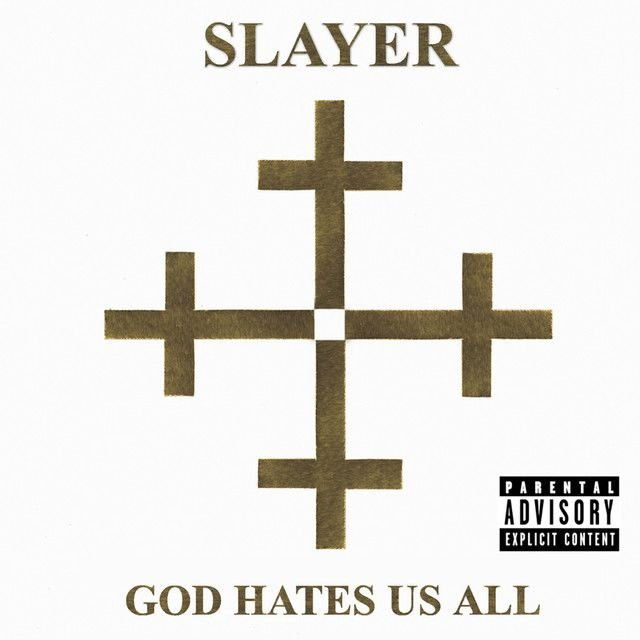
“Bloodline” appears on God Hates Us All, Slayer’s ninth studio album, released on September 11, 2001. The album was produced by Matt Hyde, and Hyde’s work on “Bloodline” helped convince the band to bring him in for the full record, according to the album’s documented production history. The record reached No. 28 on the Billboard 200 and was one of Slayer’s most discussed 2000s releases.Wikipedia: God Hates Us All
That context matters. This album leaned into raw aggression, religious conflict, murder, revenge, and psychological extremity. Kerry King said around this era that he wanted more realism and more depth in the material, even when the imagery was extreme.Wikipedia: God Hates Us All
Interpretation: “Bloodline” fits that goal by using vampire fiction to talk about very real fears: being consumed, being controlled, and losing the self.
The Speaker Is the Monster
One reason the song feels intense is its direct first-person voice. The narrator does not describe horror from a safe distance. They are the horror.
Early lines like I smell of death
and I reek of hate
introduce a character who fully accepts what they are. There is no regret in the song. The speaker treats violence almost like a birthright.
That is important to the meaning of Bloodline Slayer. The song is not asking listeners to admire this figure. It is placing them inside a predatory mindset where pain becomes fuel and murder becomes renewal.
How the Lyrics Build the Theme
Blood as power, not just gore
The song keeps returning to blood because it means more than injury. Blood stands for life itself, family inheritance, age, and legacy. So when the narrator wants to consume it, they want total possession.
A line like in my veins your eternity
turns feeding into absorption. The victim does not simply die; they become part of the predator’s ongoing life. That is what makes the song feel larger than a slasher scene.
Rebirth through destruction
The chorus is brutal but revealing. The phrase begin new life
sits right next to threats of murder. Slayer connects birth and death on purpose. The new life of the monster depends on the ending of someone else’s.
I'll kill you and your dreams tonight
Begin new life
This is the song’s clearest idea: immortality is presented as theft. The monster can only renew itself by destroying another person’s future.
Religion as a target
The lyrics also bring in God, faith, and damnation. Phrases about being condemned, defying God, and rejecting religion place the song inside the dark spiritual territory that runs through God Hates Us All.
Interpretation: These references do not necessarily preach a belief. Instead, they heighten the feeling that the speaker lives outside moral law. In Slayer’s hands, anti-religious language often works as a way to dramatize rebellion, alienation, and blasphemous power.
The Sound Makes the Threat Feel Physical
“Bloodline” is effective because the music mirrors the lyrics. The guitars move with a thick, stalking groove rather than nonstop speed, which gives the song a hunted feeling. The rhythm section pounds forward like a steady chase, while Tom Araya’s vocal delivery sounds commanding and feral.
The production on God Hates Us All was intentionally hard and stripped down. Matt Hyde used modern tools during recording and mixing, but the band kept digital effects fairly limited, aiming for a heavy, immediate sound rather than something polished or atmospheric.Wikipedia: God Hates Us All
That choice helps “Bloodline.” Instead of sounding dreamy or gothic, it sounds close and physical. The monster is not floating through a castle; they are right in front of the listener.
Two Strong Ways to Read It
Horror reading
The most obvious reading is literal. “Bloodline” tells a vampire tale full of feeding, infection, hunting, and cursed immortality. In that version, the song is a compact horror movie set to a crushing groove.
Metaphor reading
A second reading is more symbolic. The vampire can stand for any force that survives by draining others: abuse, war, addiction, trauma, or inherited violence. The title “Bloodline” supports that wider idea because it points to ancestry and transmission.
Interpretation: In this reading, Slayer is not only describing a monster. They are describing how evil replicates itself.
Why “Bloodline” Still Connects
Part of the song’s lasting appeal is that it is simple in structure but rich in imagery. It delivers the thrills of metal horror while also hinting at something deeper: the fear that cruelty does not die easily. It gets passed on.
For listeners exploring the meaning of Bloodline Slayer, that is the key takeaway. The song imagines immortality not as a gift, but as a curse built on consumption. Its monster lives forever, but only by taking life from others.
That makes “Bloodline” more than just a violent track. It is a dark study of hunger, legacy, and the terrible idea that power can reproduce itself through blood.
Disclaimer: This interpretation is based on the song’s lyrics, musical choices, and documented album context. As with many Slayer songs, meanings can vary from listener to listener.







