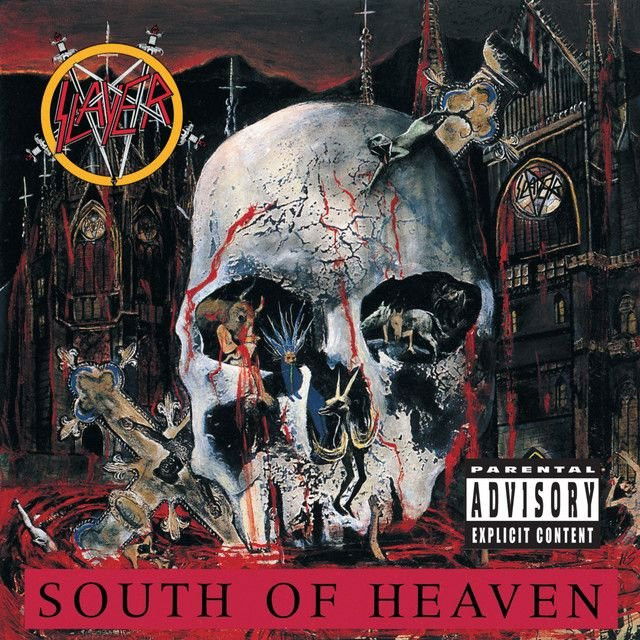
Why Slayer’s “Ghosts of War” Still Feels Alive
The meaning of Ghosts of War Slayer becomes clearer once they stop treating the song like a simple horror story. Beneath the violent language, Slayer builds a track about how war does not end when the shooting stops. It lingers in memory, in rage, and in the way violence keeps repeating itself.
"Ghosts of War" - Slayer
Once forgotten soldiers come to life.
Fallen mercenary, dormancy is done,
Loading lyrics...
Unable to load lyrics
We're unable to display the lyrics at this time. Please try again later.
Written by Jeff Hanneman and Kerry King, the song comes from Slayer’s late-1980s run, when the band had already become one of thrash metal’s defining acts. Hanneman in particular was known for writing songs that drew on war imagery and dark history, not to praise them, but to confront their brutality. That context matters when reading a song like this.
The Real Threat Is Memory
At the center of the song is the idea that the dead are not fully gone. Early lines describe silent fighters waking again, as if buried conflict has found a new body. The image of sleeping souls
rising suggests that the past has unfinished business.
Interpretation: those “ghosts” do not have to be literal spirits. They can also be memories of combat, national grudges, or the emotional damage left by war. When the lyric says memories can't ignore
, it points to a mind trapped by what came before.
That is why the chorus matters so much. The command Rise ghosts of war
sounds like a summoning. Instead of peace, the song imagines old violence being called back into action. The result is not mourning. It is reactivation.
Watch the official Ghosts of War
music video
A Voice With No Mercy
One of the most striking shifts comes in the later section, where the voice turns personal and direct. The speaker says I deal in pain
and then claims total control over life and death. That makes the song feel less like a history lesson and more like an embodiment of war itself.
There are a few ways to read that speaker:
- Interpretation 1: They are a revived soldier, now consumed by killing.
- Interpretation 2: They are war personified, speaking as an endless destructive force.
- Interpretation 3: They are trauma, taking over the human mind.
All three readings fit because the song keeps blurring the line between battlefield action and inner damage. The phrase seal your fate
pushes that feeling further. Once war returns, choice disappears.
How the Lyrics Move From Graves to Action
The song’s structure helps explain its message. It unfolds in a tight arc:
- It begins with buried fighters and forgotten losses.
- It shifts to memory, scorn, and unresolved anguish.
- It erupts into scenes of assassination and inflicted pain.
- It ends with a dominating voice that sounds unstoppable.
That movement is important. Slayer does not start with combat. They start with what was left behind. Then they show how remembrance becomes violence again.
Memories can't ignore
Anguish of before
Satisfy the scorn
Rise ghosts of war
In those repeated lines, the song connects pain, resentment, and rebirth. The dead come back because the living never resolved what happened.
Slayer’s Sound Turns Theme Into Force
The meaning of Ghosts of War Slayer is not only in the words. It is also in the sound. Slayer’s thrash style relies on speed, hard-edged riffing, abrupt transitions, and a sense of constant attack. That musical language makes the song feel like panic and pursuit, not reflection.
The guitars slash rather than sing. The drums push forward like marching under pressure. The vocals are delivered with a cold, clipped aggression that avoids sympathy. Instead of sounding sad about war, the performance sounds possessed by it.
That difference matters. Many anti-war songs use grief to make their point. Slayer often uses excess and terror. They make violence sound ugly, mechanical, and dehumanizing. In that sense, the production is part of the argument.
Artist Context Helps Explain the Darkness
Slayer have long been associated with extreme imagery, and that has sometimes led listeners to mistake depiction for endorsement. But their catalog regularly returns to war, death, and human cruelty as subjects to dramatize, not celebrate. Hanneman especially wrote songs fascinated by the way history keeps producing horror.
Even years later, the band’s intensity remained central to how fans and critics described them. In a Loudwire feature, drummer Dave Lombardo reflected on favorite Slayer songs and highlighted the force and distinct identity of the band’s material. That wider reputation supports why a track like this still lands: Slayer made songs that felt physically dangerous.
Two Strong Readings of the Song
The Battlefield Reading
On the most direct level, the song is about dead soldiers rising from failed wars. The references to forgotten fighters, targets, and killing make that reading easy to support. In this version, the ghosts are the casualties of history returning for revenge.
The Psychological Reading
Interpretation: the stronger reading may be that war survives inside the mind. The song’s stress on memory, anguish, subconscious lies, and repeated pain points toward trauma. Here, the ghosts are flashbacks, hatred, and inherited violence.
That second reading gives the song lasting power. It turns a violent thrash track into a statement about what war leaves behind.
Why the Song Still Hits
The meaning of Ghosts of War Slayer lasts because the song refuses clean endings. It suggests that wars are never fully past. They return as memory, identity, and appetite for more destruction.
That is why the title works so well. These are not just ghosts from war. They are the ghosts war creates and keeps feeding.
Disclaimer: This article offers interpretation based on the lyrics, Slayer’s artistic context, and the song’s musical style. Meanings can vary from listener to listener.







