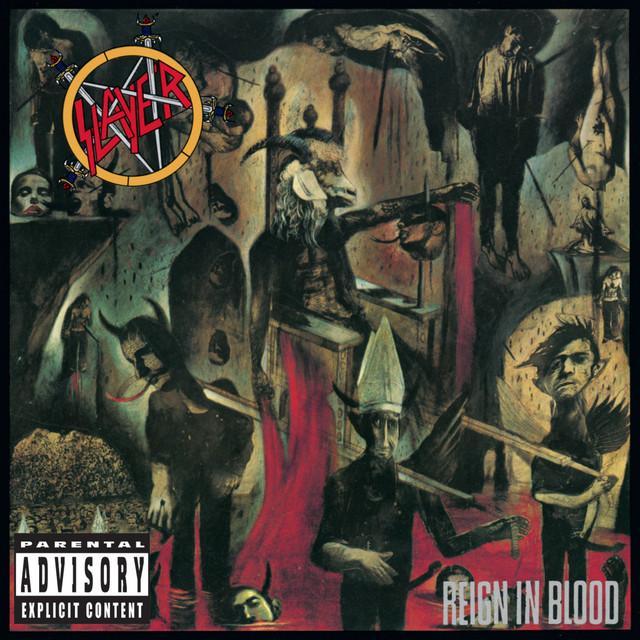
Piece By Piece by Slayer
Slayer’s "Piece by Piece" is one of the band’s clearest examples of horror-as-songwriting. For listeners searching for the meaning of Piece By Piece Slayer, the short answer is this: they present a brutal, first-person portrait of a killer with no empathy, using gore as a way to create dread rather than sympathy.
"Piece By Piece" - Slayer
A vast sadistic feast
The only way to exit
Loading lyrics...
Unable to load lyrics
We're unable to display the lyrics at this time. Please try again later.
The song is shocking on purpose. Its words do not ask the audience to like the speaker. Instead, they trap them inside a violent mind that sees people as objects, meat, and trophies. That is what gives the track its staying power in extreme metal.
A Horror Monologue, Not a Moral Speech
At the center of the song is a narrator who speaks with cold control. They do not sound conflicted, sad, or confused. They sound certain. Phrases like no emotion
and death is all I see
make that emotional emptiness the point.
This matters because the song is not really about motive. It is about the absence of humanity. The killer is almost less a person than a force moving through a nightmare, hidden and unstoppable. When the lyric says the only way out is piece by piece
, it turns death into a mechanical process.
Interpretation: The real subject may be dehumanization itself. The victim is reduced to parts, and the killer reduces themself to appetite and instinct. That is why the song feels so blunt and ugly: it wants the listener to feel that loss of personhood.

Watch the official Piece By Piece
music video
How the Lyrics Build Fear Step by Step
The song works because it moves in a clear sequence. Even with its short length, it tells a grim story:
- A space of terror is established.
- The victim is denied control.
- The body is described as being destroyed.
- The killer keeps souvenirs and continues hunting.
Early lines create a trap. The phrase you have no choice
removes agency at once. Then the song adds anonymity: my face you will not see
. That hidden identity makes the threat larger, because the danger is everywhere and nowhere.
Later, the imagery becomes more physical and more theatrical. The killer does not just attack; they display the results. That detail turns private murder into ritualized domination. In plain terms, the violence is not only about killing. It is about control, possession, and spectacle.
A vast sadistic feast
The only way to exit
Is going piece by piece
Those lines act like the song’s mission statement. They describe the scene as a feast, which suggests appetite, consumption, and pleasure. That choice of image makes the narrator seem even more monstrous.
The Chorus Turns Violence Into an Idea
The repeated hook matters because it takes a single murder scene and expands it into a whole worldview. The title phrase is not just descriptive. It becomes the song’s philosophy: destruction happens in fragments, with the victim broken down physically and symbolically.
Interpretation: That repetition may also reflect how Slayer often use extreme images to test the listener’s limits. The chorus is simple enough to stick in the head, but what it says is deeply disturbing. That clash between catchy structure and awful content is part of the song’s power.
Why the First-Person Voice Feels So Disturbing
The song is written in first person, which is key to its effect. They do not describe a murderer from a safe distance. They let the murderer speak directly. That removes any buffer between the listener and the violence.
There is also no clear backstory, which keeps the song from becoming psychological realism. The killer is less a fully explained character than a voice of pure sadism. In horror terms, that makes them scarier. There is nothing to reason with.
This is where the meaning of Piece By Piece Slayer becomes clearer: the song’s goal is not explanation. It is immersion in terror.
How Slayer’s Sound Carries the Meaning
Musically, "Piece by Piece" matches its words with speed and attack. Slayer’s early style relied on rapid riffing, aggressive drumming, and Tom Araya’s sharp vocal delivery, all of which make the song feel like a chase scene rather than a reflection.
That musical approach became central to Slayer’s identity across their catalog, even as the band later experimented on albums like Diabolus in Musica in 1998, produced by Rick Rubin and noted for down-tuned guitars and a groove-heavy feel. That record reached No. 31 on the Billboard 200, showing how far the band’s sound could stretch while staying commercially visible. Even so, many fans still look back to earlier tracks like "Piece by Piece" for the band’s purest blast of thrash violence.
In this song, the riffing feels clipped and relentless. The drums push forward without mercy. Araya’s voice does not mourn what is happening; it spits it out. That performance choice matters because it keeps the song in the realm of menace, not tragedy.
Artist Context: Shock, Extremity, and Thrash Metal
Slayer built their reputation on pushing lyrical and sonic boundaries. Kerry King, credited here as writer in the provided context, often leaned into blunt, confrontational images. In Slayer’s world, offensive content was part of the band’s identity, meant to provoke and unsettle.
That does not mean every lyric is autobiographical or ideological. Often, it means the band is using exploitation-film intensity as a metal language. The violence in "Piece by Piece" fits that pattern. It is designed to horrify, not to offer a balanced moral lesson.
Final Take on the Song’s Meaning
So, what is the meaning of Piece By Piece Slayer? They turn murder into horror theater to show a mind emptied of empathy and filled with appetite, control, and destruction. The song’s lasting force comes from how directly it presents that nightmare voice.
For some listeners, it is simply a savage thrash song. For others, it is a study in dehumanization. Both readings can work, because Slayer leave little comfort and almost no distance between the audience and the terror.
Disclaimer: This interpretation is based on the lyrics, performance, and known artist context. Song meaning can vary by listener, and not every reading reflects the band’s stated intent.







