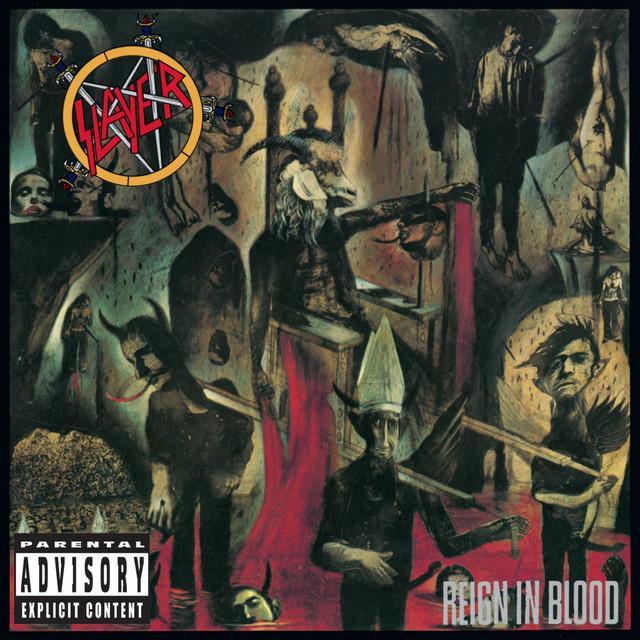
Postmortem by Slayer
Why This Slayer Song Feels Like a Descent
The meaning of Postmortem Slayer starts with a simple idea: this is not just a song about dying. It is a song about a mind being pulled toward death until death feels like the only form of release. Slayer turn that idea into something theatrical, ugly, and unforgettable.
"Postmortem" - Slayer
Holds the key to his own death
Entering a tomb of a corpse yet conceived
Loading lyrics...
Unable to load lyrics
We're unable to display the lyrics at this time. Please try again later.
Released on Reign in Blood in 1986, the track was written by Jeff Hanneman and helped define Slayer's brutal early identity. Factually, it sits on one of thrash metal's most influential records, produced by Rick Rubin. In that setting, “Postmortem” sounds less like a confession and more like a horror vision acted out at full speed.

Watch the official Postmortem
music video
The Core Meaning Beneath the Gore
At its heart, the song presents a speaker trapped in hatred, decay, and self-destruction. The opening image of a funeral for the human spirit suggests emotional death before physical death. From there, the lyrics move into tombs, blood, insanity, and extinction.
Interpretation: They frame death as both terror and temptation. That is why one of the song's most unsettling ideas is the paradox that wanting death becomes a way to keep going. When the lyric points toward wanting to die
, it is not offering wisdom. It shows a mind so damaged that survival and self-erasure have become tangled together.
This is what gives the song weight beyond shock value. The gore is vivid, but the deeper subject is inner collapse.
A Voice Already Half Buried
The narrator feels unstable from the start. They speak as if they are inside a body and outside it at the same time, watching their own ruin unfold. Images like tighten the tourniquet
and cold touch of death
make the body feel trapped, pressured, and no longer fully alive.
That matters because the song never gives the listener a stable reality. Instead, it shifts between physical violence, occult language, and mental breakdown. When the speaker mentions blind witchery
, the point is not that magic is literally saving them. It suggests desperation so deep that they will reach for any ritual, any belief, any dark promise.
Interpretation: The song's speaker may be talking to themselves as much as to anyone else. Even the command to die feels like an internal voice, not a conversation.
How the Lyrics Move From Burial to Madness
The song unfolds in a rough sequence:
- It begins with spiritual death and confinement.
- It moves into a search for escape beyond ordinary life.
- It turns toward ritual and rebirth imagery.
- It ends in full psychological disintegration.
That progression is important to the meaning of Postmortem Slayer. The lyrics do not stay in one place. They fall deeper. Early lines suggest depression and entrapment. Later ones describe blood, shadows, and a coming final call. By the end, the speaker sounds consumed by obsession.
The most chilling section is where the mind itself becomes the battlefield. References to skeletons in the mind and sanity being torn apart shift the song from graveyard horror to psychological horror. In plain terms, the real monster may be the speaker's own thoughts.
Do you want to die!The line lands like a violent interruption, forcing the song's buried urge into the open.
Sound as Meaning: Why the Music Hits So Hard
Slayer's arrangement is a huge part of the song's effect. Reign in Blood is famous for its speed, precision, and compact runtime, and “Postmortem” uses that formula brilliantly. The guitars slash through tight, choppy riffs before opening into bigger, marching patterns. Dave Lombardo's drums push everything forward with a sense of pursuit, not relief.
Tom Araya's vocal is crucial too. He does not sound reflective or sad. He sounds like he is spitting out visions faster than they can be contained. That performance keeps the song from becoming mournful. Instead, it feels feverish.
Interpretation: The music mirrors panic turning into inevitability. Fast sections feel like mental overload. Heavier grooves feel like doom arriving. That contrast helps explain why the song feels both chaotic and locked in.
The Hanneman Factor and Slayer's Wider Themes
Jeff Hanneman often wrote lyrics that pulled from horror, violence, war, and extremes of human behavior. That does not mean every song is literal autobiography. In Slayer's case, shocking imagery was part of the band's artistic language and their attempt to push metal into more frightening territory.
“Postmortem” fits that approach perfectly. It uses death not just as subject matter, but as atmosphere. On Reign in Blood, it also works structurally as a setup for “Raining Blood,” one of the album's most famous songs. Together, the tracks feel like one long nightmare escalating toward apocalypse.
For listeners in the United States, that context matters. Slayer emerged in a moment when thrash metal was getting faster and more confrontational. “Postmortem” stands out because it combines that aggression with imagery that feels almost claustrophobic.
Two Strong Ways to Read It
There are at least two solid readings of the song:
A portrait of suicidal ideation
Interpretation: The body imagery, fixation on death, and collapsing sanity can be read as a dramatized picture of a person trapped in self-destructive thought.
A horror-fantasy rebirth ritual
Interpretation: The tomb, chants, blood, and rebirth language can also suggest a death-to-new-life transformation, but one presented in grotesque metal form rather than spiritual comfort.
Both readings fit because the song constantly blurs inner and outer horror.
What "Postmortem" Ultimately Says
The meaning of Postmortem Slayer lies in that blur. The song is about death, but more specifically about what happens when a person lives so close to death in their mind that reality starts to warp around it. Its images are graphic, yet its real power comes from how clearly it captures dread, obsession, and loss of self.
That is why the track still hits so hard. It is not just violent. It is psychologically suffocating.
Disclaimer: This interpretation is based on the lyrics, Slayer's known style, and the song's musical context. As with most art, listeners may hear different meanings in it.







