Why Slayer’s “Raining Blood” Still Terrifies
The meaning of Raining Blood Slayer is not subtle, and that is part of why the song still hits so hard. Slayer take revenge, fear, and end-times imagery and blow them up into something mythic. Instead of a grounded story, they give listeners a nightmare vision where betrayal leads to a violent return to power.
"Raining Blood" - Slayer
A lifeless object, alive
Awaiting reprisal
Loading lyrics...
Unable to load lyrics
We're unable to display the lyrics at this time. Please try again later.
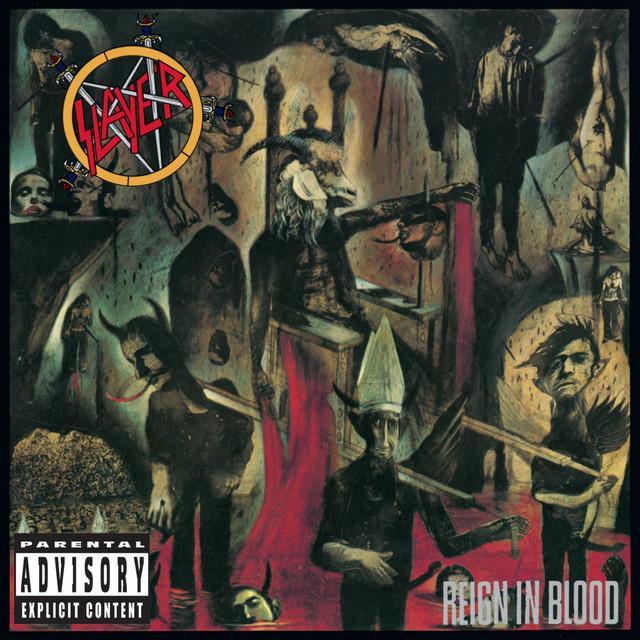
Released on Reign in Blood in 1986, the track closed one of thrash metal’s most important albums. That record was produced by Rick Rubin and helped push Slayer into a larger spotlight during the rise of extreme metal. In that context, this song feels like a final eruption: short, brutal, and unforgettable.
A Revenge Story Told Like an Apocalypse
At its core, the song presents a speaker who has been trapped, wronged, and is now ready to strike back. Early lines place them in a limbo-like state, and then the mood shifts toward payback. When the lyric mentions trapped in purgatory
, it sets up a voice that is suspended between death and return.
From there, the imagery gets larger and more supernatural. The sky turns hostile, blood falls from above, and the speaker is no longer powerless. The repeated title phrase raining blood
is less a plot point than a total atmosphere. It suggests that revenge has grown so huge it affects the whole world.
Interpretation: Many listeners read the song as a fantasy of vengeance after betrayal. The narrator seems to remember enemies and imagine a moment when all restraint disappears.

Watch the official Raining Blood
music video
Who Is Speaking in the Lyrics?
The voice in the song feels personal, but it is not intimate. They do not confess weakness for long. Instead, they move quickly from suffering to domination.
A key clue is the reference to treacherous past
. That phrase points to betrayal, and it helps explain why the speaker’s return is so merciless. By the end, they are not asking for justice. They are claiming rule through terror.
That final shift matters. The line now I shall reign in blood
turns the song from survival into conquest. The speaker does not just escape punishment or pain. They become the force of punishment.
The Chorus Turns Horror Into Power
The title hook is simple, but it does a lot of work. It gives the song its most famous image while also showing the speaker’s mindset. Blood here is not just gore. It becomes weather, landscape, and destiny.
From a lacerated sky
Bleeding its horror
Those lines make the scene feel cosmic. The violence is no longer limited to a person or a battlefield. Even the heavens seem wounded. That scale is why the chorus sticks. It sounds like revenge so absolute that nature joins in.
Interpretation: The chorus can be heard as the moment when private anger becomes total destruction. The song stops being about one grudge and starts sounding like the end of moral order itself.
Images of Blood, Sky, and Stone
Several symbols carry the song’s meaning.
Blood as punishment and rebirth
Blood obviously suggests death, but here it also marks rebirth through violence. The speaker’s return is announced through red imagery and bodily damage. In that sense, blood is both the proof of suffering and the fuel of revenge.
The sky as a broken moral world
When the lyrics describe a red sky, the world feels overturned. A sky should give light or shelter, but this one bleeds. That image suggests a universe where normal rules have failed.
Stone rules being destroyed
The phrase about rules made of stone hints at old law, fixed order, or sacred limits. When the song imagines those rules being abolished, it marks a total break from structure and restraint.
How Slayer’s Sound Deepens the Meaning
The song’s impact is not only in the words. Slayer’s performance makes the meaning feel physical. Jeff Hanneman and Kerry King’s riffs move with sharp, cutting force, while Dave Lombardo’s drumming drives the track like an attack that never fully lets up. Tom Araya’s vocal delivery sounds more like a command than a conversation.
The famous storm opening is especially important in live memory and recorded versions of the song. It frames the track like a horror film before the band crashes in. Once the main riff lands, the music feels both controlled and chaotic, which matches the lyric’s blend of ritual and violence.
This is one reason Reign in Blood became such a landmark album in metal history: its songs were fast and aggressive, but also precise. On “Raining Blood,” that precision makes the fantasy more vivid. The band do not just describe terror. They stage it.
Why the Song Endures
Part of the song’s staying power comes from how cleanly it delivers its idea. There is no wasted space. The language is stark, the images are huge, and the arrangement builds toward a feeling of unstoppable force.
It also matters that Slayer were working at a moment when thrash metal was getting faster and darker. “Raining Blood” became a defining song because it pushed that style into something almost cinematic. Many later metal bands borrowed its mix of speed, atmosphere, and violent symbolism.
For casual listeners, the meaning of Raining Blood Slayer is easiest to understand this way: it is a revenge nightmare turned into music. It uses hellish imagery not to tell a realistic story, but to dramatize betrayal, wrath, and total collapse.
Final Take on Slayer’s Dark Classic
“Raining Blood” remains powerful because it turns a simple idea—revenge after betrayal—into an apocalyptic vision. The lyrics paint the scene, but the guitars, drums, and vocals make that scene feel alive.
That is why the song still feels bigger than its runtime. It is not just about violence. It is about violence imagined as destiny.
Disclaimer: This interpretation is based on the lyrics, the song’s musical design, and Slayer’s place in metal history. Like many extreme metal songs, it can support more than one reading.








