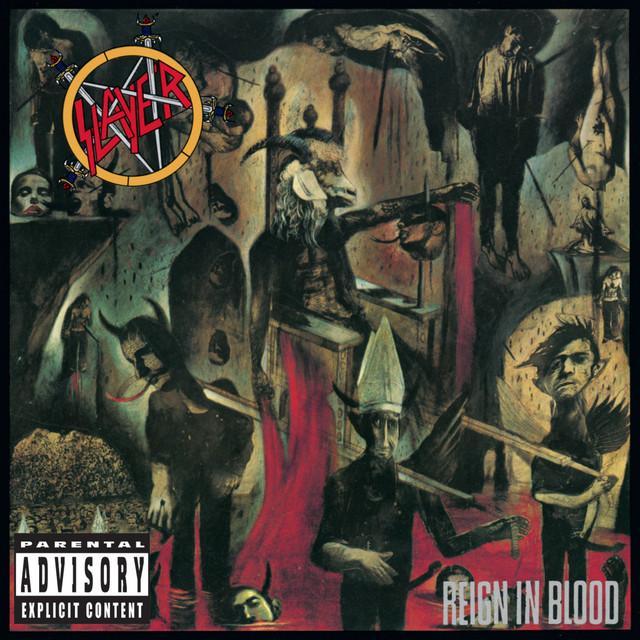
Reborn by Slayer: Death Cannot End the Threat
Slayer turn a witch-burning story into a fast, brutal warning: killing the body does not kill the force behind it.
"Reborn" - Slayer
Provided by LyricFindConvicted witch, my life will end
At midnight on the stake
My dedicated life was spentLoading...Loading lyrics...
Unable to load lyrics
We're unable to display the lyrics at this time. Please try again later.
The Core Meaning Behind the Fire
The meaning of Reborn Slayer is fairly direct on the surface and richer underneath. The song tells a horror tale from the point of view of a condemned woman, likely framed as a witch, who is about to be burned alive. Instead of pleading for mercy, they promise return, revenge, and spiritual survival.
That makes the track less about death itself and more about the failure of punishment. The people in power think execution will solve the problem. The narrator insists it will only begin a new cycle. When they declare I will be reborn
, the song turns from courtroom doom into supernatural threat.
Interpretation: beyond the horror plot, the song can also be heard as a fantasy of resistance. The authorities jail, judge, and burn someone they fear, but they still cannot control what comes after.

Watch the official Reborn
music video
Who Is Speaking in "Reborn"?
The narrator speaks in first person, but the article can still describe the voice from the outside: they sound defiant, furious, and certain of their return. Early lines establish imprisonment and execution, with images of a locked cell, shackles, and the stake. Those details make the story feel medieval and theatrical, like a witch-trial nightmare.
Short phrases sharpen that identity. Convicted witch
gives the accusation. No crime
suggests injustice, or at least a narrator who rejects the court's power. Then signed the book of red
pushes the song into occult territory, where the condemned person claims a bond with dark forces.
The result is a classic Slayer move: the voice is vivid, extreme, and unsettling. They do not ask listeners to admire the speaker. They ask them to feel the force of the speaker's rage.
A Story Told in Four Violent Beats
The song moves quickly, but its narrative is clear:
- Condemnation: the narrator is jailed and sentenced to die.
- Declaration: they claim death will not last and promise return.
- Mockery of authority: priests, curses, and legal punishment are presented as weak.
- Revenge prophecy: those who killed them will face the power they tried to erase.
That last point matters most. The threat is not just survival; it is payback. A phrase like hatred comes to life
turns emotion into a creature of its own. In other words, the song imagines revenge as something physical, almost unstoppable.
What the Chorus Really Does
The repeated hook gives the song its meaning. Each time the narrator returns to the idea of living again, the verses become less about execution and more about transformation. The body may burn, but the identity only hardens.
Death means nothing, there's no end
I will be reborn
That is the emotional center of the song. It is simple, blunt, and memorable. Interpretation: the chorus frames rebirth not as healing or redemption, but as the rebirth of wrath. This is not resurrection in a spiritual comfort sense. It is resurrection as retaliation.
Symbols, Motifs, and the Song's Dark Logic
Several recurring images carry the message:
Fire, Blood, and Ritual
Burning at the stake is both punishment and initiation. The execution is supposed to erase evil, but in the narrator's logic it completes a ritual. Fire becomes the doorway to return.
Priests and False Morality
The song attacks religious authority, especially through the figure of the priest. The narrator sees holy judgment as fake, weak, or hypocritical. That conflict gives the track a strong anti-authority edge.
Fate Versus Control
The authorities think they control destiny through prison and death. The narrator claims a bigger power is already in motion. That tension drives the song's menace.
Why the Music Makes the Threat Hit Harder
"Reborn" appears on Reign in Blood, Slayer's 1986 album produced by Rick Rubin with the band, engineered by Andy Wallace, and released on October 20, 1986. It is track seven, runs just 2:11, and credits lyrics to Kerry King and music to Jeff Hanneman. The album is widely seen as a landmark thrash record.
Just as important, the production style helps explain the song's effect. Rubin said his goal with fast metal was clarity, so it would not become a blur; he wanted a "pulse," not mud. Kerry King later praised the result because listeners could hear that the notes were truly on time. That cleaner attack matters in "Reborn." The riffs feel like blades, and Dave Lombardo's drumming pushes the song forward like a chase scene.
Because the track is so short, there is no escape valve. It strikes, threatens, and ends before the tension can fade. That economy matches Reign in Blood as a whole, a 29-minute album often praised for intensity and precision.
Album Context Matters Here
There is no widely sourced band quote that gives an official line-by-line explanation of "Reborn." That matters. Any close reading should be labeled as interpretation, not proven author intent.
Still, album context helps. Tom Araya said Slayer's lyrics around this era moved more toward subjects "on a social level" than the more overt Satanic focus of earlier work. Even so, "Reborn" keeps occult imagery front and center. That blend may be why the song feels so Slayer-like: it uses horror symbolism, but it also stages a struggle over power, fear, punishment, and belief.
Final Take on the Meaning of Reborn Slayer
The best way to understand the meaning of Reborn Slayer is as a revenge fantasy about failed execution. The song imagines a condemned outcast who turns death into fuel and terror into prophecy.
Interpretation: listeners can hear it as a literal horror story, or as a darker metaphor about ideas and people that authorities try to destroy but only make more dangerous. Either way, Slayer make one point clear: in this song's world, the end never stays the end.
Disclaimer: This interpretation is based on the lyrics, album context, and documented production history. Slayer have not provided a widely sourced, definitive explanation of "Reborn," so parts of this reading remain interpretive.







