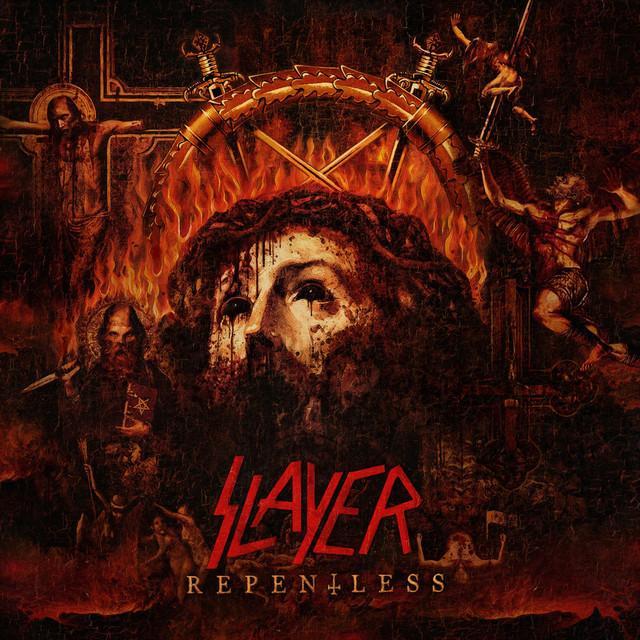
Repentless by Slayer
The meaning of Repentless Slayer becomes clearer once they treat the song less like a plot-driven story and more like a mission statement. This is a song about defiance, disgust, and survival through extreme music. It is also tied to grief: Kerry King said he wrote it for late guitarist Jeff Hanneman, calling it the “Hannemanthem,” which gives its rage a personal core even when the words sound broad and aggressive.Songfacts
"Repentless" - Slayer
Dealing with insanity every fuckin' day
I hate the life, hate the fame, hate the fuckin' scene
Loading lyrics...
Unable to load lyrics
We're unable to display the lyrics at this time. Please try again later.
Where the song points first
On the surface, the lyrics attack vanity, social rot, and empty competition. The speaker sounds fed up with public life, fame, and the ugly side of the metal scene. When they say hate the fame
and fuck their vanity
, the point is not subtle: they reject false status and the egos that come with it.
But the song does more than complain. It turns anger into identity. The repeated idea of having no regrets
frames the song as a refusal to apologize for who they are. That is the key to the meaning of Repentless Slayer: they present relentlessness as a code for living, especially when the world feels broken.

Watch the official Repentless
music video
A tribute hidden inside the attack
Factually, this song has a strong Jeff Hanneman connection. King told Metal Hammer, as quoted by Songfacts, that he wrote it for Hanneman and tried to capture how Hanneman saw the world.Songfacts Hanneman died in 2013, and Repentless became Slayer’s first studio album without him.Wikipedia
That context matters because it changes the song’s tone. What might sound like generic hostility starts to feel like memorial language. The narrator’s toughness becomes a way of preserving Hanneman’s spirit: blunt, dark, funny, and unwilling to soften.
Why the title matters so much
King also explained that he made up the word “repentless” and understood it to mean having nothing to repent for and no reason to wish they had lived differently.Metal Injection That invented term is central to the song’s message.
Interpretation: the made-up word works because it sounds bigger than “unapologetic.” It feels like a final state, as if regret itself has been burned away.
How the lyrics build that meaning
The verses move through three linked ideas:
- The world is chaotic and corrupt.
- Public life is poisoned by ego and performance.
- Music is the one thing that still feels real.
That third point is easy to miss, but it is crucial. The song says playing this music is what keeps the speaker alive. Even when they mention war, anarchy, and social collapse, the emotional center is not destruction for its own sake. It is endurance through art.
Live fast
On high
Repentless
Let it ride
This short chorus reads like a creed. It strips life down to momentum, intensity, and acceptance of consequences. Interpretation: the hook is not asking for redemption. It is choosing motion over self-doubt.
The speaker’s voice: personal, but also symbolic
The lyrics use first-person language, yet the speaker stands for more than one individual. They sound like a performer, a band, and a worldview all at once. That blend fits King’s own explanation that “Slayer is repentless,” suggesting the song speaks for the group’s identity as much as one character’s emotions.Songfacts
This is why lines about the stage and the road matter. They turn the song into a portrait of a musician who finds purpose only in performance. Everyday society feels fake; the stage feels honest.
How the sound carries the message
Musically, “Repentless” delivers exactly what its title promises. The riffing is sharp and fast, the drums hit with marching force, and Tom Araya’s vocal style sounds barked rather than sung. That keeps the song confrontational from the first seconds.
There is production history behind that punch. Repentless was produced by Terry Date, not longtime Slayer collaborator Rick Rubin, and it was released in 2015 as the band’s twelfth and final studio album.Wikipedia Gary Holt also played lead guitar on the title track, while Paul Bostaph handled drums.Wikipedia
Interpretation: the tight, modern production helps the song feel like a reset after loss. It honors Slayer’s old speed and violence, but it also sounds like a band proving they can still hit hard in a new era.
The wider Slayer context
The album Repentless debuted at No. 4 on the Billboard 200, the band’s highest US debut, which shows how strongly this era connected with listeners even after Hanneman’s death.Wikipedia The title track became a statement piece because it summed up the band’s public image: uncompromising, abrasive, and unashamed.
Its video pushed that image further with a prison-riot concept directed by BJ McDonnell and featuring actors like Danny Trejo.Songfacts That visual world matches the song’s mood of lawless pressure and violent release.
Final reading: rage, grief, and identity
So, what is the meaning of Repentless Slayer in the deepest sense? It is about refusing regret in a world they see as rotten. It is about using anger as fuel. And, with Hanneman in the background, it is also about carrying a fallen bandmate forward by turning his spirit into a slogan.
The song’s harshness is real, but it is not empty. Beneath the aggression sits a simple idea: if the world is ugly and fame is hollow, then the only honest response is to live fully, play loudly, and never look back.
Disclaimer: This interpretation mixes documented artist comments with critical reading of the lyrics and music. Meanings can vary from listener to listener.







