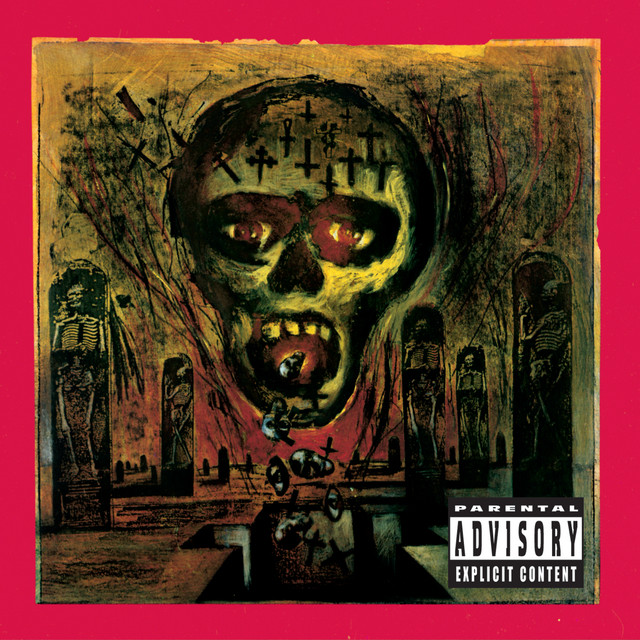
Skeletons Of Society by Slayer
Slayer turn apocalypse into a warning: when a culture rots from within, the end feels both sudden and long overdue.
"Skeletons Of Society" - Slayer
Provided by LyricFindMinutes seem like days
Since fire ruled the sky
The rich became the beggarsLoading...Loading lyrics...
Unable to load lyrics
We're unable to display the lyrics at this time. Please try again later.
Why the meaning still hits hard
The meaning of Skeletons Of Society Slayer comes down to collapse: social, moral, and physical. The song imagines a world after disaster, where the old rules are gone and survivors are left with wreckage, memory, and dread. According to Songfacts, the track is about “the evils in society, the decline of civilization, and the eventual Armageddon we are headed for.” That summary fits the song’s imagery closely.
Released on Seasons in the Abyss in 1990, the song arrived when Slayer were sharpening their mix of thrash speed and darker, more atmospheric writing. The album is widely documented as part of the band’s classic run, and it followed South of Heaven and Reign in Blood, two records that helped define extreme metal’s sound and reach AllMusic.

Watch the official Skeletons Of Society
music video
A survivor’s-eye view of the end
One reason the song feels so vivid is its point of view. The lyrics are told by someone living through the aftermath, not by an outside narrator. They remember a time when fire ruled the sky
and the social order flipped, with the powerful reduced and the foolish suddenly elevated. That inversion matters because it suggests disaster does not just destroy buildings; it scrambles values.
The speaker also sounds trapped in memory. Phrases like memories linger in my brain
frame trauma as something ongoing, not past. They are not calmly describing history. They are reliving it.
The timeline inside the lyrics
The song moves in a loose sequence:
- A catastrophic event arrives fast.
- Nature and society both break down.
- False hope appears in the form of prophecy or escape.
- The speaker realizes only ruin remains.
That middle stage is important. When the lyric mentions a prophet promising that paradise lies elsewhere, Slayer seem to mock easy answers. Even after mass destruction, people still chase comforting stories.
What the chorus is really saying
The refrain is the song’s emotional center. When the speaker sees fragments of what used to be
, the image is bigger than rubble. Interpretation: Slayer use those fragments as symbols of a failed civilization. What remains are not citizens in any healthy sense, but skeletons of society
—the bare bones of culture after meaning has been stripped away.
That title phrase works because it can be heard two ways at once:
- literal remains after catastrophe
- spiritual remains after moral collapse
This dual meaning is why the song has lasted. It can describe a bombed-out future, but it also speaks to any era where people feel public life is hollowed out.
Images of decay, fear, and judgment
The lyrics keep returning to poisoned weather, darkness, and silence. Acid rain, corrosion, burning winds, and dying daylight create a setting where the environment itself has turned hostile. That makes the apocalypse feel total. It is not only war or politics; even the sky has become an enemy.
There is also courtroom language in the line about winds acting like judge and jury
. Interpretation: this suggests punishment, as if humanity is facing a sentence for its own violence and arrogance. Slayer do not clearly say who delivers that judgment—God, nature, war, or humanity itself—so the song stays open.
A brief multi-line passage shows the song’s core mood:
Shades of death are all I see
Skeletons of society
Fragments of what used to be
These lines compress the whole idea: the speaker sees only remains, and those remains stand for a civilization that has already spiritually died.
Nuclear nightmare or broader social warning?
Many listeners hear the song as a nuclear fallout narrative, and that reading makes sense. The scorched skies, poisoned rain, and rapid end all point in that direction. Public comments collected on Songfacts specifically mention nuclear war and fallout as likely inspirations.
But the track does not need to be limited to one event. Interpretation: it can also be heard as a broader warning about social decay. The repeated sense that humanity is losing its mind turns the song into more than disaster fiction. It becomes a moral portrait of a species that may have caused its own ruin.
How Slayer’s sound carries the message
Kerry King wrote the song, and the arrangement helps sell its bleak meaning. Instead of relying only on breakneck speed, Slayer use a heavier, slower stomp in parts of the track, letting dread build between bursts of force. That matters because panic alone would make the song feel chaotic; this pacing makes it feel inevitable.
Tom Araya’s vocal delivery is also key. He does not sound theatrical here as much as haunted and severe. The guitars grind rather than soar, and the rhythm section keeps everything marching forward like a death procession. Produced by Rick Rubin for Seasons in the Abyss, the album is known for balancing aggression with clarity, which lets the imagery land without getting buried in noise Discogs.
Why the song still resonates
The meaning of Skeletons Of Society Slayer still connects because it captures a familiar fear: that a culture can rot long before it fully falls. People may hear nuclear war, environmental collapse, or political breakdown in it, depending on their moment. Slayer keep the images sharp but the cause slightly open, which gives the song lasting power.
In the end, the track is less about one disaster than about what remains after human systems fail. It asks what society looks like when only its outline is left.
Disclaimer: This interpretation blends documented context with critical reading. Like many songs, “Skeletons Of Society” can support more than one meaning.








