Why Smokie’s Love Song Is Really a Test
The meaning of If You Think You Know How to Love Me Smokie comes down to one big idea: love is not proven by confidence alone. In this song, they present romance as something that must be shown through guidance, steadiness, and emotional clarity.
"If You Think You Know How to Love Me" - Smokie
Motorbike ride in the mid-day heat.
Dust that hung from the desert skies -
Loading lyrics...
Unable to load lyrics
We're unable to display the lyrics at this time. Please try again later.
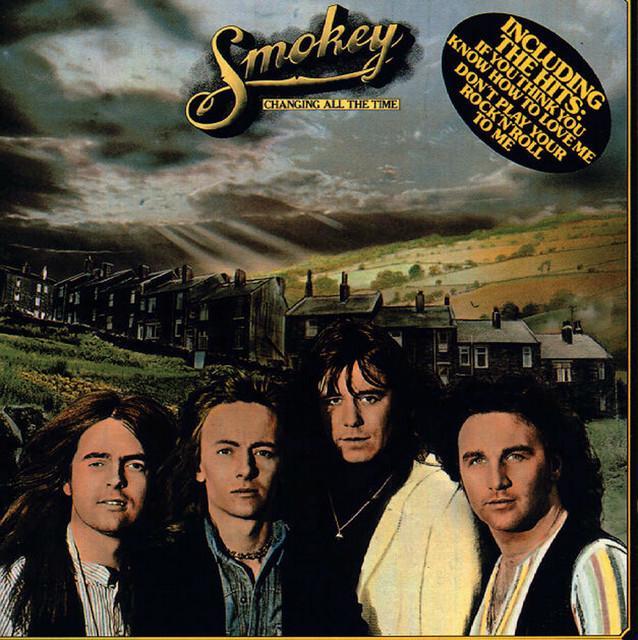
Released in June 1975 and later included on Changing All the Time, the track was written and produced by Nicky Chinn and Mike Chapman, with Chris Norman singing lead on the original version. It became one of Smokie’s early major hits, reaching No. 3 in the UK and charting across Europe.
A Love Song Built on Conditions
At first, the song sounds easygoing and melodic, but the lyric is more demanding than it first appears. The speaker does not simply ask to be loved. They ask the other person to prove they understand what love requires.
That is why the chorus matters so much. The repeated challenge, know how to love me
, is less about romance in the abstract and more about practical care. The lyric suggests that wanting someone is not enough; staying power depends on whether the partner can offer direction and support.
Interpretation: this makes the song feel almost like a boundary-setting anthem hidden inside soft rock. The speaker is open to love, but not blindly.

Watch the official If You Think You Know How to Love Me
music video
Motion, Heat, and Risk in the Verses
The verses are full of movement. They describe a downtown street
, a motorbike ride, desert dust, a nameless town, and a beach where the couple finally rests. These details create a cinematic feeling, but they also do something more important: they place love inside unstable settings.
Nothing in these scenes feels settled. There is speed, heat, dust, shadow, and night. Even when the pair are together, the world around them feels uncertain. The line about the wild, wild side
reinforces that sense of danger and excitement.
Interpretation: the journey imagery suggests a relationship still being tested. The speaker is not looking back on a secure bond. They are in the middle of deciding whether this person can be trusted.
The Chorus Changes the Whole Story
The chorus reframes everything that comes before it. After the restless scenes in the verses, the hook makes clear what the speaker really wants: not thrill, but leadership. The phrase lead the way
is the emotional center of the song.
That does not necessarily mean control. It sounds closer to reassurance. The speaker seems to say: if the other person truly understands them, they should be able to guide the relationship toward safety and commitment.
if you really, really want me to stay,
you've got to lead the way.
This is the one place where the song becomes direct. The condition is simple: if the partner wants love to last, they must act in a way that makes staying possible.
Who Holds the Power Here?
One of the most interesting things about the lyric is its balance of vulnerability and strength. On one hand, the speaker admits uncertainty. They place their emotional future in someone else’s hands and ask to be helped toward understanding.
On the other hand, they are not passive. They set the terms. They do not promise devotion first and ask questions later. Instead, they ask the partner to show that they can stand by me
before the relationship becomes permanent.
Interpretation: this power balance is part of why the song still works. It is tender, but it also has standards.
How Smokie’s Sound Supports the Meaning
Musically, the song sits in the soft rock and pop rock lane associated with Smokie’s mid-1970s work. Its smooth arrangement keeps the emotional stakes from becoming melodramatic, which actually strengthens the message. Rather than shouting a demand, the band lets the hook glide.
That contrast matters. The melody is warm and accessible, but the lyric is careful and conditional. The production by Chapman and Chinn gives the song a polished, radio-friendly feel, while Norman’s vocal adds a slightly husky sincerity. Together, those elements make the message feel human rather than harsh.
In other words, the music says comfort, while the words ask whether comfort has been earned.
Smokie’s Moment and Why the Song Connected
This single helped establish Smokie in 1975, especially after a performance on Top of the Pops boosted its visibility. Its chart success in the UK, Ireland, South Africa, Sweden, Norway, Germany, and the Netherlands shows that listeners heard something widely relatable in it.
Part of that appeal is how clearly the song expresses a common fear: what if someone says they know love, but cannot actually live it? That question does not belong to one era.
It also helps explain why other artists, including Pat Benatar, later recorded it. The song’s emotional setup is flexible enough to fit different voices and styles.
A Final Reading of the Song’s Heart
So what is the meaning of If You Think You Know How to Love Me Smokie? At its core, it is a song about testing love through action. Attraction is present, adventure is present, and desire is present, but none of those are enough on their own.
The singer asks for something harder: proof of steadiness. In that sense, Smokie turn a catchy 1975 single into a quiet statement about emotional responsibility.
That is why the song still lands. Beneath the easy melody, it asks a serious question: if love is real, can it offer direction when life feels uncertain?
Disclaimer: This interpretation is based on the lyrics, recording context, and public release history. Like many songs, it can support more than one valid reading.







