
Charlie Still Smirks by SNFU
A punk song that refuses to romanticize evil
The meaning of Charlie Still Smirks SNFU starts with its target: Charles Manson as a lasting symbol of violence, manipulation, and media spectacle. Rather than explore him with mystery or fascination, SNFU strip him down to something uglier and smaller. Their narrator presents him as a killer who still enjoys the attention, still wears defiance like a mask, and still deserves no freedom.
"Charlie Still Smirks" - SNFU
Her blood's on the fridge
Those hippies, they've gone too far
Loading lyrics...
Unable to load lyrics
We're unable to display the lyrics at this time. Please try again later.
That approach fits SNFU’s style on FYULABA, their 1996 album released on Epitaph Records. The record is widely described as hardcore punk and skate punk, and it was produced by the band, with recording at Mushroom Studios and mixing by Dave Ogilvie, known for work with Skinny Puppy. Critics praised the speed and musicianship even when they were split on the tabloid-heavy lyrics. Those album facts shape this song’s meaning because it lives in that same world of fast riffs, black humor, and sharp disgust.
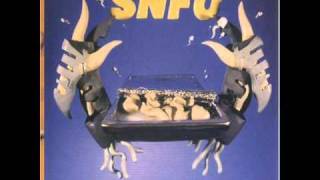
Watch the official Charlie Still Smirks
music video
The story in the verses: crime, cult, and backlash
The opening verse throws the listener into a murder-scene image with A starlet lay dead
. It is not there to retell every detail of the Manson murders. Instead, it quickly points to celebrity death, broken ideals, and the collapse of 1960s counterculture myths.
The next lines blame those hippies
and mention acid and a farm. In plain terms, the song connects the Manson Family to a warped version of the peace-and-love image often linked to that era. Interpretation: SNFU are not making a careful social history argument. They are using punk shorthand to say that a movement once sold as peaceful could also hide delusion, manipulation, and violence.
Then the song moves to leadership. The line about followers needing a leader
makes the song less about one criminal mind and more about the people who wanted belonging, purpose, or power. That is one of the track’s strongest ideas: cults do not grow only because a leader is evil. They also grow because followers are vulnerable to someone promising meaning.
Why the chorus matters more than the details
The chorus is where the song’s judgment becomes unmistakable. It says up for parole today
, then answers that legal possibility with contempt. The key phrase is still smirks
. That image matters because it suggests not remorse, but arrogance.
In other words, the song’s anger is not only about past crimes. It is about the idea that someone could remain proud, amused, or untouched by the pain they caused. Interpretation: the “smirk” works like a symbol of unrepentant evil. Even behind bars, he still seems to win a little if he can keep the public staring at him.
The chorus also rejects redemption in blunt terms. The narrator does not argue for nuance or rehabilitation. They argue that some acts place a person beyond sympathy. In punk fashion, the message is direct, rough, and intentionally unforgiving.
Dark humor as a weapon, not a distraction
One of the song’s most startling lines is the rumor-joke about Axl Rose. It sounds absurd, crude, and almost tossed off. But that shock tactic has a purpose.
On FYULABA, reviewers noticed Ken Chinn’s interest in celebrity culture and tabloid-style references. This song uses that same approach to show how Manson existed not just as a criminal, but as a grotesque celebrity. The song mocks the media ecosystem around him: killers become headlines, headlines become myths, and myths attract ugly fascination.
So the joke is not just there for provocation. Interpretation: it shows how pop culture can swallow even horror and turn it into gossip, rumor, and spectacle.
How SNFU’s sound sharpens the message
Musically, SNFU deliver the song with the speed expected from a band working in hardcore punk. FYULABA was praised for being rapid, crunchy, and chorus-driven, and that matters here. The guitars do not leave much room for reflection. The drums push forward. The vocal attack sounds sneering and urgent.
That musical setting supports the lyric’s moral stance. A slower arrangement might have invited contemplation or tragedy. This one pushes toward disgust and ridicule. The band seem to be saying that Manson does not deserve grandeur; he deserves a fast, cutting dismissal.
There is also a tension that makes the song interesting: the hook is catchy, almost fun, while the subject is monstrous. That clash mirrors the larger theme of media turning horror into something repeatable and consumable.
A wider reading of the song’s meaning
At the most basic level, the meaning of Charlie Still Smirks SNFU is outrage at Charles Manson and rejection of any fantasy that he should rejoin society. But there is a second layer.
Interpretation: the song is also about the danger of charisma. It shows how damaged communities and insecure followers can create room for a manipulator. At the same time, it warns that public culture keeps feeding such figures attention long after their power should be dead.
That makes the title especially sharp. “Still” matters. It suggests endurance: the crimes are old, the man is imprisoned, and yet the smirk remains. So does the public memory. So does the appetite for spectacle.
Final takeaway
SNFU turn a notorious true-crime figure into a short, furious statement about manipulation, notoriety, and moral disgust. They do it with hardcore speed, bitter humor, and a chorus built around one ugly facial expression.
For listeners asking about the meaning of Charlie Still Smirks SNFU, the clearest answer is this: it is a song about refusing to confuse infamy with importance. It argues that some public monsters survive by keeping the world fascinated, and it answers that fascination with contempt.
Disclaimer: This interpretation is based on the song’s lyrics, historical context, and documented information about SNFU and FYULABA*. Meaning in music can remain open to different readings.*








