What "Napalm in the Morning" Really Means
The meaning of Napalm in the Morning Sodom starts with shock, but it does not end there. Sodom’s song turns war into a scene of fire, fear, and spiritual collapse. Rather than telling a neat story, they throw the listener into confusion and pain.
"Napalm in the Morning" - Sodom
Multiple rites I'm gonna lose my way
Paraphilliac body control
Loading lyrics...
Unable to load lyrics
We're unable to display the lyrics at this time. Please try again later.
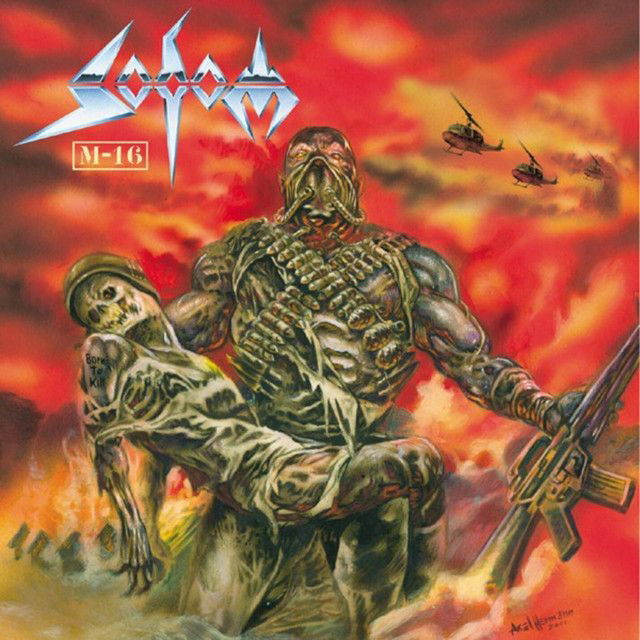
Factually, the track appears on M-16, Sodom’s tenth studio album, released on October 22, 2001. That record is a Vietnam War concept album, and the song includes an intro sample from Apocalypse Now. The album was recorded at Spiderhouse Studios and co-produced by Harris Johns, a key name in German metal production. Those details are widely documented in reference material on the album and its release history.
A Vietnam War Song Without Heroism
At its core, this track is about warfare as dehumanization. The lyrics describe bodies burning, identity falling away, and death arriving from above. When the chorus speaks of fire is raining
and ends with Napalm in the morning
, it frames combat as total destruction, not courage.
That matters because M-16 is built around the Vietnam War. Across the album, Sodom use military imagery, weapons, and battlefield perspectives. Here, they narrow in on one terrible symbol: napalm. In American memory, napalm is tied to images of villages burning, civilians fleeing, and soldiers losing any moral center. The song leans into that historical weight.

Watch the official Napalm in the Morning
music video
The Voice Feels Trapped Inside the Blast
One reason the song feels so intense is that the speaker is unstable. The lyrics move between personal torment, direct threat, and battlefield description. A line like you’re gonna die
sounds less like calm narration and more like panic, command, or doom echoing through combat.
Interpretation: They may be writing from a split point of view. Part of the song sounds like a victim or witness. Another part sounds like war itself speaking—cold, unstoppable, and stripped of empathy. That shifting voice fits the song’s central idea: in extreme violence, the self starts to break apart.
The Images Turn Flesh Into Evidence
The song’s strongest images are physical. It describes skin, burning, suffocation, and a carbonized torso
. These are not random gross-out details. They show how war reduces a person to damaged matter.
There is also a repeated loss of identity. One line suggests the skin peels away a timid mask
. Paraphrased, the idea is that under extreme force, all social roles vanish. No rank, belief, or fear can protect the body from fire.
That is why the song feels larger than a single battle scene. It is not just about one attack. It is about what industrial violence does to the human form and the human soul.
Fire, Faith, and Moral Collapse
Another key layer in the meaning of Napalm in the Morning Sodom is spiritual ruin. The lyrics mention evil prophets, lost religion, destiny, and surrender to gods. This language pushes the song beyond military realism.
Interpretation: They may be showing how war creates a false religion of destruction. Bombs fall from the sky like judgment. Leaders act like prophets. Soldiers and civilians are forced into rituals of death they did not choose.
The chorus makes that feeling bigger:
Unholy evil prophets rise
Fire is raining
final thunder roaring
These short phrases turn the battlefield into an apocalypse. The enemy is not just another army. It is the idea that violence becomes sacred, inevitable, and beyond reason.
How the Sound Delivers the Message
Sodom are a thrash metal band, and that matters here. The song’s meaning is not only in the words. It is also in the speed, attack, and pressure of the performance.
The guitars churn forward with a hard, martial feel. The drums push the song like incoming strikes, and Tom Angelripper’s voice sounds bitten off and furious rather than polished. That roughness is important. A cleaner delivery might make the song feel theatrical. This performance makes it feel urgent and ugly in the way war is ugly.
Production helps too. Harris Johns was known for giving heavy records a sharp, aggressive edge, and M-16 benefits from that clarity. The instruments hit with force, but the mix still lets the chaos breathe. That balance supports the lyric theme: destruction that is organized, mechanical, and relentless.
Why the Movie Echo Matters
The title obviously recalls a line from Apocalypse Now, and the intro sample strengthens that connection. But Sodom are not simply quoting a famous movie moment for style.
Interpretation: They use that reference to critique the way war can be turned into spectacle. The phrase is recognizable, almost cinematic. Then the song strips away any cool surface and replaces it with burning bodies and psychological collapse. In other words, they take a pop-culture war image and force the listener back into the human cost.
Final Take on the Song’s Meaning
So, what is the meaning of Napalm in the Morning Sodom? It is a war song about terror, not triumph. They use violent imagery, religious collapse, and relentless thrash energy to show napalm as a symbol of total dehumanization.
The track fits M-16 perfectly because it turns a specific Vietnam War image into a wider statement about modern combat: once fire falls from the sky, bodies, beliefs, and identities all begin to burn away.
Disclaimer: This article offers a literary interpretation based on the lyrics, the album’s documented concept, and the song’s musical context. As with most metal songs, some meanings remain open to listener interpretation.







