Why 'Chillin' Like a Villain' Works
The meaning of Chillin' Like a Villain Sofia Carson, Cameron Boyce, Booboo Stewart, Mitchell Hope starts with a simple setup: this is not really a song about evil. It is a song about performance, belonging, and learning how to survive in the wrong place.
"Chillin' Like a Villain" - Sofia Carson, Cameron Boyce, Booboo Stewart, Mitchell Hope
Everybody's got a wicked side
I know you think that you can never be like us
Loading lyrics...
Unable to load lyrics
We're unable to display the lyrics at this time. Please try again later.
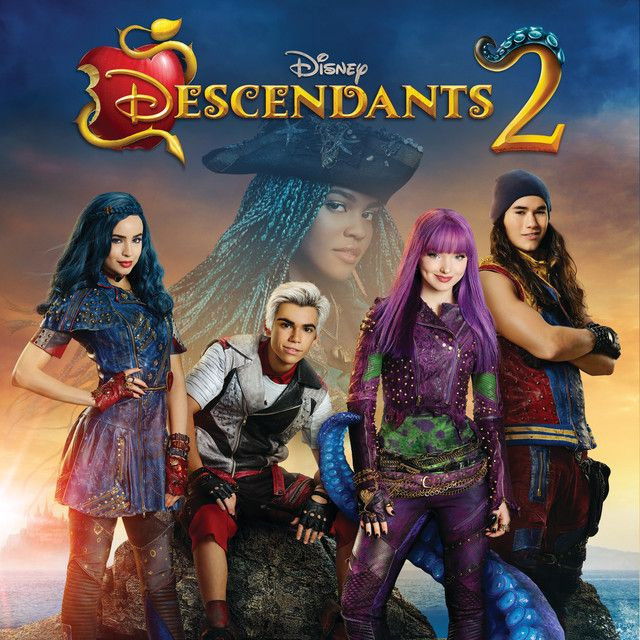
In Descendants 2, the number is performed in character by Evie, Carlos, Jay, and Ben. Within the story, the Villain Kids bring Ben to the Isle of the Lost and try to teach him how not to stand out there. According to the Descendants fan reference, the scene works like a playful lesson in how to move, act, and blend in on the Isle. That context matters, because the song is less about becoming cruel and more about putting on a mask.
The Real Message Hiding Under the Swagger
On the surface, the chorus sells rebellion as cool. Phrases like break the rules
and chillin' like a villain
sound like a celebration of bad behavior. But the verses give the hook a different meaning.
The instructions are all about body language, self-protection, and image control. They tell Ben to move differently, hide emotion, and avoid attracting attention. In plain terms, the song says that in a harsh environment, people sometimes survive by acting tougher than they really are.
Interpretation: The song uses “villain” as a style more than a moral label. The characters are not teaching Ben how to be heartless. They are teaching him how to play a part well enough to get through danger.
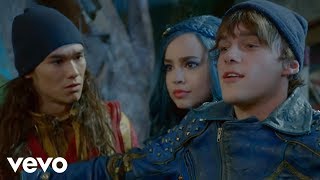
Watch the official Chillin' Like a Villain
music video
Ben's Role Turns the Song Into a Character Study
Ben is the key to the whole number. He is naturally open, kind, and visibly uncomfortable with the Isle's rules. That is why the teasing lines land as comedy: everyone around him can see he does not fit.
The bridge makes that tension explicit. Ben admits, in effect, that he wants to try, but it is difficult to become something unnatural. The short phrase hard being what I'm not
says more than the chorus does. It shows that the song's conflict is not good versus evil in a cartoon sense. It is authenticity versus adaptation.
That is also why the lesson becomes funny instead of dark. Ben keeps trying on villain behavior like a costume. When he starts to succeed, the moment feels less like corruption and more like a school play where the nicest kid finally learns the choreography.
How the Verses Build the Theme of Performance
The song works almost like a dance manual. The early commands focus on posture and attitude, such as drag your feet
and not be yourself
. Those ideas link movement to identity.
That connection matters. On the Isle, they suggest that morality is visible before anyone even speaks. If Ben walks too upright, looks too polite, or seems too sincere, he could expose the group. So the lesson is physical first and emotional second.
You need to watch your back
You need to creep around
You need to slide real smooth
Don't make a sound
This brief section captures the whole mood: stay alert, stay hidden, and never look soft. It turns “being bad” into stealth training.
The Chorus Sells Freedom, but the Story Adds Irony
A big reason the song is memorable is that the chorus sounds triumphant. It is catchy, repetitive, and built for audience participation. That musical confidence can make the message seem simple.
But the story adds irony. The Villain Kids are not fully endorsing this worldview. They know the Isle is dangerous, and they know Ben's kindness could make him a target. So when they frame rule-breaking as cool, they are partly joking and partly warning him.
Interpretation: The chorus is both sincere and playful. It captures the thrill of rebellion while showing how easily rebellion can become a survival script.
Why the Production Matters So Much
The meaning is not only in the lyrics. It is in the sound and staging too. The track is bright, rhythmic, and built around punchy pop production with hip-hop and dance-pop energy, which fits the Descendants 2 soundtrack's larger Disney-pop style.
That upbeat sound keeps the song from feeling threatening. Instead of heavy darkness, the production gives listeners bounce, humor, and momentum. The percussive beat mirrors the step-by-step instructions, almost like each command is part of a routine. That makes sense in a Kenny Ortega-directed world, where choreography often carries character meaning as much as dialogue does.
The vocals also help. Sofia Carson leads with confidence, while the group responses create the feeling of initiation. Ben's lines then break the pattern, because he sounds like someone learning the rules in real time. The result is a musical scene about peer teaching, not just a standalone anthem.
Artist and Franchise Context Sharpens the Meaning
Factually, the song appears in Descendants 2 and is credited to writers Adam Schmalholz, Antonina Armato, Thomas Sturges, and Tim James. It is performed by Sofia Carson, Cameron Boyce, Booboo Stewart, and Mitchell Hope as their characters. Fan documentation also notes that the song became one of the franchise's most recognized numbers.
That popularity makes sense. It captures what Descendants does best: mixing Disney morals with teen identity drama. These characters are always balancing inheritance and choice. They come from villain families, but they are not locked into villain outcomes.
So this song becomes a clever midpoint. It lets them enjoy the style of being bad without fully surrendering to it.
Final Take on the Song's Meaning
In the end, the meaning of Chillin' Like a Villain Sofia Carson, Cameron Boyce, Booboo Stewart, Mitchell Hope is about learning a role, not losing a soul. The song turns “badness” into a social costume that helps Ben move through a world where innocence would be risky.
That is why the number feels so fun. It is a fantasy of swagger, but also a reminder that identity can be acted out, borrowed, and tested. In Descendants 2, being a villain is less about evil than about knowing when to look fearless.
Disclaimer: This interpretation separates story facts from critical reading. Like most pop musical numbers, the song can support more than one meaning depending on how listeners hear its humor, context, and character arcs.








