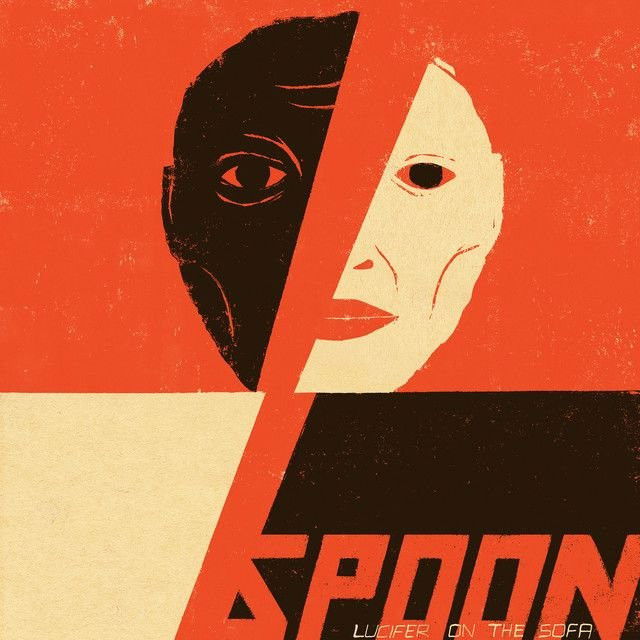
Why 'The Devil & Mister Jones' Feels So Dangerous
The meaning of The Devil & Mister Jones Spoon starts with a simple but uneasy idea: people often know a figure is bad news, yet they still line up for what he offers. Spoon turns that idea into a tight, catchy warning song. Rather than telling a clear story with one villain and one victim, they sketch a world where charm, salesmanship, and spiritual threat all blur together.
"The Devil & Mister Jones" - Spoon
How did it get this far?
How did it ever start?
Loading lyrics...
Unable to load lyrics
We're unable to display the lyrics at this time. Please try again later.
On the surface, the song circles around a man named Mister Jones. Underneath, it feels like a study of temptation. He sells relief, status, maybe even miracles. But the song keeps hinting that every gift comes with a price.
A Charmer Who Sells More Than Products
The first questions in the lyric create confusion and distance. The speaker seems to be looking at a mess that grew over time and asking how it happened. That matters because the song is not about one bad choice. It is about a slow surrender.
When Spoon repeats what he is selling
, they frame Mister Jones less as a person with a real solution and more as a hustler with an irresistible pitch. The phrase is plain on purpose. It could mean drugs, religion, fame, influence, or any dream sold to vulnerable people.
Interpretation: Mister Jones works best as a symbol. He is the kind of figure who knows exactly what people want to hear. That makes him larger than one character.
Watch the official The Devil & Mister Jones
music video
The Devil Image Without Saying Too Much
The title pairs “the devil” with “Mister Jones,” and the lyrics build that link through suggestion instead of direct statement. The song mentions juju raining down
, a phrase that gives the track an occult, superstitious atmosphere. It sounds like a curse in the air, not just a bad mood.
That image connects with lines about pressure and anxiety. The force around Mister Jones makes people heavy mental
and tense. In plain terms, his influence poisons a room before he even speaks. Spoon uses supernatural language to describe emotional and social control.
There is also a sharp line between promise and consequence. He can tell someone she can sing again, and he can make a blind man see. Those are miracle-like claims. But then the lyric says he will take back everything
. That reversal is crucial. His power may look holy, but it behaves like exploitation.
How the Chorus Turns Listeners Into Participants
One of the smartest parts of the song is that it does not only condemn Mister Jones. It also looks at the crowd around him. The repeated idea that everybody is saving up for his offer shows a culture of desire. People are not forced at gunpoint. They are preparing to buy in.
That detail makes the meaning of The Devil & Mister Jones Spoon broader than a portrait of one manipulator. It becomes a song about why people fall for manipulators. Some want healing. Some want certainty. Some just want to belong to whatever everyone else is chasing.
The lyric about every mark looking out for his goods sharpens that point. A “mark” is a target, someone easy to fool. Spoon suggests that the crowd is both eager and endangered.
A Short Narrative of Seduction and Loss
The song unfolds in a few clear beats:
- It opens with confusion about how things got so bad.
- Mister Jones appears as a magnetic seller.
- He promises impossible restoration and spectacle.
- His gifts turn into control and debt.
- The song widens into a warning about a fragile world.
That final shift matters. Near the end, the lyric says this world is fragile
. Suddenly, Mister Jones is not just tricking isolated people. He is operating in a moment of real social weakness. If the world already feels unstable, a false savior becomes even more powerful.
Why the Sound Makes the Warning Stick
Spoon’s music often works through precision, and this track seems built that way. Reviews of Lucifer on the Sofa described the album as full of deliberate arrangements, sweeping dynamics, and strong hooks, with “The Devil & Mr. Jones” singled out for its “elastic” pull (The A.V. Club). That matches the song’s meaning: it has to sound tempting if it is going to dramatize temptation.
The album itself was co-produced by Mark Rankin, and Britt Daniel said the band wanted to bring live energy into the recordings after feeling some earlier songs had grown stronger on the road (NME). That live-wire focus helps here. The groove feels locked in, almost predatory, while the hook keeps snapping back into place.
Interpretation: the song’s catchiness is part of its message. Listeners feel the seduction even as the lyrics warn against it.
Artist Context Helps Explain the Mood
Spoon’s Lucifer on the Sofa leaned into grittier rock textures, shaped in part by Britt Daniel’s return to Austin and by classic-rock influences filtered through Spoon’s controlled style (The A.V. Club). That context fits this song perfectly. It sounds earthy and sharp, not dreamy or abstract.
That matters because Mister Jones is not painted as a fantasy creature. He feels like someone who could walk into a room, own it, and leave people worse off. The band’s stripped, muscular approach keeps the threat human-sized and believable.
The Best Reading: A Warning About False Salvation
The strongest interpretation is that the song is about people who sell answers during moments of weakness. Mister Jones could be a cult leader, a dealer, a con man, a celebrity guru, or even a political figure. The song stays open enough to allow all of those readings.
What stays constant is the pattern: promise, dependence, loss. He offers meaning. He creates tension. He takes control. That is why the title’s devil image works so well. The devil here is less a monster with horns than a polished salesman who understands desire.
Final Take
In the end, the meaning of The Devil & Mister Jones Spoon is about how temptation spreads through charm, commerce, and need. Spoon builds a song where the villain feels magnetic, the crowd feels complicit, and the cost of belief keeps rising.
That makes it one of their sharper cautionary songs: catchy on the surface, deeply suspicious underneath.
Disclaimer: This interpretation is based on the lyrics, recorded performance, and available artist and review context. Like most Spoon songs, it remains open to more than one valid reading.








