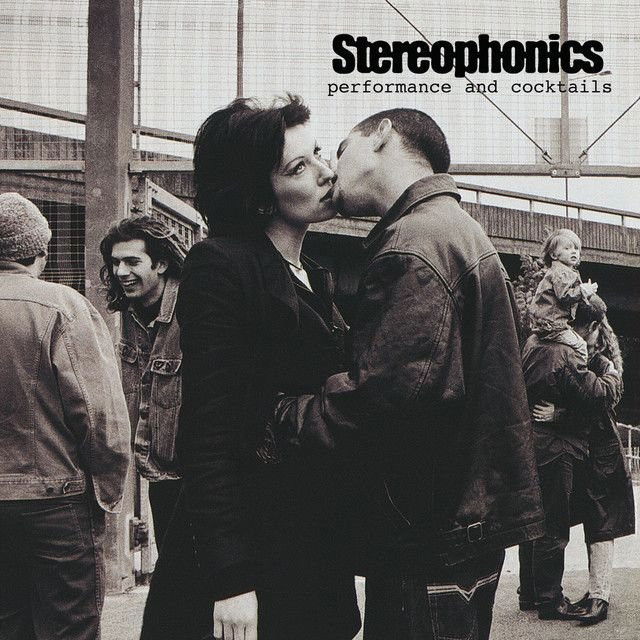
Pick A Part That's New by Stereophonics
A dizzy song about memory, desire, and disorientation
The meaning of Pick A Part That's New Stereophonics centers on a strange feeling: being somewhere unfamiliar, yet feeling as if they have already lived it. The song moves like a half-remembered night out, where places, voices, and emotions blur together. It is catchy on the surface, but underneath it is unsettled and uneasy.
"Pick A Part That's New" - Stereophonics
Didn't know where to go
Never met you before
Loading lyrics...
Unable to load lyrics
We're unable to display the lyrics at this time. Please try again later.
Released as the third single from Performance and Cocktails in 1999, the track became one of the band’s early breakthrough hits, reaching No. 4 on the UK Singles Chart. That success matters because it shows how well Stereophonics could hide complex feelings inside a direct rock single. They were writing songs that sounded big and open, even when the words felt foggy and inward.

Watch the official Pick A Part That's New
music video
The verses feel like walking through déjà vu
From the start, the narrator sounds unsure of where they stand. They say they have never been there before, yet almost every image that follows suggests the opposite. A home has a smell that is somehow recognizable. The walking feels familiar. A voice on the phone may be their own.
That tension is the key to the song. It is built on doubles: new and old, real and imagined, present and remembered. Short phrases like walking feels familiar
and confusion's familiar
show that the problem is not simply getting lost. The narrator may be trapped in a repeating emotional pattern.
Interpretation: This can be heard as a song about entering a new relationship or new scene while carrying old damage with them. Everything seems fresh, but they keep recognizing the same emotions, habits, and mistakes.
What the chorus adds to the meaning
The chorus gives the song its title and most mysterious line: pick a part that's new
. In plain terms, it sounds like an invitation to find one small piece of life that feels different. The larger world may be messy, upside down, even underground, but there is still a search for novelty, renewal, or escape.
That makes the hook more than nonsense phrasing. Stereophonics use repetitive wording to mimic a mind trying to steady itself. The chorus keeps circling back, almost as if the narrator is coaching themselves through overstimulation.
All around upside down
pick a part that's new
Those lines suggest chaos, but also choice. Even in disorientation, the narrator looks for one detail they can claim as fresh.
A snapshot of urban loneliness
Another reason the song connects is its social backdrop. One of its sharpest images is people drinking alone and pressing buttons on a phone. In 1999, that image already felt detached and modern. Today, it sounds even more current.
The song never gives a full story, but it drops enough details to build a setting:
- strangers around them
- solo drinking
- phone calls and uncertain voices
- a home or room that feels both intimate and alien
These details make the song feel less like a love song and more like a portrait of dissociation in a crowded world. The narrator is around people, yet cut off from them. They may even be cut off from themselves.
Sound and production: why the song feels both bright and uneasy
Musically, “Pick a Part That’s New” sits in that late-1990s Stereophonics sweet spot: muscular guitars, a steady beat, and Kelly Jones’ rough-edged voice carrying both swagger and vulnerability. According to the song’s credits, it was written in New York in 1997, recorded at Parkgate in East Sussex, and produced by Bird & Bush.
That production choice matters. The arrangement is clean and driving, not dreamy or soft, which creates a useful contrast. The lyrics suggest mental blur, while the band plays with confidence and motion. That clash gives the song its energy. They do not sink into sadness; they push through it.
Kelly Jones’ vocal delivery is especially important. He sings the uncertain lines with force, not fragility. As a result, the confusion in the song feels lived-in rather than theatrical. The narrator sounds like someone trying to make sense of their own repeated behavior while still moving through the night.
Two strong ways to read the lyrics
Reading one: a new relationship haunted by old patterns
This is the clearest interpretation. The narrator enters a new person’s space and insists it is the first time, but their senses tell another story. The smell, the footsteps, and the emotional tone all seem familiar. That suggests they are projecting old experiences onto a new encounter.
When they ask Was I here once before?
they may not mean a literal place. They may mean, “Have I felt this exact heartbreak, craving, or confusion before?” In that reading, the song is about emotional repetition.
Reading two: a night out slipping into self-alienation
There is also a looser, more psychological reading. References to drinking alone, phone calls, and unreality suggest a blurred late-night state. The narrator may be moving through bars, apartments, and memories without a stable sense of time.
In this version, Is that my voice
becomes a moment of self-estrangement. They hear themselves from a distance. The song then becomes less about romance and more about losing grip on where one night ends and another begins.
Why the song still holds up
Part of the reason this track endures is that it never over-explains itself. Stereophonics leave space between the images, and listeners fill it with their own history. Anyone who has walked into a “new” situation and felt old feelings rush back can hear themselves in it.
It also helps that the melody is memorable and the structure is tight. The song lasts only a few minutes, but it captures a full emotional cycle: curiosity, recognition, doubt, repetition, and the faint hope that something can still change.
For many listeners, that is the lasting meaning of Pick A Part That's New Stereophonics: it is about trying to find one untouched piece of experience when life keeps repeating itself.
Final takeaway
Stereophonics turn blurred perception into a sharp rock song. The lyrics suggest déjà vu, loneliness, and self-questioning, while the music keeps surging forward. That push and pull is what gives the track its staying power.
Interpretation disclaimer: Song meanings are not fixed facts. This reading is based on the lyrics, recording context, and the band’s style, but other listeners may hear the song differently.







