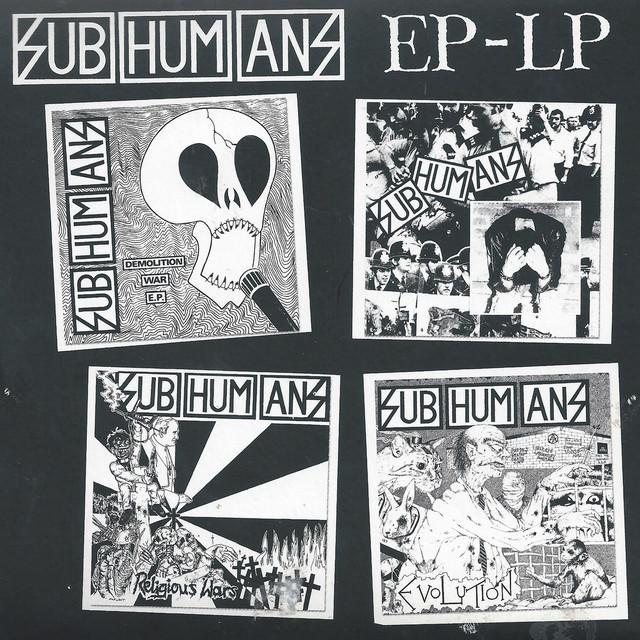
Why "Religious Wars" by Subhumans Still Hits
The meaning of Religious Wars Subhumans is direct, angry, and hard to miss. This is a punk song about people being pushed toward violence in the name of belief, then being told that their deaths are noble. Subhumans do not present war as sacred or meaningful. They present it as waste.
"Religious Wars" - Subhumans
Termination with a rusty knife
Religious wars no reason why
Loading lyrics...
Unable to load lyrics
We're unable to display the lyrics at this time. Please try again later.
Their point is not subtle. The lyric attacks the way religion can be used as a cover for fear, control, and blind obedience. In a very short running time, the band connects faith, death, and political manipulation into one sharp statement.
A Punk Song That Rejects Holy Excuses
At its core, the song says that religious conflict is built on false justification. The opening lines move from belief in an afterlife to brutal death, which creates a nasty contrast. The promise of eternity is placed next to physical suffering, suggesting that lofty promises can be used to hide ugly reality.
That idea becomes even clearer in the hook, where the band repeats religious wars
and insists there is no reason why
. Paraphrased, the song argues that once leaders claim divine approval, they stop having to explain the human cost. The repeated phrase is not a history lesson. It is an accusation.
This fits a wider historical pattern. Scholars often note that so-called religious wars are rarely only about faith; political power, territory, and identity usually play major roles too, as discussed in the religious war overview. The song simplifies that complexity into a punk slogan, but the target is clear: sacred language can hide very human motives.

Watch the official Religious Wars
music video
Who They Seem to Be Addressing
The voice in the song feels like a warning aimed at ordinary people, especially those asked to die for a cause they did not create. When the lyric says people were left you to die
, it shifts attention away from generals, priests, or rulers and toward the abandoned body at the center of the conflict.
That matters because the song is not interested in theological debate. It is interested in consequences. The dead person gets a grave and a symbol. The people in charge get a story.
The Victim Matters More Than the Creed
One of the song’s most effective moves is how it cuts through grand language and keeps returning to death itself.
In the name of Godthey left you to die
That short passage captures the whole argument. First comes the excuse. Then comes the body. The order is important.
Fear Is the Engine
The song’s second verse gives the clearest explanation for why people submit to this system. It says religion becomes fear of something unreal
. In paraphrase, the idea is that fear of judgment, fear of death, and fear of uncertainty can make people hand over their own moral instincts.
The line about the way you really feel
pushes that point further. Interpretation: Subhumans seem to argue that doctrine can pressure people to bury doubt, empathy, or common sense. If they obey the cause, they do not have to face their own questions.
That is a classic punk theme: institutions training people not to think for themselves. Here, religion is not shown as comfort. It is shown as a tool that can break a person’s connection to their own conscience.
Images of Death, Not Salvation
The imagery in the last section is stripped down and cold. Darkness, dead eyes, and a grave marked by a cross all replace the comforting promises that religion is supposed to offer. Instead of redemption, the song gives finality.
This is where the title and the closing images meet. A war called holy should, in theory, point toward truth or glory. But the song only shows loss. Even the cross, usually a symbol of faith, appears here as a marker placed after the fact. It does not save the victim; it labels the death.
Interpretation: That image suggests religion can become part of the cleanup operation. After violence happens, symbols help make it look meaningful.
Why the Sound Makes the Message Stronger
Subhumans came out of the UK anarcho-punk scene, a movement known for anti-authoritarian politics and stripped-down urgency. Their music generally favors speed, abrasion, and confrontation over polish, and that matters here. The song’s attack works because it sounds impatient.
Fast drums and harsh guitars leave little room for reflection or comfort. The vocal delivery feels spat rather than sung. That production style mirrors the lyric’s moral disgust. A softer arrangement might have turned the song into a meditation. This version makes it a protest.
There is also a structural benefit to punk simplicity. Because the lyrics are brief and repetitive, phrases like what a glorious way to die
land with bitter sarcasm. The line sounds like propaganda on the surface, but in context it means the opposite. The music’s aggression helps listeners hear that irony immediately.
For basic band context, Subhumans are widely associated with British punk and anarcho-punk history, summarized in the Subhumans band overview.
A Short Song With a Wide Target
Even though the title says "religious" wars, the song can also be read more broadly. Interpretation: it is about any ideology that turns death into a moral duty. Religion is the example, but the deeper enemy may be blind belief itself.
That broader reading helps explain why the track still connects. Listeners do not need to hear it as a statement about one faith tradition. They can hear it as a warning about leaders who turn fear into obedience and call sacrifice noble after someone else pays the price.
Final Take on the Song’s Meaning
The meaning of Religious Wars Subhumans is that violence becomes especially dangerous when it borrows the language of certainty and salvation. The song rejects the idea that dying for a sacred cause is automatically honorable.
Instead, it says people are manipulated by fear, abandoned by authority, and buried beneath symbols that cannot undo the loss. That blunt moral clarity is why the song still hits.
Disclaimer: This interpretation is based on the lyrics, performance, and available context. As with most songs, listeners may hear different meanings in it.








