Why "Give It Revolution" Hits So Hard
The meaning of Give It Revolution Suicidal Tendencies comes through fast: this is a song about refusing passive acceptance. It sees freedom as something people must defend, not something guaranteed by leaders, courts, or tradition.
"Give It Revolution" - Suicidal Tendencies
The world's been mauled tyranny
Now we're refusing to take it
Loading lyrics...
Unable to load lyrics
We're unable to display the lyrics at this time. Please try again later.
On the surface, the track sounds like a classic metal rally cry. Underneath, it is sharper than that. The lyrics connect tyranny, law, war, and martyrdom into one argument: when power becomes abusive, resistance becomes necessary.
A Protest Song Built on Urgency
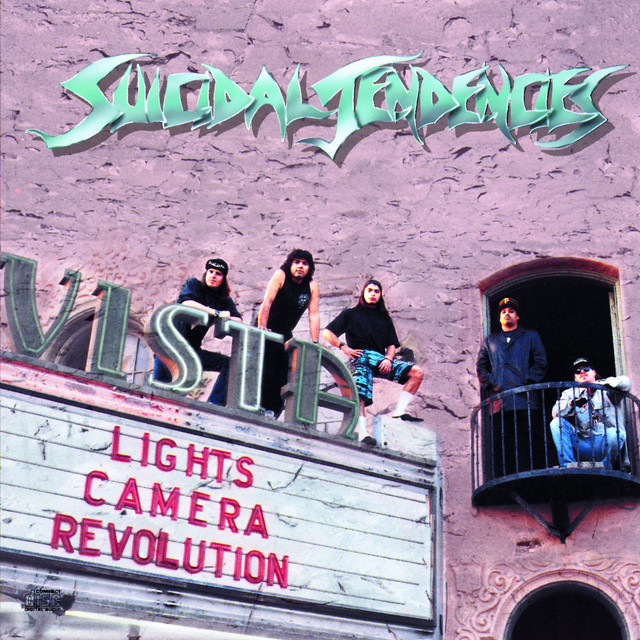
On Lights...Camera...Revolution!, released in 1990, Suicidal Tendencies were moving into a more complex thrash sound while adding funk touches through bassist Robert Trujillo, according to the album’s documented history. The record was produced by Mark Dodson and the band, and it later earned Gold certification in the United States.
That context matters here. “Give It Revolution” is not a reflective ballad about change. It is a full-speed demand for action, shaped by a band known for crossover aggression but expanding its musical range on this album.
The song’s opening idea frames history as a long struggle against abuse. It says oppression is not rare or accidental. In their view, it is a repeating pattern, and people keep suffering when they accept it as normal.
Watch the official Give It Revolution
music video
The Core Message: Freedom Must Be Defended
The key message is simple: freedom cannot survive on paper alone. Early in the song, they attack the idea that legality automatically equals justice. When the lyrics point to crimes defended by the law, the band suggests that authority can protect wrong instead of correcting it.
That is why lines about breaking chains matter so much. The phrase break the chains
is not subtle, but it is effective. It turns oppression into something physical and personal, something people can feel on their own bodies.
Interpretation: the song argues that freedom is moral before it is legal. If laws deny basic rights, then the song says people may have to resist those laws rather than obey them.
Who Is Speaking in the Lyrics?
The voice shifts between command and collective pledge. Sometimes they tell the listener what must be done. Other times they speak as a group using words like we'll right it
and the repeated call to give it revolution
.
That mix is important. It makes the song feel bigger than one narrator’s anger. The speaker becomes part leader, part crowd, part movement.
There is also a spiritual note in the verse that mentions divine creation. That moment suggests human freedom is not only political but sacred. In other words, the band presents liberty as something no ruler has the right to cancel.
Why the Chorus Feels Like a Slogan
The chorus is repetitive on purpose. By hammering give it revolution
, the band turns the title into a chant. It works like a protest slogan you can yell back from the floor.
That repetition strips away complexity and leaves only commitment. The verses explain why revolt is necessary; the chorus answers with what to do next.
put a bullet in my head
can't kill a word I've said
That brief section is the emotional center of the track. The idea is that a body can be silenced, but a message can outlive violence. The song moves from rebellion to martyrdom, making resistance sound permanent.
Violence, Sacrifice, and the Idea of Martyrdom
The most striking lines are not just about fighting back. They are about what happens if power tries to crush dissent. When the lyrics say make this martyr die
, they create a paradox: killing a rebel may actually strengthen the cause.
Interpretation: this is less about one literal person and more about the survival of radical ideas. The song suggests that once people name injustice clearly, that truth spreads beyond any one speaker.
That helps explain the track’s intense confidence. Even when it imagines bullets and death, it refuses defeat. The enemy can wound the person, but not erase the words.
How the Music Carries the Meaning
Musically, the song supports its message through speed, attack, and pressure. The guitars hit with tight thrash riffing, while the drums push the track forward like a march. Mike Muir’s vocal delivery sounds less polished than urgent, which fits the song’s street-level politics.
The album itself is often noted for more advanced arrangements than the band’s earlier work, and that helps here. Instead of sounding sloppy or purely chaotic, “Give It Revolution” sounds controlled enough to feel purposeful. The anger is organized.
There is also a wider album context. Lights...Camera...Revolution! included some of the band’s most visible songs and received heavy attention in the MTV era through other singles. That gave tracks like this one a stronger platform, even if “Give It Revolution” was not the main crossover hit.
A 1990 Song That Still Feels Current
Part of the meaning of Give It Revolution Suicidal Tendencies is its distrust of passive moderation. One line argues that oppressive systems benefit when good people tolerate them for too long. That idea still lands because it speaks to a familiar fear in American political life: that silence helps the powerful more than anyone else.
Still, the song is not a detailed policy statement. It speaks in absolutes, moral contrasts, and battle language. That can make it feel blunt, but that bluntness is part of the design. Suicidal Tendencies wanted force, not nuance, in this moment.
Final Take on "Give It Revolution"
“Give It Revolution” is about active resistance to tyranny, the limits of legal authority, and the belief that truth can survive repression. Its lyrics frame rebellion as duty, while its music makes that duty feel immediate.
For listeners, the song’s power comes from that fusion of message and momentum. It does not ask for patience. It demands conviction.
Disclaimer: This interpretation is based on the song’s lyrics, album context, and documented band history. As with all art, listeners may reasonably hear different meanings in the track.








