Why ‘I Saw Your Mommy...’ Is Punk Shock Theater
The meaning of I Saw Your Mommy... Suicidal Tendencies is less about grief or crime and more about punk provocation. The song takes a grotesque scene and tells it with a sneer, almost like a cruel playground taunt turned into hardcore theater.
"I Saw Your Mommy..." - Suicidal Tendencies
I saw a body lying down quiet as a mouse
She was lying face down in the sewer
Loading lyrics...
Unable to load lyrics
We're unable to display the lyrics at this time. Please try again later.
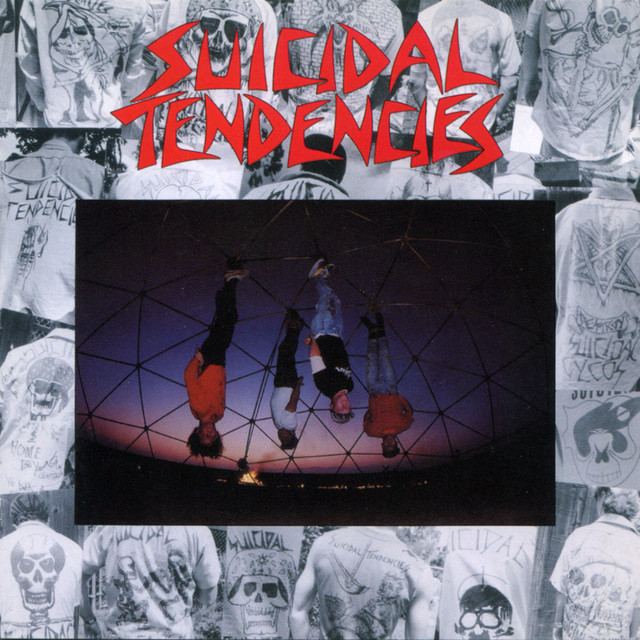
Suicidal Tendencies came out of early 1980s Southern California punk, a scene known for speed, attitude, and a taste for offense. Their 1983 self-titled debut also produced Institutionalized
, one of the band’s signature songs and a major crossover moment for hardcore punk, according to widely cited histories of the band and song. That same album also included “I Saw Your Mommy...,” showing how Mike Muir and company mixed humor, violence, and social alienation in their early work.
The Real Target Is Bad Taste Itself
On the surface, the plot is simple and ugly. A narrator finds a murdered woman, recognizes that she is someone’s mother, and then describes the body in lurid detail. Instead of reacting with fear or sorrow, they sound excited.
That mismatch is the point. The song uses horror imagery to create disgust, then pushes further by making the speaker sound amused. When they repeat your mommy’s dead
, it lands like a chant meant to shock both the victim’s family and the listener.
Interpretation: the song is best heard as black comedy and deliberate bad taste. It is not presenting a moral lesson in any normal way. It is acting out the ugliest, most immature response possible, which fits punk’s habit of mocking social rules and good manners.
Watch the official I Saw Your Mommy...
music video
A Narrator With No Human Limits
What makes the song memorable is not just the gore. It is the narrator’s total lack of empathy. They do not mourn. They brag. They even treat the scene like entertainment, using ideas such as taking a souvenir because it seemed neat
.
That voice matters because it turns the track into character work. The speaker feels less like a realistic witness and more like a cartoon of cruelty: a person so numb, so warped, or so eager to offend that death becomes a joke.
Who Are They Talking To?
The repeated “your” in the chorus creates a direct victim on the other side of the song. The narrator is not just describing a body; they are rubbing it in. That makes the track feel like a vicious taunt aimed at a classmate, enemy, or abstract listener.
Interpretation: this second-person attack may be why the song feels so juvenile on purpose. It mirrors the logic of a cruel insult, only pushed to absurd, monstrous levels.
How the Story Builds Its Nasty Joke
The verses move in stages:
- The narrator discovers a body.
- They realize whose mother it is.
- They catalog the damage in graphic terms.
- They turn the death into mockery.
- The chorus repeats the insult until it becomes grotesquely catchy.
That structure is important. The details keep escalating, so the song behaves like a dare: how much uglier can it get? One of the nastiest turns comes when the narrator sounds fascinated by the scene rather than horrified by it.
I watched her as she bled
turns pain into spectacle,
which is exactly why the song feels so disturbing.
The line is brief, but it shows the central trick. The song is not only violent. It is about enjoying violence as a performance.
The Sound Makes the Joke Hit Harder
The music matters as much as the words. Suicidal Tendencies’ early style fused hardcore punk aggression with metal weight, helping lay the groundwork for crossover thrash in the years that followed. On their debut era material, the band often paired fast, blunt riffs with Mike Muir’s sharp, sometimes half-spoken vocal attack, a style also heard on Institutionalized
.
In “I Saw Your Mommy...,” that rough delivery makes the song sound reckless and adolescent in a very calculated way. The guitars do not soften the lyrics; they egg them on. The rhythm section keeps things moving so fast that the listener has almost no time to process one disgusting image before the next arrives.
Interpretation: this speed is part of the meaning. It mirrors a mind racing toward the most offensive thing it can say next.
Artist Context Helps Explain the Extremes
Mike Muir wrote the song, and his early work often leaned into outsider anger, sarcasm, and anti-authority posture. Suicidal Tendencies were never a polished, polite band. Their early identity thrived on confrontation, from their look to their lyrics to the panic they sometimes caused in media coverage of hardcore scenes.
That context helps explain why the song is so excessive. It belongs to a moment when punk bands were trying to provoke adults, disgust gatekeepers, and amuse fans who understood the joke. Songs like this were part of an image built on chaos and refusal.
At the same time, not every listener hears only comedy. Some hear a swipe at how violence gets consumed as spectacle. The narrator sounds thrilled by damage, almost like an audience member at a horror show.
Two Strong Ways to Read It
Reading One: Pure shock humor
This is the simplest reading. The song is trying to be outrageous, funny in a sick way, and impossible to ignore. Phrases like allowance that you’ll really miss
turn death into a tasteless punchline.
Reading Two: A satire of emotional numbness
A second reading is more critical. The song may be mocking the kind of person who can look at a corpse and treat it like gossip, entertainment, or social ammunition. In this reading, the narrator is the real target.
Both interpretations fit the meaning of I Saw Your Mommy... Suicidal Tendencies because the song never asks the listener to admire the speaker. It dares them to sit with something ugly and decide whether they are laughing, flinching, or both.
Why the Song Still Sticks
The song lasts because it is unforgettable, not because it is subtle. Its nastiness is the hook. But underneath the gore, it also captures something central to early hardcore: the urge to say what should not be said and to do it loudly.
For some listeners, that makes it juvenile nonsense. For others, it is a perfect artifact of punk’s shock-first era. Either way, it is hard to mistake the goal.
Disclaimer: This article offers interpretation, not a definitive statement of intent. Songs like this invite multiple readings, especially when satire, horror, and humor overlap.







