Why 'The Miracle' Sounds Like a Warning
The meaning of The Miracle Suicidal Tendencies comes down to one sharp idea: what looks like salvation can become a trap. In this song, they present a speaker who once trusted a promised answer, then slowly sees that the answer is doing real harm.
"The Miracle" - Suicidal Tendencies
I laughed out loudy, while I cried inside
But I didn't haave the strength to say enough of this ride
Loading lyrics...
Unable to load lyrics
We're unable to display the lyrics at this time. Please try again later.
That tension is why the song still hits. It uses the language of belief, healing, and rescue, but turns those ideas inside out. The "miracle" is not a blessing here. It is something seductive, controlling, and hard to escape.
A False Cure at the Center
At the most basic level, the song describes someone who put faith in a fix that seemed powerful and immediate. Early on, the speaker admits they believed in something extraordinary, using the phrase believed in a miracle
. But the song quickly shows that this faith was misplaced.
Instead of relief, they describe numbness, confusion, and damage. The lyrics move from hope to deterioration, suggesting that the miracle was really a harmful dependency or illusion. Interpretation: many listeners will hear this as a song about addiction, because the language of control, physical decline, and difficulty leaving strongly points that way.
Still, the song also works more broadly. It can be heard as a warning about any toxic thing sold as an answer: drugs, emotional denial, manipulative relationships, or even a fantasy that prevents real change.

Watch the official The Miracle
music video
The Voice of Someone Losing Control
One reason the song feels so intense is its unstable first-person perspective. The speaker keeps swinging between extremes, and the lyrics reflect that motion in blunt opposites.
They move through states like freezing then I'm burning
and laughing then I'm crying
. Those short contrasts make the inner chaos feel immediate. The person in the song does not sound steady enough to trust their own perceptions anymore.
That loss of self goes deeper when they describe outside influence. In one of the song's clearest ideas, the speaker says their actions, thoughts, and feelings have been controlled. That is a major clue to the song's emotional core: this miracle does not expand freedom; it replaces it.
How the Chorus Turns Belief Into a Challenge
The repeated question about whether someone still believes in miracles gives the song its hook, but also its irony. In another context, that line might sound uplifting. Here, it sounds doubtful, almost bitter.
The song keeps returning to that question after showing damage and confusion. Because of that structure, the chorus stops being a celebration of faith and becomes a test. After all this pain, who would still trust the promise?
Do you still believe, do you still believe in miracles?
That short refrain matters because it widens the song. The speaker may be talking to themselves, to another person, or to anyone still chasing an easy rescue. Interpretation: the chorus asks whether people keep believing because they are hopeful, or because they are trapped.
Images of Confusion, Delay, and Decay
Several lyrical patterns shape the song's meaning. The first is contradiction. The song keeps pairing emotional opposites, which gives the sense of a mind split against itself.
The second is paralysis. The speaker seems stuck in cycles of waiting and hesitation, hoping for a better day that never arrives. When the song warns that waiting too long can make change impossible, it sounds like a moment of clarity breaking through denial.
The third is bodily decline. The line about feeling the body rot is one of the harshest images in the track. It turns the miracle into something physical and corrosive, not just emotional.
There is also a revealing moment when the speaker says it's all lies
. That phrase feels like the song's awakening. The spell has not fully broken, but they finally understand that the promise was false.
Why the Music Makes the Meaning Stronger
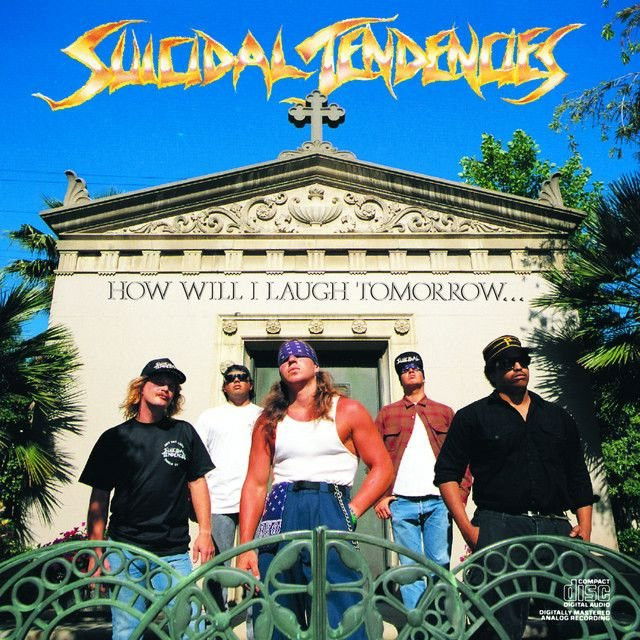
"The Miracle" appears on How Will I Laugh Tomorrow When I Can't Even Smile Today, Suicidal Tendencies' 1988 third studio album, released September 13, 1988. It was their first album for Epic Records, and it marked a stronger move toward a heavier thrash-metal sound, with more complex songs and fuller production, according to album documentation and later critical summaries in sources such as Wikipedia and Revolver.
That context matters. Mike Clark's arrival helped push the band further from hardcore punk toward metal, giving songs like this one more weight and tension. The album was produced by Mark Dodson and Suicidal Tendencies, and recorded at Cherokee Studios in Hollywood.
On "The Miracle," that heavier attack supports the theme perfectly. The guitars feel forceful rather than comforting. The rhythm section keeps pressure on the listener, and Mike Muir's vocal delivery sounds strained, urgent, and unstable. Rather than offering release, the arrangement keeps tightening the emotional vise.
Where the Song Fits in the Band's Story
Suicidal Tendencies were always skilled at mixing aggression with social and psychological themes. Critics often note that this album sharpened both sides of that identity: the metal became more developed, and the self-questioning in Muir's writing stayed central.
That makes "The Miracle" more than a simple anti-drug song. It fits a larger band interest in mental pressure, self-conflict, and systems of control. The miracle is dangerous because it promises escape while making the speaker less free.
The Lasting Meaning of "The Miracle"
The meaning of The Miracle Suicidal Tendencies is ultimately about seeing through a lie that once felt necessary. The song captures the awful point where comfort turns poisonous, and belief turns into dependence.
Its power comes from that mix of clarity and struggle. The speaker sees the truth, but leaving still feels hard. That makes the song less like a neat moral lesson and more like a real portrait of breaking away.
Disclaimer: This interpretation is based on the lyrics, recorded performance, and available band context. As with many songs, listeners may reasonably hear different meanings in "The Miracle."







