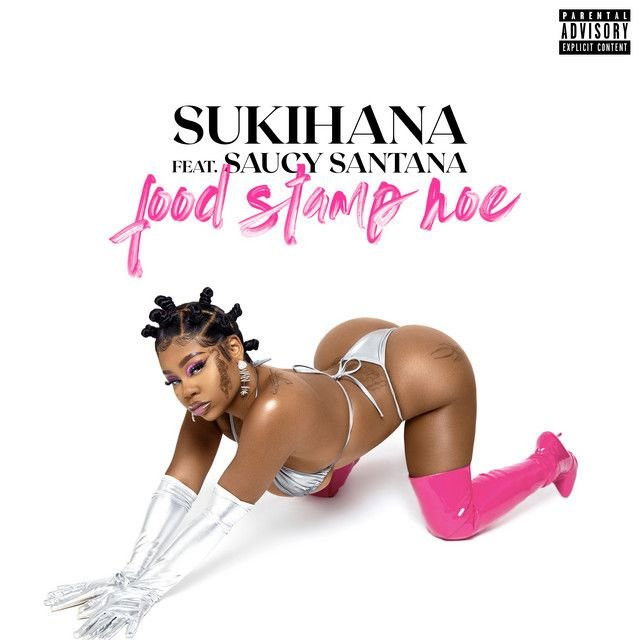
Why ‘Food Stamp Hoe’ Turns Insult Into Power
The meaning of Food Stamp Hoe Sukihana, Saucy Santana starts with shock value, but it does not end there. On the surface, the song is loud, sexual, and funny. Under that surface, it is about control: who sets the price, who gets access, and who gets to define a public image before critics do.
"Food Stamp Hoe" - Sukihana ft. Saucy Santana
Nigga, spend that bag on a trill bitch
You put your hands all in yo' pockets
Loading lyrics...
Unable to load lyrics
We're unable to display the lyrics at this time. Please try again later.
Sukihana and Saucy Santana both work in styles built on exaggeration, punchlines, and fearless self-presentation. That matters here. The song is not trying to sound polite or subtle. It is trying to sound untouchable.
The Core Message Hides in Plain Sight
At its center, the track says that desire is not enough by itself. The repeated wallet imagery makes that clear. When the hook pushes someone to pull out that wallet
and make deposits
, the song frames romance and sex as open negotiations, not emotional fairy tales.
That idea can sound harsh, but the point is bigger than money alone. Interpretation: the cash talk stands in for value. They are saying that attention, access, and intimacy should not come cheap, especially when women and queer performers are often objectified in rap culture and online.
The title itself does more work than it first seems. By embracing food stamp ho
, the song flips a class-coded insult into a self-made identity. Instead of running from stigma, they grab it, stylize it, and turn it into comedy and power.

Watch the official Food Stamp Hoe
music video
How the Hook Builds the Song’s World
The chorus is simple on purpose. It repeats commands, price language, and body language until the listener gets the rule: stop showing off and prove worth. That is why phrases like break some bread
hit so hard. The line is funny, catchy, and direct, but it also reinforces the song’s whole social logic.
Rather than portraying romance as tenderness, the hook presents it as a test. Anyone can talk big. Anyone can flirt. In this world, real interest has to come with action.
That repetition also gives the song a chant-like quality. It feels built for clubs, memes, and crowd participation. The directness is part of its meaning: they are not asking for approval; they are setting terms.
Sukihana’s Verse Is Bigger Than Shock Rap
Sukihana’s writing here is graphic, but it is not random. Her verse stacks explicit jokes, status flexes, and outrageous details to build a character who is impossible to embarrass. If critics try to shame her, she has already gone farther than they would dare.
That is a key piece of the meaning of Food Stamp Hoe Sukihana, Saucy Santana. The song uses vulgarity as armor. What sounds chaotic is actually controlled. Her persona is saying that if the public wants spectacle, she will provide it on her own terms.
Interpretation: there is also a class angle in the song’s language. By using references tied to poverty and luxury in the same breath, Sukihana blurs the line between being judged and getting paid. She makes low-status labels sit next to expensive taste, which turns social shame into a kind of flex.
Saucy Santana Brings Camp, Humor, and Extra Bite
Saucy Santana’s feature sharpens the song’s personality. According to his career overview, he emerged first as a makeup artist for City Girls before breaking out as a rapper and later scoring viral hits like “Walk” and “Material Girl” (Wikipedia). That background helps explain why his verse lands with such theatrical confidence.
He enters with nursery-rhyme bounce, taunts, and a roll-call structure that turns money talk into pure performance. When he says I want the money
, it feels less like confession than slogan. He makes greed sound playful, knowing, and communal.
His presence also expands the song’s point of view. It stops being only one person demanding payment and becomes a larger statement about image, desirability, and social survival. In Santana’s hands, the song becomes campy and cutting at once.
The Production Keeps the Joke Sharp
Production matters a lot here. The beat is spare, rhythmic, and repetitive, leaving space for every line to hit like a dare. The track leans on a club-ready loop and call-and-response structure instead of melodic complexity. That choice supports the theme because the song is about assertion, not vulnerability.
The vocal delivery does even more. Both artists rap with a teasing, confrontational style that keeps the record from sounding defensive. They sound amused. That matters because humor is one of the song’s strongest weapons.
Interpretation: the minimalist beat makes the song feel transactional too. There is little emotional cushioning. Just drums, a groove, and commands. The sound mirrors the message.
Why the Song Connected
“Food Stamp Hoe” arrived in 2021 as a non-album single credited to Sukihana featuring Saucy Santana and Dontaye Williams, with Santana listed in his discography as a featured artist (Wikipedia). That timing fits a moment when internet rap rewarded bold catchphrases, meme-friendly hooks, and outsized personas.
The song works because it understands that offense and comedy often travel together online. Listeners may come for the outrageous title, but they stay because the hook is smart, memorable, and brutally clear.
For some, the track is simply wild fun. For others, it is a deliberate act of reclamation. Both readings can be true.
The Final Read on Its Meaning
So, what is the meaning of Food Stamp Hoe Sukihana, Saucy Santana? It is a song about naming oneself before the world can do it for you. It is about turning insults into branding, turning desire into leverage, and turning crude humor into a show of control.
That does not make it subtle. It makes it effective. By the end, the song sounds less like a confession than a dare.
Disclaimer: This interpretation is based on the lyrics, performance style, and available artist context. Song meaning can vary from listener to listener.








