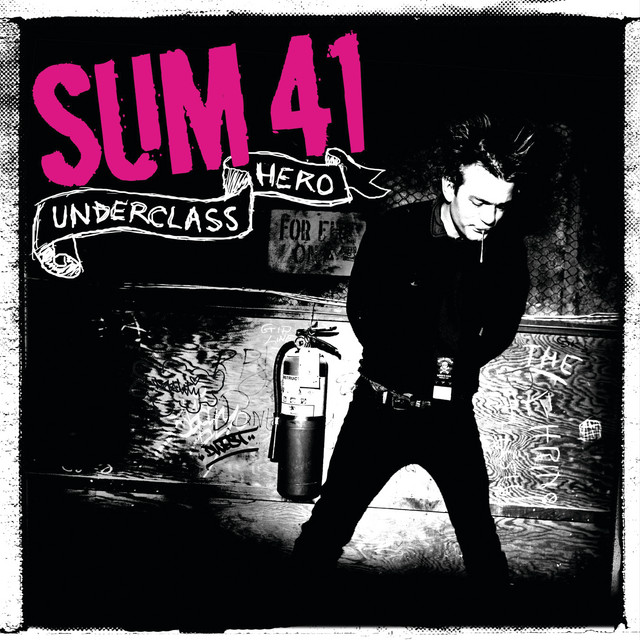
Walking Disaster by Sum 41
The meaning of Walking Disaster Sum 41 centers on a young narrator who feels cut off from home, angry at family, and unsure who they have become. On the surface, it sounds like a runaway song. Underneath, it is more about identity: what happens when someone starts to believe the worst labels placed on them.
"Walking Disaster" - Sum 41
I'm sure everything's the same
Mom and Dad both in denial
Loading lyrics...
Unable to load lyrics
We're unable to display the lyrics at this time. Please try again later.
Released as the second single from Underclass Hero in 2007, the track was written and produced by Deryck Whibley, and it arrived during a period when Sum 41 were leaning hard into personal, emotionally direct songwriting. According to widely cited release details, the song came out on July 24, 2007, six days after the album, and the band performed it on The Tonight Show with Jay Leno that same day.
The song’s real conflict is not the road
At first, the lyrics frame a physical absence: they have not been home, they are walking unnamed streets, and they seem detached from the place they came from. But the deeper conflict is emotional. The narrator feels unseen by both parents and cast as the problem child.
When the song mentions only child
and being the one to blame, it sketches a home life shaped by denial and guilt. The speaker is not just far away. They feel written off. That is why the bitterness lands so sharply in the opening verse.
Interpretation: the song is less about rebellion for fun and more about a person building an identity out of rejection. They would rather leave than keep living inside a role they did not choose.

Watch the official Walking Disaster
music video
How the verses turn pain into self-image
One of the smartest things in the song is how it moves from accusation to self-description. Early on, the narrator attacks their parents. Soon after, they start attacking themselves.
That shift matters. By the time they call themselves the forgotten son
, the pain has already become internal. What began as family conflict turns into a damaged self-concept.
The middle verses deepen that spiral. Phrases like burn the bridge of innocence
and a pill-away catastrophe
suggest reckless choices, numbness, and the idea that one bad step could make everything worse. The song does not need graphic detail to make that point. It shows a person who feels trapped in a pattern they partly hate and partly accept.
A quick narrative map
- They leave home feeling blamed and unwanted.
- They wander through defeat, both outside and inside.
- They admit innocence is gone and they no longer know who was right.
- They embrace the label of being broken.
- They end with a surprising hint of return.
That final turn is crucial because it keeps the song from becoming one-note.
Why the chorus hits so hard
The chorus gives the song its bluntest image: a walking disaster
. It sounds like self-hatred, but it also sounds defensive. If they name themselves first, nobody else gets to use the label as a weapon.
The next line, too late to save me
, pushes that idea further. On one level, it sounds hopeless. On another, it sounds like a challenge: stop pretending they can be easily fixed.
Interpretation: the chorus is the narrator’s mask. They turn pain into a tough, memorable identity because that feels safer than admitting they still want care, approval, or love.
That reading becomes stronger because the verses keep showing confusion beneath the bravado. They do not sound stable or fully certain. They sound hurt, loud, and lost.
The bridge reveals the song’s mental fog
The later section is where the emotional picture gets more complex. The narrator hears voices in my head
and wonders whether they are speaking clearly at all. This does not have to be read literally. It can also point to inner chaos, self-argument, and emotional overload.
There is one brief moment that captures that collapse especially well:
Am I talking to myself?
I don't know what I just said
Those lines shrink the world inward. The battle is no longer just with parents or hometown memories. It is with their own mind and their own scrambled sense of self.
How the sound carries the meaning
Musically, “Walking Disaster” fits Sum 41’s pop-punk style, but it is more reflective than their most explosive singles. Sources commonly list it as a pop-punk track from Underclass Hero, with Whibley handling both writing and production. That matters because the song feels tightly aligned with one voice.
The arrangement supports the theme in three main ways:
- Steady forward motion: the beat keeps moving, like someone who cannot stop wandering.
- Big melodic chorus: the hook makes private shame sound public and anthemic.
- Emotional vocal tone: Whibley sings with strain rather than swagger, which keeps the song vulnerable.
Instead of sounding chaotic all the time, the track is controlled. That control makes the narrator’s breakdown feel lived-in, not theatrical.
The ending changes the entire song
After all the resentment, the final lines suddenly imagine coming back. The narrator says they will be home soon and wants to see a smile. That shift does not erase the anger. It reveals what was underneath it.
Interpretation: they never stopped wanting connection. The song’s hardest lines may be a shield for someone who still hopes home can mean comfort again.
That is why the ending is so effective. It opens the door to reconciliation without promising it. The narrator is still damaged, still uncertain, but no longer pretending they feel nothing.
Why the song still connects
Part of the meaning of Walking Disaster Sum 41 is that it captures a very specific youth emotion: the fear that other people’s judgment has become one’s whole identity. Many songs about leaving home celebrate freedom. This one shows the cost.
It also helped define the mood of Underclass Hero, an album that often focused on frustration, class resentment, and personal dislocation. As a single, “Walking Disaster” also found a real audience on rock and alternative radio in 2007, including a peak on U.S. Alternative Airplay and Canada Rock charts.
In the end, the song is about more than being a mess. It is about what it feels like when someone starts to believe they are one—and the small, fragile part of them that still wants to come back.
Disclaimer: This interpretation is based on the lyrics, recorded performance, and publicly available release context. Like most songs, “Walking Disaster” can support more than one reading.








