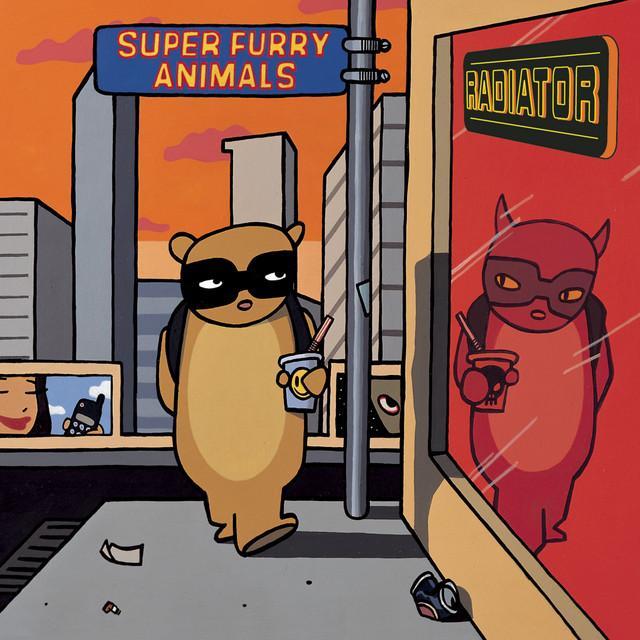
The International Language of Screaming by Super Furry Animals
A Pop Song About Motion, Not Arrival
The meaning of The International Language of Screaming Super Furry Animals starts with a simple idea: life is less about fixed identity and more about movement. The song keeps pushing away stable labels like origin, destination, and even past experience. Instead, it focuses on the in-between state of becoming.
"The International Language of Screaming" - Super Furry Animals
It's not where you're at
It's not where you've been
Loading lyrics...
Unable to load lyrics
We're unable to display the lyrics at this time. Please try again later.
That is why the repeated line where you're between
matters so much. The lyric does not celebrate a final answer. It suggests that a person is most alive while changing, searching, and moving through uncertainty. In that sense, the song is not really about screaming as anger alone. It is about expression that crosses borders when normal language feels too small.
Watch the official The International Language of Screaming
music video
The Core Message Hides in Plain Sight
Super Furry Animals often mixed wit, odd images, and catchy hooks, and this 1997 single does the same. Released as the second single from Radiator, it reached No. 24 on the UK Singles Chart, according to Wikipedia. Those facts matter because the song sits at a point when the band was sharpening their identity: playful on the surface, but deeper underneath.
The opening turns a list of facts into a challenge. It says that where someone is from, where they are, and what they have seen are not the whole story. The real subject is transition. A person is not a finished object. They are a process.
Interpretation: That idea can be read as personal, social, or even artistic. Personally, it speaks to growing up and changing. Socially, it pushes back against labels. Artistically, it sounds like a band defending freedom over categorization.
The Journey Never Ends
Movement as the Main Symbol
The middle of the song makes this theme more direct with a playful alphabet journey. The phrase From A to B
sounds basic at first, but then the song keeps moving onward. It refuses to stop at one point or one neat conclusion.
The line Don't stop the journey
is the clearest statement in the track. It turns motion into a rule. Even when there seems to be nothing to see
, the song argues that movement still matters. That idea gives the song a strange optimism. It says progress is valuable even when results are unclear.
This is one reason the song feels bigger than its short running time. At just over two minutes, it acts like a burst of philosophy in pop form. The speed itself supports the meaning: the track barely pauses, because the message is to keep going.
When Screaming Becomes Communication
The title sounds wild, but the key lyric explains it. Near the end, the singer admits that ordinary surroundings feel fixed and lifeless, which creates an urge to react. Then the song arrives at its emotional center:
If I scream it, I mean it
I hope you will understand me
Before and after that moment, the song suggests frustration with a world that feels stuck. Screaming becomes the last honest form of speech. It is not polished, but it is real. That is the "international language" of the title: raw feeling that anyone can recognize, even without shared vocabulary.
Interpretation: This can be heard as a comment on alienation. When systems, routines, or public language feel empty, emotion cuts through. A scream is universal because pain, urgency, and intensity are universal.
The Sound Makes the Idea Land
The production helps sell this reading. The track was produced by Gorwel Owen with the band, and it packs guitar, bass, keyboards, drums, and Gruff Rhys's vocal into a compact, jumpy arrangement. Critics at NME called it a brief, "spindly burst," which fits the song's nervous energy.
The repeated La la la
parts are especially smart. On one level, they sound carefree and almost childlike. On another, they replace clear language with pure vocal sound. That links back to the title. The song keeps asking what happens when meaning survives even after words break down.
There is also a tension between bright melody and restless content. The band makes the track catchy instead of heavy, which keeps the message from turning bleak. They sound excited by instability, not crushed by it.
Two Strong Ways to Read the Lyrics
Reading One: A Song About Identity
One reading is that the song rejects fixed identity. It says people are not only their hometown, history, or current situation. They are shaped by transition, ambiguity, and growth. That makes the song feel modern even now, because many listeners live between places, roles, and versions of themselves.
Reading Two: A Song About Art and Expression
Another reading is that the song describes the artist's job. They observe a world that seems "stationary," feel the urge to rearrange it, and then communicate through force and style when plain speech fails. In this view, screaming is not literal. It is creative expression at full volume.
Both readings fit because the lyrics stay broad enough to hold more than one meaning.
Why the Song Still Connects
What makes this track memorable is how much it says with so little. It turns repetition into philosophy, nonsense syllables into a statement about communication, and speed into a metaphor for living. The meaning of The International Language of Screaming Super Furry Animals lies in that mix of fun and urgency.
They present change as uncomfortable, but also necessary. They suggest that when life feels frozen, the answer is not silence. It is motion, reordering, and one honest outburst that someone else might understand.
Final Take
Super Furry Animals built a song that sounds light but carries a serious idea: the most truthful part of a person may be the part still in motion. Its short length, fizzy arrangement, and sharp lyrics all point to the same message. Meaning lives in transition.
Disclaimer: This interpretation is based on the song's lyrics, sound, and documented release context. As with most art, listeners may hear other meanings too.







