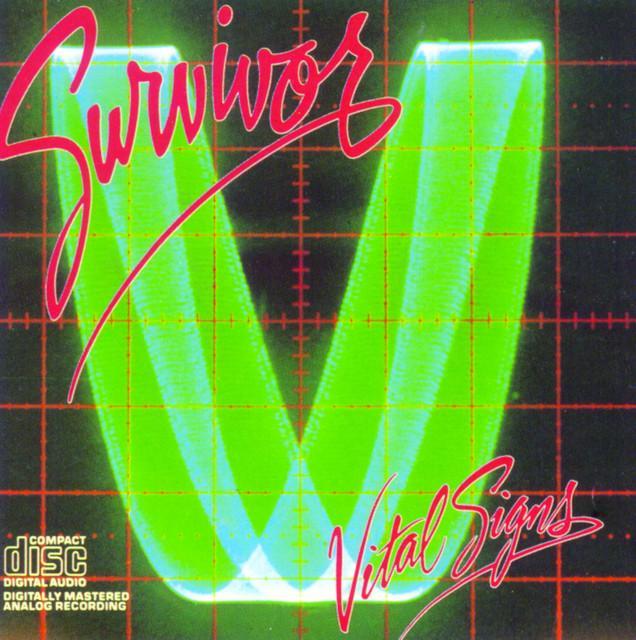
Why Survivor's 'I Can't Hold Back' Hits Hard
The meaning of I Can't Hold Back Survivor comes down to one clear feeling: desire that has reached the point of no return. The song is about someone who has stopped waiting, stopped hiding, and decided that love, attraction, and fate are all pushing toward one moment.
"I Can't Hold Back" - Survivor
Turn the pages of desire
Now it's time to trade those dreams
Loading lyrics...
Unable to load lyrics
We're unable to display the lyrics at this time. Please try again later.
Released in September 1984 as the lead single from Vital Signs, it also marked a major turning point for Survivor. It was the band's first album with lead singer Jimi Jamison, and the single became a comeback hit, reaching No. 13 on the Billboard Hot 100 and No. 1 on the Top Rock Tracks chart, according to the research sources provided.
A Love Song Built on Pressure
At its core, the song describes romantic tension that has been building for a while. The speaker believes the connection is real, and they read signs in the other person's body language, voice, and presence. That is why the opening image, story in my eyes
, matters so much. It suggests that feelings are already visible before anything is fully said.
The next image, pages of desire
, pushes that idea further. The song treats attraction like a story that has already started, even if the relationship has not fully begun. Instead of asking whether something will happen, the lyrics ask when the hidden feeling will finally become action.
Interpretation: This is not a shy love song. It is a song about crossing the line from fantasy into real-life commitment, or at least real-life passion.
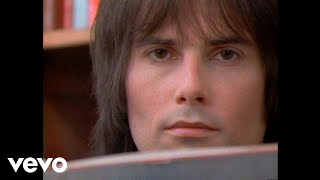
Watch the official I Can't Hold Back
music video
From Dreaming to Acting
One of the strongest ideas in the verses is the move away from imagination. The lyrics suggest it is time to leave dreams behind for something immediate and physical. That shift gives the song its whole engine.
The speaker is no longer content to wonder. They feel that the other person responds too, especially in the repeated touch imagery. When the song uses hand of fate
, it raises the relationship from a crush to something that feels destined. Whether or not that destiny is real, the speaker believes it is.
That belief matters because it explains the urgency. If love feels fated, hesitation begins to feel like a mistake.
Why the Chorus Feels So Big
The chorus is simple, but that simplicity is why it works. I can't hold back
is not a complicated statement. It is the sound of restraint collapsing.
The line I'm on the edge
adds the emotional picture. They are standing at a threshold, where one more second of waiting feels unbearable. Then the chorus makes the decision final: there will be no retreat.
This is the emotional center of the meaning of I Can't Hold Back Survivor. The song is less about romance in a gentle sense and more about surrendering to overwhelming feeling. The hook turns private longing into a public declaration.
The Images That Make It Feel Epic
Survivor use a few classic 1980s images to make a personal moment feel larger. Night, silence, stars, and fate all appear in the song. A line about a shooting star passing by suggests a rare chance that may disappear if they do not act.
That kind of imagery gives the song a cinematic quality. The romance is not presented as ordinary. It feels timed by the universe, charged by the dark, and pushed forward by a once-in-a-lifetime spark.
Another shooting star goes by
the silence speaks to you and I
Even here, the idea is clear without needing much lyric detail: the world around them seems to confirm what they already feel.
The Sound Carries the Meaning
Musically, the song amplifies every one of those emotions. Survivor were already known for muscular rock songs, but Vital Signs polished that power into a more radio-friendly 1980s style. The result is arena rock with bright keyboards, a strong guitar riff, steady drums, and a huge vocal performance.
Jimi Jamison was a big part of that effect. His voice sounds both forceful and smooth, which helps the song balance toughness with vulnerability. He does not sing the lyrics like a private diary entry. He sings them like a man trying to outrun his own restraint.
Research sources also credit producer Ron Nevison with an arrangement that keeps sections moving and blended in a dynamic way. That matters to meaning: the song never feels stuck. It keeps surging forward, matching the lyric's refusal to stay contained.
Why It Mattered for Survivor
The song's impact was not only lyrical. It helped launch a new era of the band. After Dave Bickler left because of throat surgery, Jamison became the new frontman for Vital Signs. That made this single feel like both a personal declaration inside the song and a career declaration outside it.
The MTV-friendly video also helped. Research notes that the clip, directed by Bob Radler and shot in Chicago, received heavy MTV rotation during the channel's peak influence years. That visual exposure helped turn the song into more than an album track.
In other words, the single's message of breaking through matched Survivor's real-world comeback energy.
A Clear Reading, With One Small Twist
The most direct reading is that the song is about a man deciding to act on intense romantic desire. That reading is supported by the writing background shared in research: Jim Peterik said the song developed around a man whose heart was full of desire.
Interpretation: There is also a broader reading. The song can work as an anthem about finally choosing action over fear. That is why listeners can connect to it even outside romance. The emotional shape is universal: wait, doubt, build pressure, then leap.
The Lasting Meaning
The meaning of I Can't Hold Back Survivor lasts because it is so focused. It captures the exact second when wanting becomes doing. The lyrics, vocal, and production all push toward that same point.
That is why the song still feels exciting. It is not about complicated psychology. It is about emotional momentum, and Survivor make that momentum sound huge.
Disclaimer: Song meaning is always part fact, part interpretation. This reading is based on the lyrics, the song's documented background, and the musical context available in the provided research.








