Why “Leaving Trunk” Never Really Sounds Free
The meaning of Leaving Trunk Taj Mahal comes into focus when they hear a blues narrator trying to leave trouble behind, only to find that trouble traveling with him. On the surface, the song is about packing up and going. Underneath, it is about emotional confusion, risky desire, and the hard truth that a change of place does not always fix a damaged state of mind.
"Leaving Trunk" - Taj Mahal
I ain't see no blues, whiskey made me sloppy drunk
I ain't never seen no whiskey, the blues made me sloppy drunk
Loading lyrics...
Unable to load lyrics
We're unable to display the lyrics at this time. Please try again later.
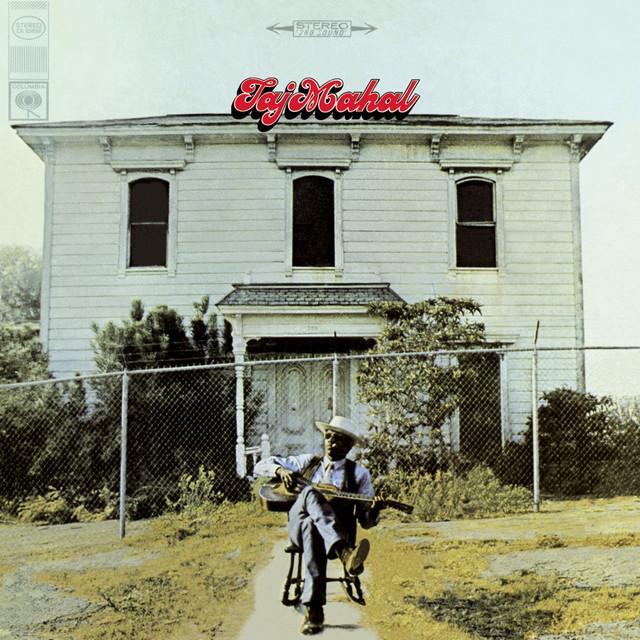
Taj Mahal did not write the song; it is credited to Sleepy John Estes, a key country blues figure whose writing often mixed humor, pain, and everyday survival. Taj Mahal’s version helped bring that older blues language to a wider rock-era audience through his self-titled 1968 debut album, documented by AllMusic. That context matters, because the performance feels both traditional and freshly alive.
A Blues Exit That Is Not a Clean Escape
At the center of the song is a simple action: the singer says he went to pack his leavin' trunk
. That image sounds decisive. He is done, moving on, headed elsewhere.
But the next ideas undercut that confidence. He links drinking, the blues, and mental disarray, using phrases like sloppy drunk
to show how unstable he feels. The song suggests that his crisis is not just practical. It is emotional and psychological.
Interpretation: the trunk is more than luggage. It becomes a symbol of self-protection. He wants to organize his pain into one final act of departure, but the song keeps showing that his feelings are too tangled for a neat ending.

Watch the official Leaving Trunk
music video
Desire, Secrecy, and the Threat in the Room
One of the song’s strongest scenes involves a woman and the danger around her. The narrator is drawn into a relationship that cannot safely exist in the open. When the song mentions the fear of a main man
catching him there, it turns a private romance into a risky triangle.
This matters because the song is not only about heartbreak. It is also about consequences. The singer is not leaving a calm situation; he is leaving a place where desire has become dangerous.
Who is speaking here?
The narrative voice is first person, and that gives the song its immediacy. Everything feels lived in, not observed from a distance. The speaker sounds worn down, but not passive. He keeps making choices, even bad ones, and that is part of what makes the performance compelling.
“Three Different Ways”: The Song’s Real Conflict
The most revealing image in the lyric is the blues arriving in three different ways
. That line captures the song’s deepest conflict better than the travel imagery does.
Instead of one clear feeling, he is split in multiple directions. One part of him wants to go. Another wants to stay. A third seems stuck in between, unable to settle the fight.
One said go
the other two said stay
That brief moment gives the song its emotional architecture. The outward motion of leaving crashes into inward hesitation. Even when he talks about Memphis and better luck, the listener hears hope mixed with self-deception.
Interpretation: Memphis is not just a destination. It stands for the fantasy of reset, the belief that somewhere else might restore dignity, luck, or control.
How Taj Mahal’s Performance Deepens the Meaning
A big part of the meaning of Leaving Trunk Taj Mahal comes from how it sounds. Taj Mahal’s recordings in the late 1960s often fused deep country blues feeling with sharper modern energy, as noted in the Smithsonian Folkways profile. In this track, the groove feels loose but firm, which mirrors the lyric’s push and pull.
The vocal delivery is key. Rather than singing the words in a polished way, Taj Mahal leans into roughness, stretch, and repetition. That style makes the narrator sound like someone thinking out loud while trying to steady himself.
The instrumental feel also matters. Blues phrasing often circles back on itself, and here that repetition reinforces the idea that he cannot break free cleanly. The song moves forward, but emotionally it loops. That is exactly why the “leaving” never sounds final.
A Story Told in Quick, Human Fragments
The lyric works because it does not explain everything. Instead, it gives snapshots:
- packing to leave
- drinking and confusion
- a secret affair
- fear of being discovered
- waking up pulled in opposite directions
Those fragments feel true to blues storytelling. They create a life under pressure without overexplaining it. The listener has to connect the scenes, and when they do, the portrait is of a person trapped by appetite, shame, longing, and habit.
Why the ending matters
By the close, there is no grand lesson and no clean resolution. That is the point. Blues songs often honor the fact that people do not solve themselves in three minutes. They confess, repeat, joke, warn, and keep moving.
In that sense, “Leaving Trunk” is less a travel song than a song about carrying unrest. He may leave the house, the woman, or the town, but he does not leave the blues behind.
Final Take on the Song’s Lasting Pull
The meaning of Leaving Trunk Taj Mahal lies in that tension between motion and paralysis. The singer talks like a man on his way out, yet every line reveals attachment, temptation, or doubt. Taj Mahal’s version keeps that contradiction front and center, turning an old blues song into a vivid drama of trying to outrun what already lives inside.
That is why the song still hits: it understands that leaving is sometimes real, but freedom is harder.
Disclaimer: This interpretation is based on the released lyrics, blues tradition, and recorded performance. As with many blues songs, some meanings remain open to listener interpretation.






