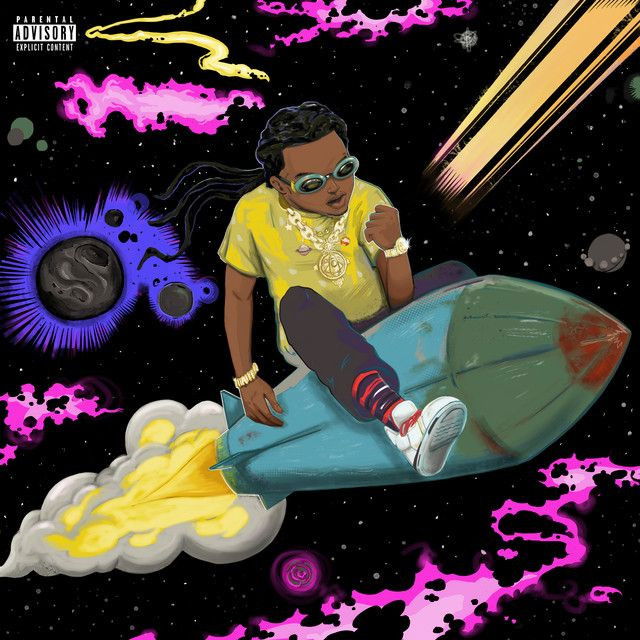
Last Memory by Takeoff
A hazy morning-after anthem, "Last Memory" turns luxury into something both thrilling and unstable.
"Last Memory" - Takeoff
Provided by LyricFind(MonstaBeatz)
Woke up this mornin' can't remember nothin'
Two bitches just flew in from London (two bitches)Loading...Loading lyrics...
Unable to load lyrics
We're unable to display the lyrics at this time. Please try again later.
Why the Meaning of Last Memory Takeoff Stands Out
When people search for the meaning of Last Memory Takeoff, they usually hear the obvious first: this is a flex record. Takeoff wakes up after a night he can barely piece together, then measures that blur through money, women, jewelry, and power. Factually, the song was released on October 26, 2018, as the lead single from The Last Rocket, his only solo studio album, and it was produced by Monsta Beatz. It later reached No. 54 on the Billboard Hot 100 and earned a Gold certification in the U.S. (Wikipedia).
But the song is more interesting than a simple victory lap. Its central image is not just wealth. It is lost memory. That detail makes the celebration feel unstable, almost ghostly. Takeoff is surrounded by proof of success, yet the first thing he tells listeners is that he cannot fully remember the night.

Watch the official Last Memory
music video
A Morning-After Flex With a Nervous Edge
The opening hook frames the whole song. Takeoff describes waking up unable to recall everything, then seeing signs of excess everywhere. Phrases like can't remember nothin'
and covered in money
turn the room into evidence of a lifestyle that moves faster than reflection.
Interpretation: That is the key tension. The song is proud of success, but it also shows how success can become disorienting. The memory gap matters because it suggests that luxury has become routine, even numbing.
This is why the chorus works so well. It does not build toward a moral lesson. Instead, it keeps circling the same image: a man waking up rich, armed, and admired, but also slightly detached from his own life.
How Takeoff Builds His World in the Verses
Takeoff fills the verses with snapshots rather than a linear story. That style fits the title. The song feels like fragments from a night and a life that move too quickly to fully hold.
A few themes keep returning:
- wealth as proof of status
- women as part of fame's orbit
- weapons and street ties as protection
- prayer as a sign of inner pressure
- outer space as a symbol of elevation
When he boasts about a half a million on a necklace
, the point is not just price. It is visibility. His success has to be seen. He also leans on cosmic imagery, especially in NASA takeoff with the rocket
. That line connects his rap name to a larger myth about escape, lift-off, and being beyond ordinary reach.
The Space Motif Is More Than a Punchline
The rocket bars are especially important in the meaning of Last Memory Takeoff. They tie the song to The Last Rocket era and help shape Takeoff's solo identity outside Migos. He is not just rich; he is airborne. He is not just ahead; he is in another atmosphere.
Interpretation: Space works here as a metaphor for distance. Takeoff sounds removed from normal life, normal rules, and normal scale. That can feel triumphant, but it can also feel lonely. The higher he goes, the less grounded the song becomes.
That dual feeling gives the flexing more depth. On the surface, the bars are slick and funny. Underneath, they suggest a person trying to match fame with an almost superhuman image.
God, Danger, and Distrust Under the Shine
One reason the song lasts is that it is not all diamonds and bravado. Midway through, Takeoff brings in prayer, evil, betrayal, and neighborhood violence. He says he talks to God and worries about the devil taking blessings. He also stresses that outsiders do not truly understand the life he is describing.
Those details add friction. The song's world is luxurious, but it is not safe. Even when Takeoff sounds calm, there is pressure behind the performance. He has money, but he still thinks in terms of loyalty, enemies, and survival.
Interpretation: This is where the track becomes more than a party record. It hints that success has not erased fear. It has only changed its shape.
Why the Beat Matters So Much
According to coverage from XXL, the song carries strong "trap accents," and the review notes that Takeoff is still flexing heavily on the track (Wikipedia). That production choice matters. Monsta Beatz gives him a beat that is glossy, spacious, and hard without feeling cluttered.
The instrumental supports the song's meaning in three ways:
- The bass gives the flexes weight.
- The clean bounce makes the lifestyle sound effortless.
- The airy feel supports the space imagery and memory blur.
Takeoff's delivery is just as important. He sounds controlled, not frantic. That coolness makes even the wildest details sound normal, which is part of the song's effect. The chaos is presented as routine.
Reception, Image, and Solo Identity
The music video, released the same day as the single, places Takeoff in a mansion surrounded by wealth and women, which mirrors the song's themes (Wikipedia). He also performed it on The Tonight Show Starring Jimmy Fallon in November 2018, showing how central the track was to launching his solo era (Wikipedia).
That context matters because "Last Memory" helped define who Takeoff was on his own: technically sharp, cool under pressure, and less interested in emotional confession than in controlled image-building. Yet even in that image, small cracks appear.
Final Take on Last Memory's Meaning
So, what is the meaning of Last Memory Takeoff? At its core, it is a song about fame experienced as blur: money everywhere, memory missing, danger nearby, and success so large it has to be described in cosmic terms.
Interpretation: The song celebrates Takeoff's rise, but it also quietly shows the cost of living at that speed. The thrill is real. So is the distance from anything stable.
That tension is why the track still works. It sounds like a victory, but it wakes up with a headache.
Disclaimer: This interpretation is based on the released song, its lyrics, production, and public reporting. As with any art, listeners may hear different meanings.








