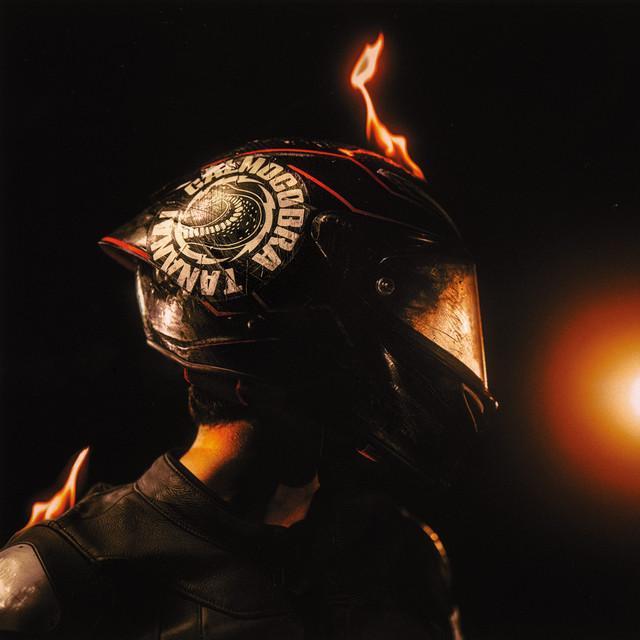
Why "RAGNI" by Tananai Hurts So Quietly
The meaning of RAGNI Tananai comes into focus when listeners stop treating it like a simple breakup-adjacent love song. It is really about fear: fear of loss, fear of growing up, and fear that love may ask one person to heal what the other still cannot handle alone.
"RAGNI" - Tananai
Ci amavamo già da trent'anni
Ma noi avevamo vent'anni
Loading lyrics...
Unable to load lyrics
We're unable to display the lyrics at this time. Please try again later.
Tananai released “RAGNI” in 2024 as the follow-up to “Storie brevi,” a major summer hit with Annalisa that later appeared in the orbit of his album CalmoCobra (Wikipedia). That timing matters. Coming after a bright, radio-friendly duet, “RAGNI” feels more private and bruised, like the comedown after noise and attention.
The Heart of the Song Is Not Spiders
On the surface, the title points to a literal fear. The partner has paura dei ragni
—a fear of spiders. But the song quickly makes clear that this is only half the picture. The narrator pairs that fear with his own: not spiders, but time, aging, and the pressure to become stable.
That contrast gives the song its emotional engine. One person fears small, visible things. The other fears something huge and invisible: the passing years. Interpretation: spiders stand for ordinary, almost childish panic, while time stands for adult dread that cannot be brushed away.
A Young Love That Already Feels Worn
Very early, the song creates a strange time warp. They had barely spoken, yet it felt as if they had loved each other forever. The idea is not that the romance was mature; it is that it felt instantly intense. Then the song undercuts that fantasy by reminding listeners they were only twenty.
That age matters. Tananai presents youth as both reckless and fragile, marked by tears, parties, and fights. The relationship has passion, but not much stability. When the narrator admits they had only fooled themselves, the song stops sounding dreamy and starts sounding self-aware.
Who Is Speaking, and What Do They Want?
The narrator speaks directly to a partner who seems more emotionally organized than he is. He does not ask for grand romance. He asks to be managed, understood, and repaired.
That is why the chorus lands so hard. The repeated plea curami sempre
is less a sweet request than a confession of need. He wants care that lasts, because he does not trust his own ability to hold himself together.
Il dolore non vuol dire
necessariamente sangue
Those lines contain the song’s core message: pain does not need visible wounds to be real. In plain terms, they are saying emotional damage can be serious even when nobody sees it.
The Medical Images Explain the Relationship
The song keeps returning to healing language. The partner is told she is not a nurse, yet the narrator still asks for treatment. He mentions that she studies anatomy, a detail that deepens the metaphor. She knows how bodies work, but the song hints she also knows how to look inward.
That makes the relationship uneven in an important way. He is impulsive and defensive. She is observant, almost clinical, but still emotionally involved. Interpretation: he sees her as someone capable of reading injuries he cannot explain himself.
This is also where jealousy and shame enter. He seems aware that he can be difficult, even exhausting. When he asks how she can stand him if he has nothing left to give, the song sounds less like seduction and more like self-accusation.
Violence, Restraint, and the Desire to Change
One of the sharpest moments imagines an encounter with a man holding a knife. The narrator says that before, he would have reacted with violence. Now he claims he would stop himself.
That shift is crucial to the meaning of RAGNI Tananai. The song is not only about being healed; it is about trying to become less destructive. Love gives him a reason to pause. He wants to be the kind of person who makes it home safely, not the kind who turns every threat into proof of masculinity.
Still, the song does not celebrate full transformation. It sounds like someone in the middle of learning control, not someone who has mastered it. The later thought about becoming an adult confirms that. Growing up is framed as an unfinished process.
How the Sound Supports the Lyrics
Even without quoting much of the text, listeners can hear how the production carries the meaning. Tananai often works in sleek modern pop, but here the emotional shape matters more than genre labels. The repetition in the hook mirrors obsession, while the colder room imagery suggests a stripped-back emotional atmosphere.
Interpretation: when the melody circles around the plea for care, it creates the feeling of someone stuck in the same need. The song’s pop structure makes the confession catchy, but that catchiness almost hides how desperate it is.
There is also an interesting career contrast here. Tananai had a broad commercial moment with “Storie brevi,” which was widely covered, charted strongly, and was described as a song-of-the-summer contender in Italian media (Wikipedia). “RAGNI,” by comparison, feels inward. That makes it a useful reminder that his writing often mixes polished pop instincts with messy emotional detail.
So What Does “RAGNI” Finally Mean?
At its deepest level, the song is about two fears sitting in the same room. One is easy to name, like spiders. The other is harder: the fear of adulthood, of emotional inadequacy, of needing more care than love can fairly provide.
The partner becomes both lover and mirror. By asking her to heal him, the narrator reveals he knows he is not finished becoming himself. That is what gives the song its sting. It understands that some people do not just want to be loved; they want to be repaired.
Final Thought
The meaning of RAGNI Tananai lies in that uneasy space between tenderness and dependence. It is a song about invisible pain, immature love, and the frightening work of growing up.
Disclaimer: This interpretation is based on the lyrics provided and publicly available context. As with all song analysis, some meanings remain open to listener interpretation.








