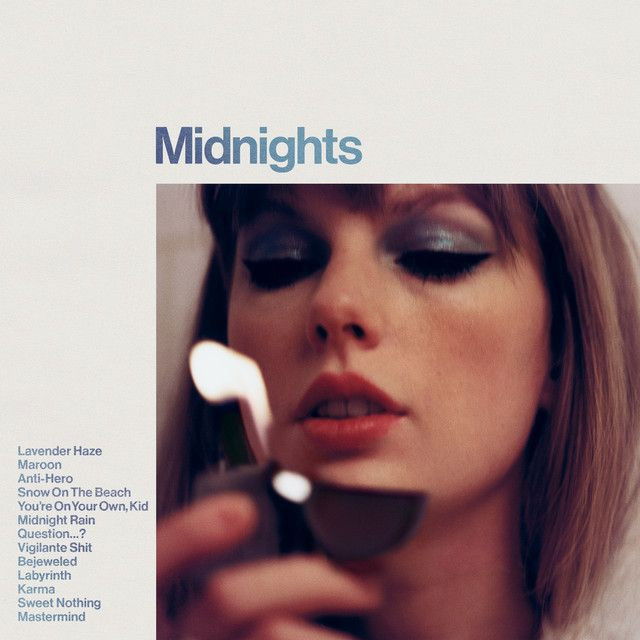
Lavender Haze by Taylor Swift
They open Midnights with a question: how do you protect a real relationship when everyone wants a headline? Lavender Haze frames love as a shelter—soft, modern, and stubborn—against tradition and internet noise. If you’re searching for the meaning of Lavender Haze Taylor Swift, think of a couple choosing privacy over performance.
"Lavender Haze" - Taylor Swift
Starin' at the ceilin' with you
Oh, you don't ever say too much
Loading lyrics...
Unable to load lyrics
We're unable to display the lyrics at this time. Please try again later.
Love as a Safe Weather System
Swift has said the phrase “lavender haze” described an all‑encompassing infatuation from mid‑century slang. In this song, that haze becomes a protective weather system around two people. The narrator admits they are under scrutiny
, yet the partner “handles it beautifully,” so the focus shifts from public judgment to private steadiness.
Interpretation: the haze is not denial; it’s a conscious filter. They decide whose voices matter and mute the rest.
Watch the official Lavender Haze
music video
Who’s Speaking—and What They Want
The first image, meet me at midnight
, places the story in a liminal hour when texts quiet and honesty rises. The narrator speaks directly to a partner who refuses tabloid bait. They long to stay in that lavender haze
, which means keeping the relationship defined by the two of them—not by marriage rumors or comment‑section narratives.
They also reject being boxed in. The world keeps bringin' up my history
, but the partner doesn’t engage. That gap—between public fixation and private calm—creates the song’s tension and relief.
The Story Beats, Simply Told
- Nighttime intimacy: two people choose closeness over chatter.
- External pressure: questions about labels, marriage, and past relationships ramp up.
- Boundary setting: “Talk your talk,” outsiders can post and speculate; the couple won’t play.
- Recommitment: they return to the figurative haze as an act of care and resistance.
These beats hinge on modern fame culture, summed up by talk your talk and go viral
. The line is less about clout and more about refusing to feed it.
The Chorus: A Soft‑Glow Rebellion
I feel the lavender haze creepin' up on me I just wanna stay in that lavender haze
In the hook, the haze is both mood and choice. Interpretation: the creeping feeling is love’s pull, while “stay” is agency—choosing the relationship over performative milestones. The chorus reframes the verses’ stress as background static the couple can tune out.
Symbols and Language: Why “Lavender,” Why “1950s”?
Lavender is a calming color with a slightly androgynous edge—neither hot pink nor bold red. It suggests balance, not frenzy. The song contrasts that modern softness with mid‑century scripts about what a woman “should” be. When the narrator brushes off retro expectations about marriage and purity, they’re naming a pressure that still lingers.
Specific phrases do the work:
bringin' up my history
: the internet’s permanent memory.get it off my desk
: boundaries—a refusal to manage others’ projections.stay in that lavender haze
: protect the bond.
Together, they outline a feminist subtext: love is valid without public proof or traditional milestones.
How the Sound Paints the Color
The production floats. Dreamy synth pads, rounded sub‑bass, and a mid‑tempo pulse create a weightless feeling, like looking through purple fog. Jack Antonoff’s and Taylor Swift’s approach favors soft transients and side‑chained swells, so beats feel cushioned rather than sharp. Stacked, breathy harmonies, possible vocoder layers, and filtered ad‑libs smear the edges of the melody—the musical version of a haze.
Trap‑leaning drums and brief drops keep the song modern, while the topline stays conversational. That contrast mirrors the lyrics: contemporary love against old rules. The repetition of lines like get it off my desk
functions like a mantra, a pop hook that doubles as a boundary reminder.
Alternate Readings Worth Considering
Interpretation 1: Celebrity critique. The song addresses how fame distorts private life—“viral” talk replaces real communication. The haze is a bubble built to survive a 24/7 feed.
Interpretation 2: A broader statement about dating in America. Even outside celebrity life, many feel pushed to define relationships by timelines and labels. The song offers a counter‑script: define love on your terms.
Both readings fit because the details are specific, but the emotions are universal.
Quick Context and Credits
Lavender Haze is the opener of Midnights (2022). Taylor Swift wrote it with Jack Antonoff, Jahaan Sweet, Mark Anthony Spears (Sounwave), Samuel Dew, and Zoë Kravitz. Production centers on Swift and Antonoff, with key contributions from Sweet and Sounwave. Knowing these collaborators—pop, R&B, and hip‑hop‑leaning writers—explains the blend of glossy synths and subtle groove.
Takeaway
The meaning of Lavender Haze Taylor Swift lands here: love as intentional shelter. It’s dreamy, but not naïve—an active choice to keep a relationship defined by its participants, not by strangers.
Disclaimer: Song meanings are interpretive. This analysis blends artist context with critical reading and may differ from your own.
Sources
- https://www.billboard.com/music/pop/taylor-swift-lavender-haze-meaning-midnights-1235152459/
- https://www.rollingstone.com/music/music-news/taylor-swift-lavender-haze-midnights-song-explained-1234604185/
- https://www.republicrecords.com/news/taylor-swift-midnights-out-now
- https://www.allmusic.com/album/midnights-mw0003776244
- https://pitchfork.com/reviews/albums/taylor-swift-midnights/









