Why Terrenoire’s ‘Jusqu'à mon dernier souffle’ Feels Like a Life Map
Terrenoire’s “Jusqu'à mon dernier souffle” feels intimate from the first lines. The singer does not present a grand story with a single twist. Instead, they move through hopes, fears, old neighborhoods, family memory, and a dream of shared love. That is what gives the song its force: it sounds like a person trying to build a meaningful life while carrying worry, distance, and longing.
"Jusqu'à mon dernier souffle" - Terrenoire
Je voudrais faire le bien
Et puis soigner les gens
Loading lyrics...
Unable to load lyrics
We're unable to display the lyrics at this time. Please try again later.
For listeners searching for the meaning of Jusqu'à mon dernier souffle Terrenoire, the song is best understood as a self-portrait in motion. It asks what kind of person someone wants to be “until my last breath,” while admitting how hard that goal becomes in real life.
A Promise to Live Well, Even While Doubting
The opening idea is moral as much as emotional. The narrator says they want to do good and help heal people. That makes the song sound generous at first, but Terrenoire quickly complicates that wish. Life is pictured as something that wears people down and keeps them close to the ground, almost trapped by pain and habit.
This is where one of the song’s key tensions appears. The speaker wants to be useful, kind, and hopeful, yet they also confess a mind that drifts toward catastrophe. When they admit they can imagine the worst and are not bad at that
, the song becomes more human. It is not a saintly statement. It is a realistic one.
Interpretation: the refrain about lasting “until the last breath” is not only about endurance. It is about staying ethically alive—trying to care for others even when anxiety keeps interrupting that effort.
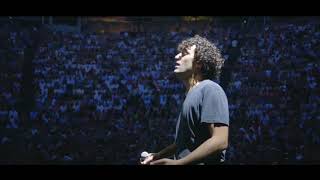
Watch the official Jusqu'à mon dernier souffle
music video
Fear, Inheritance, and the Weight of Growing Older
A striking detail comes when the narrator links this dark imagination to their father. That brief family connection matters because it turns fear into inheritance. Worry is not shown as random. It feels learned, absorbed, maybe even passed down.
Then comes one of the song’s smartest reversals. The singer says they are moving toward happiness, but only by constantly chasing it. The final note is almost self-correcting: maybe that chase is the mistake. In plain terms, the song questions the modern habit of treating happiness like a destination to hunt down.
That idea fits the reflective identity often present in Terrenoire’s work as the Saint-Étienne brothers behind the project discuss their musical world on their official site. Their writing often blends personal memory with broader emotional searching, and this song does that with unusual clarity.
Between Clichy and Terrenoire
The middle of the song grounds all this reflection in place. The narrator lives in Clichy and has spent years there, with nights, relationships, and routines piling up. Yet they still say, in essence, that they are not from here. That split is central to the meaning.
They are physically in one city but emotionally formed somewhere else: Terrenoire, the district of Saint-Étienne that also gives the duo their name. When the song says enfant de Terrenoire
, it is doing more than sharing hometown pride. It is claiming identity through memory.
The Geography of Memory
The long list of neighborhood names works like an emotional map. To a casual listener, these names may sound simple or even documentary. But in the song, they function like landmarks in the mind. Each one adds texture to the past.
The most moving memory is not dramatic. It is domestic: evening arriving, the father calling the children home, dinner in silence before the television. That small family scene tells listeners almost everything. Home is not romanticized as perfect, but it is held with care.
Terrenoire, TerrenoireParadiso, Paradiso
Those repeated place words feel half-prayer, half-echo. Interpretation: “Paradiso” may suggest an idealized inner homeland, where memory turns ordinary streets into something almost sacred.
Desire as a Future They Need to Invent
In the final movement, the song shifts toward love. The narrator imagines going toward another person’s body and inventing a happy life for two. The wording matters: this future does not already exist. They must make it up.
That makes the romantic vision tender but fragile. The dream includes a beautiful house and a river they would have invented
. Even nature in this ending is imagined, not inherited. Unlike childhood memory, which is fixed in the past, adult love becomes a creative act.
Interpretation: the song suggests that memory tells someone who they were, while love lets them design who they might become.
How the Sound Likely Supports the Song’s Meaning
Even without leaning on long lyric quotation, the emotional architecture suggests a Terrenoire hallmark: warm electronic textures, intimate vocals, and a slow-building arrangement that lets memory feel both near and distant. Coverage by France Inter has noted the duo’s mix of chanson feeling and modern pop/electronic design, which helps explain why their songs can feel both grounded and dreamlike.
That sonic balance matters here. A soft, suspended production style would fit the themes of floating memory, inner worry, and imagined futures. If the arrangement gradually opens up, it mirrors the lyric journey from burden to possibility.
What the Song Finally Means
At its core, this is a song about becoming. The narrator wants to be good, fears becoming consumed by anxiety, misses home, carries family memory, and still reaches for love. The line of feeling runs from duty to doubt to belonging to desire.
For anyone asking about the meaning of Jusqu'à mon dernier souffle Terrenoire, the song says that a full life is not one clear identity. It is a mix of care, fear, roots, and invention. They do not solve those tensions. They keep breathing through them.
That may be why the song lingers. It understands that people are made from the places they left, the people who shaped them, and the futures they still dare to imagine.
Disclaimer: This interpretation is based on the lyrics provided, publicly available artist context, and musical analysis. As with any song, meaning can remain personal and open to more than one reading.








