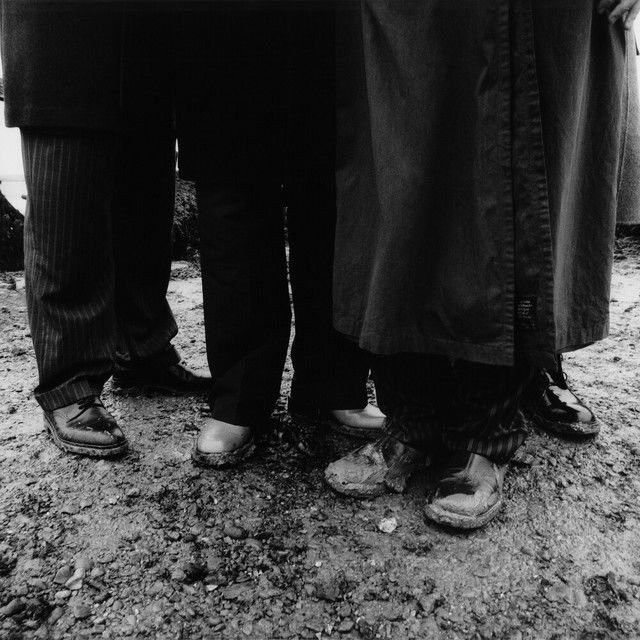
Part Of The Band by The 1975
The meaning of Part Of The Band The 1975 starts with confusion on purpose. This is not a neat story-song. Instead, it sounds like thoughts arriving in real time: memories of sex and youth, jokes about politics and media, and harder reflections on addiction, shame, and public identity. That loose shape is the point.
"Part Of The Band" - The 1975
I always used to bust into her hand
In my, my, my imagination
Loading lyrics...
Unable to load lyrics
We're unable to display the lyrics at this time. Please try again later.
Released on July 7, 2022, as the lead single from Being Funny in a Foreign Language, the track marked a sharp turn for the band's fifth era. It was co-written by Matty Healy, George Daniel, and Jamie Squire, and co-produced by Healy, Daniel, and Jack Antonoff, with Michelle Zauner contributing vocals, according to Wikipedia and Songfacts.
A song about identity in pieces
At the simplest level, the song is about a man trying to sort through different versions of himself. He looks back at fantasy, lust, artistic pretension, queerness, class performance, internet culture, and sobriety. None of those topics are held still for long, because the song is about a mind that does not rest.
One early line contrasts roles and belonging with part of the Air Force
and part of the band
. In plain terms, it sets up two social identities and turns them into a memory about desire and imagination. The song keeps asking whether a person is ever more than the role they perform.
Interpretation: the title suggests both membership and smallness. Healy is not "the whole band" in the song's worldview. He is only one part of a larger social machine: relationships, scenes, headlines, expectations.

Watch the official Part Of The Band
music video
Memory, ego, and the mess of growing up
The first half of the lyric keeps moving between confession and exaggeration. When the narrator says my cancellation
, he is not simply naming a scandal. He is placing personal shame inside a modern public world where every mistake becomes part of a larger story.
That helps explain the song's strange swings in tone. One second it is intimate; the next it is mocking cultural types, media habits, and moral posturing. NME noted that the song turns from old relationships toward Healy's role as a public voice, calling it a tangled stream of consciousness with no real chorus (NME).
The love stories are not stable
The references to a girl, then to fell in love with a boy
, matter because they widen the emotional field. The song does not present desire as fixed or tidy. Instead, attraction becomes part of the narrator's self-mythology, where romance is mixed with literary posing and awkward self-awareness.
That blend makes the song funny and sad at once. Healy sounds aware that he can turn life into performance. He also sounds tired of doing it.
The middle section turns outward
Midway through, the song says, in effect, that self-analysis is not enough. It pauses to ask what responsibility an artist has to other people. The line about talking about "the people" pushes against pure narcissism, but the song immediately undercuts that idea too.
This is where social satire enters. The lyrics sketch trendy politics, media writing, and online performance in broad, comic strokes. Rather than giving a clear lecture, the song shows disgust and attraction mixed together. The narrator sees a culture obsessed with image, but he knows he is part of it.
The worst inside of us begets
that feeling on the internet
Those lines are brief, but they carry a lot of the song's argument. They suggest that online life does not invent human ugliness from nothing. It amplifies what is already there.
The key question: self-awareness or self-parody?
The most discussed moment is the one asking whether he is ironically woke
. Paraphrased, he wonders if his politics are sincere, fashionable, defensive, or just another bit. That is one reason the meaning of Part Of The Band The 1975 feels so modern: it captures how hard it is to separate belief from branding.
Interpretation: this is not a simple anti-woke jab. It is a self-accusation. The narrator suspects that even his criticism of performative politics could become performance itself.
The closing sobriety reference deepens that idea. Healy counts a long period without using, turning recovery into a daily practice rather than a dramatic speech. In that light, the song becomes less about winning an argument and more about learning how to live honestly.
Why the sound matters so much
The production is crucial to the song's meaning. Reviewers described it as folk rock, indie folk, and art pop, built from acoustic guitar, strings, woodwinds, horns, and soft digital details rather than the band's usual glossy punch (Wikipedia; Songfacts).
Healy told Apple Music, quoted by Songfacts, that they wanted to remove the "macho rockness" and make something more delicate. That decision changes how the lyrics land. If these words were shouted over big drums, they might sound smug or chaotic. In this arrangement, they feel fragile, almost embarrassed.
That softness also fits the album era. As a lead single, "Part Of The Band" signaled reinvention. Critics praised it as a risky, organic reset, and several year-end lists ranked it among 2022's best songs, including outlets listed by Wikipedia.
The clearest takeaway
So what is the song about? It is about someone trying to move from image to honesty, while knowing he may never fully escape performance. It is witty, self-lacerating, observant, and deeply unsure.
For many listeners, that is the power of the track. It does not solve the contradictions it names. It sits inside them.
Disclaimer: This interpretation separates documented facts from critical reading. Like many The 1975 songs, "Part Of The Band" invites multiple meanings, and reasonable listeners may hear it differently.
Sources
- https://en.wikipedia.org/wiki/Part_of_the_Band
- https://www.songfacts.com/facts/the-1975/part-of-the-band
- https://www.nme.com/reviews/track/the-1975-new-song-part-of-the-band-3263062
- https://www.rollingstone.com/music/music-news/matty-healy-is-doing-some-strange-self-reflection-on-the-1975s-part-of-the-band-1379221/








