Topaz by The B‐52s
A dreamscape, not a plot
The meaning of Topaz The B‐52s begins with mood before story. This is not a song built around a clear character or a sharp conflict. Instead, they create a floating vision made of sea light, city shapes, stars, and motion. The words move like a series of snapshots, each one widening the frame.
"Topaz" - The B‐52s
Skyscrapers are winking
Some hills are never seen
Loading lyrics...
Unable to load lyrics
We're unable to display the lyrics at this time. Please try again later.
From the start, the song places listeners in a place where nature and modern life glow together. Phrases like cities by the sea
and skyscrapers are winking
suggest a shoreline that feels both real and unreal. The image is urban, but it is also soft and enchanted.
Interpretation: the song seems to imagine a future world that is peaceful, open, and ecstatic. Rather than warning about technology or modern life, they blend those things into a larger vision of beauty.

Watch the official Topaz
music video
The core idea behind “Topaz”
At its heart, “Topaz” feels like a song about expansion. The lyrics keep reaching outward: from hills to oceans, from planets to constellations, from the body to the heavens. Even when the song names earthly places, it treats them as part of something cosmic.
The repeated idea that the universe is expanding
matters because it turns the song’s landscape into a living thing. Nothing is fixed. Everything grows, pulses, and opens up. That makes the title feel symbolic too.
Interpretation: “Topaz” may stand for clarity, light, and rare beauty. A topaz gemstone catches and bends light, and this song does something similar with images. It takes ordinary things like cities, forests, and sea horizons and makes them shimmer.
How the verses build the theme
One striking part of the song is the way it stacks images without over-explaining them. Dolphins sing, starfishes spin, starships blink, and forests sit beside the sea. These details are not there to create realism. They create a feeling of shared life, where nature, imagination, and human invention all exist on the same plane.
That is why a line like minds swim in ecstasy
is so important. It tells listeners how to hear the rest of the song. The point is not logic in a strict sense. The point is altered perception, joy, and sensory overload.
There is also a strong sense of movement. Hearts and thoughts travel faster, ships sail, moonrise arrives, and voices guide the speaker forward. The song never stays still for long. It keeps opening doors into larger and stranger spaces.
Our hearts are traveling faster,
Faster than the speed of love
This brief moment sums up the emotional push of the track. They are not just moving physically. They are crossing into a higher state of feeling.
Chorus, hook, and the mystery of the title
The single-word hook, Topaz
, lands like a spell. Because it is so short, it does not explain itself. That mystery is part of its power.
In practical terms, the refrain acts as a center point inside all the drifting imagery. The verses roam across sea, sky, and space, but the title keeps bringing listeners back to one glowing object or idea. It is almost like a jewel at the center of a mobile.
Interpretation: the title may represent an ideal world, a state of mind, or a source of radiance. Since the song keeps returning to clean colors, open seas, and heavenly motion, “Topaz” can be heard as the name of that luminous destination.
The B-52s context matters
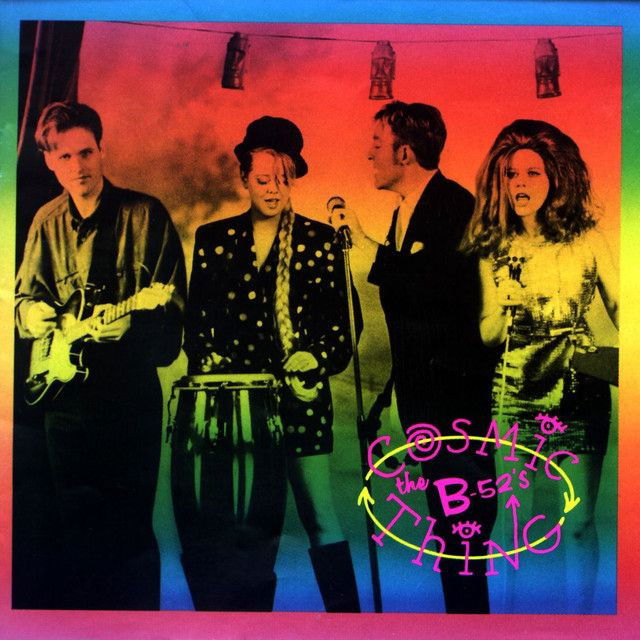
The B-52s built their reputation on playful art-pop, retro kitsch, party energy, and surreal images. On albums like Cosmic Thing, they often balanced humor with atmosphere. “Topaz” fits that wider style, but it leans more dreamy than campy.
The credited writers are Cindy Wilson, Fred Schneider, Kate Pierson, and Keith Strickland, reflecting the band’s collaborative style. That matters because the song sounds less like one person’s diary and more like a shared vision. The “we” language in the lyrics supports that feeling too.
For factual song credits, the track is associated with the band’s late-1980s period and appears on Cosmic Thing. That album pushed them toward a cleaner, brighter production style, and “Topaz” benefits from that polish.
How the sound carries the meaning
Musically, “Topaz” helps its meaning through texture more than drama. The arrangement has a glossy, airy quality that matches the lyrics’ sense of lift. Bright keyboards, steady rhythm, and layered vocals give the song a floating feel, as if it is hovering just above the ground.
The production also keeps the song from becoming too heavy or abstract. Even when the lyrics talk about heavens, planets, and guided voices, the beat stays approachable. That is a classic B-52s move: they can make odd imagery feel inviting.
Their vocal blend is especially important. Instead of sounding isolated or confessional, the voices feel communal. That supports the song’s vision of collective motion toward something freer and more beautiful.
A few strong readings of the song
There are at least three useful ways to hear “Topaz”:
- Utopian fantasy: They imagine a clean, joyful world where city life and nature are fully in tune.
- Spiritual ascent: The song describes a movement beyond ordinary reality into wonder, love, or transcendence.
- Pure sensation: The lyrics work like abstract painting, aiming less for a fixed message than for a flood of color and feeling.
These readings can all be true at once. That layered openness is a big part of the meaning of Topaz The B‐52s.
Why the song still feels special
“Topaz” stands out because it refuses cynicism. It sees the world as glowing, connected, and still becoming. Even the repeated image of places “never seen” does not feel scary. It feels promising.
That is why the song remains memorable. They offer listeners a rare mix of ocean calm, cosmic scale, and pop warmth. Instead of telling them exactly what to think, the song invites them to drift inside its jewel-like atmosphere and find their own meaning.
Disclaimer: This interpretation combines lyrical analysis with publicly available credit and album context. As with many impressionistic songs, some meanings remain open to the listener.







